Leverage Like a Legend: Warren Buffett's Japan Gambit and Lessons for Investors
 Join Us
 Follow Us
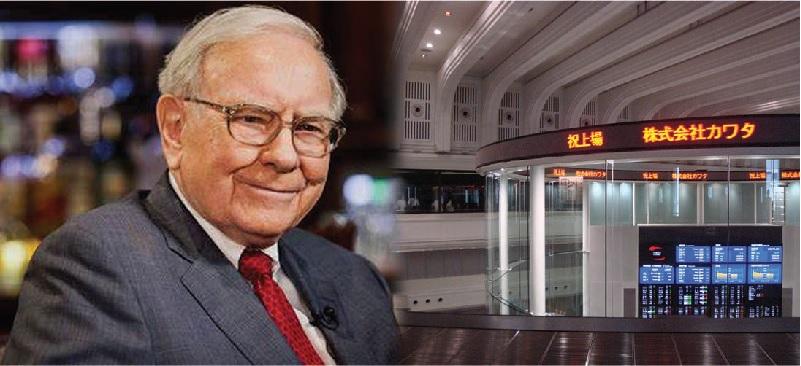
Imagine turning a billion dollars into twelve, all without risking a dime of your own.
✨ Key Takeaways
Imagine turning a billion dollars into twelve, all without risking a dime of your own. Sounds like financial fiction, right? But that's exactly what investing guru Warren Buffett pulled off with his audacious bet on Japan. In this special story, Vaishnavi Chauhan dissects the unconventional strategy Buffett employed to leverage borrowed money and generate sky-high returns in the Land of the Rising Sun.
Investing is like planting seeds in a garden with the hope that they will grow into healthy plants over time. When you invest, you're putting your money into things like stocks, bonds, real estate, or other assets, hoping they will increase in value in the future.
When it comes to investment strategies, leveraged investing stands out as a method that offers the potential for amplified returns, although with increased risk. This strategy involves using borrowed funds to magnify the scope of your investments, allowing you to control larger assets with a smaller initial outlay of your own capital. While leveraged investing can enhance profits when executed judiciously, it also heightens the exposure to losses if the market moves unfavourably.
Case study:
Debunking Warren Buffett’s ingenious Japanese bet
When we talk about superstar investors, one name stands out is Warren Buffett. One of his standout moves is investing in Japan. But what exactly was his move. Let's have a look:
On his 90th birthday in 2020, Berkshire Hathaway announced a significant move, the acquisition of more than a 5 per cent stake in five prominent Japanese trading companies: Itochu, Mitsui, Mitsubishi, Marubeni, and Sumitomo. What made this investment particularly intriguing was Buffett's unconventional approach – he didn’t use any of his own capital for this venture.
The Unconventional Strategy —Instead of investing his own funds, Buffett borrowed yen in Japan at a remarkably low-interest rate of half a per cent per year fixed. With this borrowed capital, he made a sizable investment in the Japanese trading companies, totalling approximately USD 5 billion.
The Ingenious Structure of the Deal — What makes Buffett's Japanese bet truly remarkable is the structure of the deal. While borrowing funds at an exceptionally low-interest rate, Buffett invested in companies that offered substantial dividend yields – around 8 per cent. This strategic move allowed Buffett to benefit from the spread between the borrowing cost and the dividend income, effectively leveraging other people's money to generate significant returns.
The Evolution of the Investment — Over time, Buffett's Japanese investments have yielded remarkable results. The initial USD 5 billion investment has grown substantially, with the total value estimated to be around USD 12 billion. Moreover, the dividends received from the Japanese trading companies have more than doubled, reaching approximately USD 800 million annually.
Analysing the Returns — One of the most striking aspects of Buffett's Japanese bet is the return on equity – it's infinite. This is because Buffett didn’t use any of his own equity for the investment; instead, he leveraged borrowed funds to generate substantial returns. This highlights Buffett's skill in capital allocation and his ability to create value through prudent financial engineering.
The Significance of Buffett's Japanese Investments — In Buffett's 2022 letter to Berkshire shareholders, he reflected on his decades-long tenure and highlighted a select few investments that have truly moved the needle. Among them, his Japanese bets stand out as a testament to his ability to identify lucrative opportunities and execute strategic manoeuvres that deliver significant value to shareholders.
Lessons Learned from Buffett's Japanese Bet
1. Using Other People's Money: Buffett's investment in Japan shows how borrowing money at a low cost and investing it wisely can help make more money. He borrowed money and invested it in assets that gave high returns, making a lot of money for Berkshire shareholders.
2. Long-Term Vision: Buffett's investments in the Japanese trading companies underscore the importance of a long-term investment horizon. Despite short-term market fluctuations, Buffett remained steadfast in his conviction, recognizing the intrinsic value and growth potential of the companies he invested in.
3. Value Creation Through Financial Engineering: Buffett's ability to structure deals in a manner that maximizes returns highlights the importance of financial engineering in value creation. By optimizing the capital structure and leveraging favourable market conditions, Buffett was able to unlock significant value for Berkshire shareholders.
Warren Buffett's investment in Japan shows how smart investing can pay off big time. By borrowing money and investing it wisely in assets that gave high returns, Buffett made a lot of money for Berkshire shareholders. His approach teaches investors important lessons about making smart investment decisions for long-term success.
God opened his chest
Warren Buffett’s decision to invest billions of dollars in Japan was “a no-brainer” that felt like a gift from God, according to his late business partner.“It was awfully easy money,” Charlie Munger, Buffett’s longtime lieutenant and vice chair of Berkshire Hathaway, said in an interview. “It was like having God just opening a chest and just pouring money into it,” said the late vice chairman of Berkshire Hathaway. In the summer of 2020, Berkshire revealed it had bought about a 5 per cent stake in each of Japan’s top five trading companies. In total, the American industrial invested USD 6.7 billion at the time. That same year, as Japan’s stock markets rocketed to 33-year highs, Berkshire disclosed it had doubled down, taking its stakes in each company to an average of more than 8.5 per cent. The companies backed by Berkshire included - Itochu, Marubeni, Mitsubishi Corporation, Mitsui & Co and Sumitomo. They are known as 'sogo shosha' or general trading companies in Japan.
Here's a breakdown of how leveraged investing works and its key considerations:
Borrowing Capital — The first step in leveraged investing is acquiring borrowed funds from a broker or financial institution. The interest rate on the borrowed amount is pivotal, as it directly impacts the overall profitability of the investment. Allocation of Funds: With the borrowed capital in hand, investors allocate these funds to various asset classes such as stocks, bonds, real estate, or even specialized leveraged products like options. The goal is to generate returns that surpass the cost of borrowing.
Profit and Loss Dynamics — In an ideal scenario, the returns on the invested capital exceed the interest payments on the borrowed funds, resulting in a net profit. However, it's essential to recognize that losses are also magnified in leveraged investing. If the investment depreciates, the investor not only incurs losses on their own capital but also bears the burden of repaying the borrowed amount and any associated interest.
Conclusion
While Warren Buffett's Japanese adventure serves as a fascinating case study in leveraged investing, it's important to remember it's not a blueprint for every investor. The current Indian market climate, with its volatility, makes leveraged strategies generally less suitable for retail investors. Buffett's approach is built for the long term, a stark contrast to the shorter timeframes leveraged investing often demands. The key takeaway? Leveraged investing can be a powerful tool, but it's best wielded by experienced investors who understand the magnified risks involved. For most, focusing on a welldiversified portfolio with a long-term horizon remains the wiser course, especially in today's uncertain market landscape. There's always something to learn from the masters, but sometimes, the best strategy is to play it safe and build wealth steadily