Making Hay While The Sun Shines
 Join Us
 Follow Us
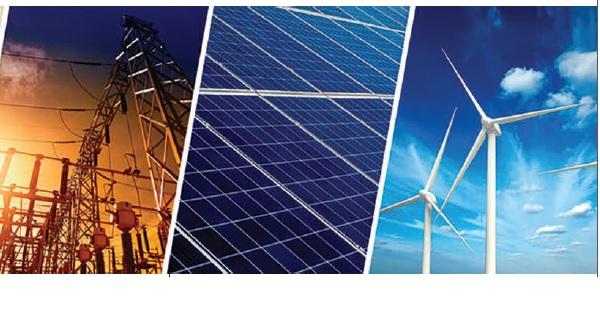
Every sector goes through expansion, peaks and troughs. If we look around us the renewable sector looks like one with huge tailwinds. Yogesh Supekar discusses the sector’s outlook while focusing on the exact investing opportunities where investors can remain invested for the long term
✨ Key Takeaways
Every sector goes through expansion, peaks and troughs. If we look around us the renewable sector looks like one with huge tailwinds. Yogesh Supekar discusses the sector’s outlook while focusing on the exact investing opportunities where investors can remain invested for the long term
If there is any one sector in India that has grabbed maximum headlines in 2022, it is the renewables sector. The amount of investments the sector is able to attract has surprised most of the market participants. Along with the renewables sector we can see capex happening in the railways and defence sectors too. Also, ground realities indicate that the capex in private sector is in alignment with the PSU spending. The government direction (policy initiatives) and expansionary policies (government spending) are guiding capex expenditure in India.
There is no doubt that the Indian government is serious about clean energy and various initiatives taken by the Narendra Modi-led government are leading toward early adoption of clean energy at various levels in the private sector, government sector and in public life in general. The government’s leadership and policy initiatives have kickstarted a trend that may grow into a megatrend in the coming years. We have seen several corporate groups commit to green energy initiatives. Be it Mukesh Ambani’s Reliance group, Tata Group, Adani Group or the Vedanta Group, each one of them has promised heavy commitment towards green energy in the coming years.
Gautam Adani has recently announced a plan to build three giga factories in India, extending from polysilicon to solar modules to make wind turbines and hydrogen electrolysers while Vedanta Group has announced that Serentica Renewables will install 1,500 MW of hybrid wind and solar capacity in three states in India. A large part of this capacity will be used to deliver close to 600 MW of round-the-clock clean energy to various entities of the Vedanta Group. In short, leading corporates are chipping in for renewables and this goes to show that there are huge tailwinds for the sector.
Solar EPC Segment
The outlook for solar EPC market is extremely positive. In the solar industry, engineering, procurement and construction (EPC) is a term used for providing end-to-end solar services that extend from designing the system and procuring the components to installing the project. The global solar EPC market is witnessing robust growth owing to investment subsidies announced by various governments over the last few years. Various policy initiatives of the Indian government are expected to benefit the renewables sector in India.
The Union Budget 2022 allocated ₹ 19,500 crore to boost manufacturing of solar modules with priority to fully integrate manufacturing units to solar PV modules under the Production Linked Incentive (PLI) scheme. The government has an ambitious goal of achieving 280 GW of installed solar capacity by 2030. The PLI scheme for the renewables energy sector is in line with the ‘Make in India’ vision and can be expected to help achieve the government’s ambitious goal of 280 GW of installed solar capacity by 2030. This can be achieved once the domestic solar manufacturing ecosystem is strengthened.
Says Mohit Jangir, who is an active investor with focus on renewable energy sector, “From being a necessity, renewable sources of energy such as solar and wind have come a long way by being cost-competitive against conventional sources such as coal and gas. So, the view is extremely positive if you have a longer-term horizon.” To present an overall perspective, the total installed capacity of solar energy was at 179 GW at the end of 2014 and in 2021 alone the PV capacity grew by 168 GW and is expected to grow by another 228 GW in the calendar year 2022. The growth is humongous, mostly coming from emerging countries such as China and India.
Investment Opportunities
Echoing his own experience of investing in the renewable energy sector, Mohit Jangir continues, “You can play it by investing in companies manufacturing key components which will be used in setting up solar and wind projects. The demand for solar panels and allied components is growing at a pace we have never seen in the past. For instance, if we look at the demand of these products in India versus the domestic manufacturing scenario, the opportunity size seems huge.”
“Incremental demand for solar glass to meet our targets is more than 25 GW per annum (5,000+ ton per day) while our domestic manufacturing capacity is 450TPD. While there are some near-term headwinds, the long-term prospects are really healthy. In the solar panel space, there is only one listed pure play module manufacturer with aspirations to achieve GW scale production and that company is Solex Energy. However, there will be many companies which will get listed in this space and you should be ready to grab the opportunities as and when they present themselves,” he adds. Indeed, there is a huge investing opportunity to be tapped in the renewables sector.
Solex Energy is just one of the multi-bagger stocks that has multiplied investors’ wealth 10 times in just one year. Another multi-bagger stock from the renewables space has been Gensol Engineering which is planning to launch its sub ₹ 10 lakh electric vehicle (EV) passenger vehicle in FY24. For investors betting on this sector, one cannot ignore huge opportunities presented in the EV sector. While Tata Motors and Mahindra and Mahindra are expected to dominate the EV space in India, there will be several players like Gensol Engineering and Tube Investments India which may surprise the markets with their product launches and market penetration in the coming quarters.
Automotive Sector and Renewables
It is a wide known fact that the Indian automobile industry is expected to become the third-largest by 2030. However, what most of us are not aware about is that EV sales stand at less than 1 per cent of the total vehicle sales against the global share of 8.3 per cent. The EV ecosystem is expected to get stronger in the coming years as the impact of progressive state policies and incentives under FAME II has been positive. It will be interesting to study India’s EV adoption trend.
It is speculated that the early wave of electric mobility in India till FY 2025 will be driven by public and shared mobility, including last-mile connectivity services, and not by private cars. The Government of India’s think tank NITI Aayog’s analyses of the success of FAME II and other measures shows that India could realise EV sales penetration of 30 per cent of private cars, 70 per cent of commercial cars, 40 per cent of buses and 80 per cent of two and three-wheelers by 2030. For investors what is interesting is that the EV push in India opens a plethora of business opportunities across three key segments – mobility, infrastructure and energy.
Some of the key beneficiaries in the EV space can be battery infrastructure providers, solar vehicle charging providers and EV OEM market participants. NITI Aayog estimates that a total investment of USD 267 billion (₹ 19.7 lakh crore) in EVs, battery infrastructure and charging infrastructure is needed to make the full transition to EVs. Some of the key growth drivers for the EV market in India are the spread in charging infrastructure, advancements in battery manufacturing and expectation of reduction in total cost of ownership in the coming 2-to 3 years to make it relatively lower than their ICE (internal combustion engine) counterparts.
Conclusion
Indian benchmark indices are once again proving to be worldbeating indices amongst the leading markets. While there are concerns on the longevity of outperformance in the Indian markets, there are several companies from the broader markets that show lot of promise on the growth front. The valuation is expensive and we have seen that the investors are willing to pay a premium for quality growth that is being delivered by Indian companies. Talking about the top-down approach and India being one of the favourites of FIIs going by the fund flow since the second half of July, one cannot ignore the opportunities presented by the renewables sector in India.
The growth drivers for the sector are in place and there is strong intent both from the government side and the corporates to implement projects related to green energy effectively. Huge capex outlined for the sector and adoption by the end-consumer for green energy is what is helping the sector grow rapidly. Solar energy, a renewable and clean source, relies on solar panels converting sunlight into electricity. Renewables energy has become the most competitive energy source owing to rapid technology improvements and decreasing costs of resources along with the increased competitiveness of battery storage.
The concerns of climate change and growing support for ESG (environmental, social and governance) is helping the renewables sector to remain a top priority. Similar is the trend for wind energy. The wind and solar capacity additions remained impressive in 2021 and are expected to remain healthy in 2022. India is endowed with very vast solar energy potential with most parts of the country receiving about 300 sunny days and an average solar radiation incident over the land in the range of 4-7 kWh per day.
Investors who believe in the long-term potential of equity markets and believe that the renewables sector stocks should be part of the strategic portfolio should look for potential opportunities in EV manufacturers, EPC companies involved in implementing green energy projects, solar industry players and component manufacturers along with every other player who stands to benefit from the growing consumption trend for renewables energy. Companies involved in providing rooftop solar panels and floating solar panels on waterbodies can also be explored with positive bias.