Metal Stocks: Boom, Bust, and Beyond
 Join Us
 Follow Us
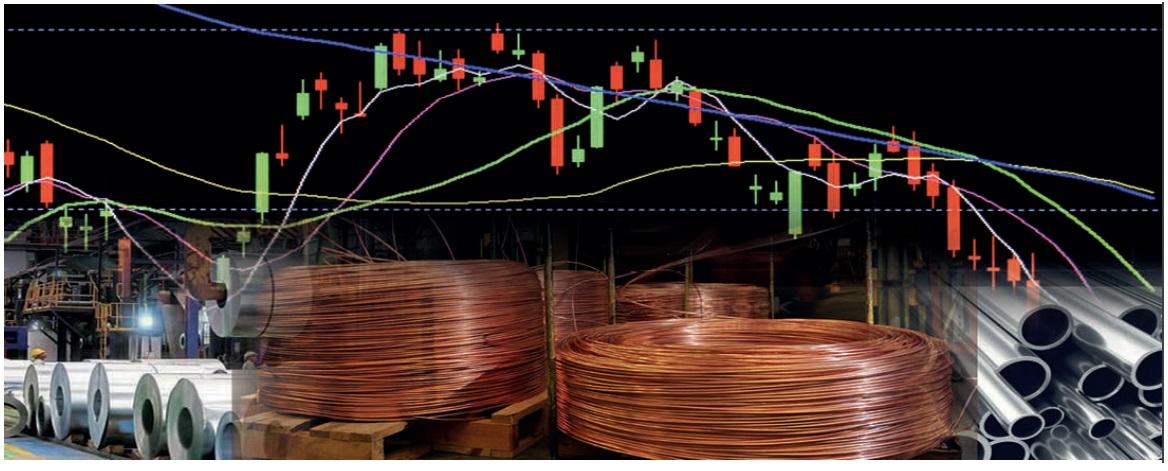
The Indian markets have experienced a challenging phase in recent months, weighed down by sluggish economic growth and weak quarterly earnings that have failed to justify elevated equity valuations, even after a major correction.
✨ Key Takeaways
Many investors entered metal stocks, anticipating strong growth driven by the government’s Make in India initiative, PLI schemes, infrastructure push, green energy projects, and EV expansion. However, the once high-performing stocks are now facing headwinds. What has changed dramatically? Mandar Wagh delves into the factors behind the metal industry’s current downturn, industry leaders’ financial performance, emerging opportunities, risks, and investment strategies in these challenging times
The Indian markets have experienced a challenging phase in recent months, weighed down by sluggish economic growth and weak quarterly earnings that have failed to justify elevated equity valuations, even after a major correction. This has triggered a strong sell-off by foreign institutional investors (FIIs). While benchmark indices have tumbled 12-13 per cent from their record highs, sectoral indices have faced even steeper losses. The BSE Metals index, which tracks leading metals and mining companies, has plunged nearly 20 per cent over the past five months.
All eyes are now on the metals industry, amid concerns that potential tariffs under the Donald Trump administration could disrupt the global metals market. Against this backdrop, we bring you a special report on India’s metals and mining industry—analysing the financial performance of industry leaders, assessing the impact of global developments on India, and identifying key challenges and opportunities. This in-depth

coverage aims to equip investors with the insights needed for well-informed decisions.
About the Industry
The metals and mining industry is a critical driver of India’s economy, contributing around 2.5 per cent of the national GDP and employing millions across its vast supply chain. It serves as the backbone for major sectors such as infrastructure, construction, manufacturing, automotive, power and defence, ensuring the supply of essential raw materials like iron ore, coal, steel, aluminium, copper, zinc, and rare minerals. With India undergoing rapid urbanisation and industrialisation, the demand for metals is rising. Mega projects like highways, railways, smart cities, ports, and renewable energy parks are driving consumption, making the sector a key enabler of economic growth.
The government’s focus on self-reliance in mineral production, easing mining regulations, and attracting foreign investments is further propelling expansion. The mining sector is poised for significant expansion, with the industry expected to reach USD 125 billion by 2026, growing at a CAGR of 6-7 per cent. The country is also the second-largest producer of crude steel, with production capacity targeted to reach 300 million tonnes by 2030 under the National Steel Policy. Meanwhile, the aluminium and copper segments are witnessing robust demand due to their applications in renewable energy, electric vehicles (EVs), and infrastructure projects.
As the world’s third-largest energy consumer, India faces a consistently rising demand for power and electricity, driving a sustained surge in coal consumption. Although the Union Budget 2025 did not emphasise infrastructure development as strongly as the previous budgets, instead focusing more on boosting consumption and investment, infrastructure remains a priority. The shift in expenditure strategy reflects a broader economic approach while ensuring continued support for key projects. Notably, the government has unveiled a second asset monetisation plan worth `10 lakh crore for 2025-30, reinforcing its commitment to long-term infrastructure growth.
Financial Performance
For a comprehensive analysis of the industry’s performance, we have assessed the top 20 BSE-listed metals and mining companies by market capitalisation. This evaluation covers diverse segments, including ferrous and non-ferrous metals, mining, steel, and steel products, offering in-depth insights into the key players driving India’s metals and mining industry. In Q3FY25, the metals and mining industry exhibited modest growth, reflecting overall sectoral weakness. Both year-on-year (YoY) and quarter-on-quarter (QoQ) aggregate revenue saw a 3-4 per cent rise, but aggregate net profit failed to grow, instead recording a marginal year-on-year decline, while rising 7 per cent sequentially.
Mining companies, particularly Coal India Ltd. and Vedanta Ltd., as well as businesses engaged in aluminium, iron ore, and zinc, demonstrated relative resilience despite the challenging environment. However, steel companies bore the brunt of the downturn. JSW Steel Ltd., India’s largest steelmaker by market capitalisation, saw its net profit plummet over 70 per cent year-on-year. Steel Authority of India Ltd. (SAIL), a central public sector enterprise, faced an even sharper 96 per cent year-on-year decline in net profit, despite a modest 4-5 per cent growth in revenue. Listed below are some factors contributing to the sector’s weaknesses.
Challenges
Commodity Price Fluctuations - The metals and mining industry faced volatile commodity prices, with fluctuations in steel, aluminium, and iron ore prices impacting profitability. Weak global demand and supply chain disruptions led to pricing pressures, particularly for steelmakers. Meanwhile, higher coking coal and energy costs further eroded the margins, making it difficult for companies to maintain stable earnings.
Dollar Strength - The appreciation of the U.S. dollar exerted downward pressure on commodity prices, as metals like copper, aluminium, and steel became more expensive for emerging market buyers. A stronger dollar also led to higher input costs for Indian companies reliant on imported raw materials, while making exports less competitive, affecting revenue growth for metal producers.
Trump Tariff War - The prospect of U.S. tariffs, including a 25 per cent duty on steel and aluminium imports, has significantly dampened market sentiment. Fears of retaliatory measures against BRICS nations have further fuelled uncertainty. The Trump 2.0 presidency could reignite a global tariff war, significantly impacting trade dynamics between the major economies. If the U.S. reinstates or escalates tariffs on steel and aluminium imports, it may disrupt global supply chains, affecting both China and India. Historically, Trump’s trade policies have targeted Chinese exports, leading to an oversupply of metals in Asian markets, which in turn exerts downward pressure on global prices.
For India, this scenario presents both challenges and opportunities. A surge in Chinese metal exports to India, as a result of U.S. trade restrictions, could lead to domestic price suppression and market oversupply, affecting Indian steelmakers’ profitability. On the other hand, if the U.S. reduces its reliance on Chinese imports, Indian exporters may find an opportunity to expand their footprint in the American market. Additionally, if trade tensions escalate, India could attract global investments in metals and manufacturing as companies seek to diversify the supply chains.
Weak Earnings by Domestic Players - Indian metal producers, especially in the steel sector, faced disappointing Q3FY25 earnings due to lower realisations, weak domestic demand, and escalating input costs. Rising raw material expenses, global trade uncertainties, and pricing pressures further dented profitability. These weak earnings raised concerns over demand recovery, resulting in cautious investor sentiment regarding the performance of metal stocks.
Financial Performance of the Leading Metal and Mining Companies
Click Here To Open:Financial_Performance_of_the_Leading_Metal_and_Mining_Companies


Driven by these challenges, metal stocks witnessed a sharp downturn as markets entered a major correction in October 2024. The BSE Metals index tumbled over 20 per cent since then, while several Mid-Cap and Small-Cap metal stocks continue to trade well below their 52-week highs. Stock performance data clearly indicates that every constituent of the BSE Metals index has recorded a notable double-digit decline over the past six months.
Opportunities
India’s metals and mining industry, despite the current challenging environment, holds significant long-term growth potential, driven by rising global demand, large-scale infrastructure expansion, and evolving market trends. The government’s continued focus on infrastructure development, including roads, railways, ports, and smart cities, is expected to fuel the demand for steel, aluminium, and other key metals. Additionally, the shift towards clean energy and electric mobility presents a major opportunity, as renewable energy projects and electric vehicle production will increase the need for essential minerals like lithium, copper, and aluminium.
The ‘Make in India’ initiative and the Production-Linked Incentive (PLI) schemes further support domestic manufacturing, reducing import dependency and encouraging higher domestic metal production. Moreover, the liberalisation of mining policies, along with the auctioning of new mineral blocks, is expected to attract fresh investments and boost output efficiency. India’s growing role as an exporter of finished metal products also provides a strong opportunity, as its competitive production costs and strategic geographic location position it well to serve the global markets.

Technological advancements, including AI-driven mining, automation, and sustainable extraction techniques, are set to enhance operational efficiency and reduce environmental impact, making Indian mining more globally competitive. Additionally, increased foreign direct investment (FDI) in the sector is expected to bring capital inflows, modern technology, and best practices, further strengthening India’s position in the global metals industry. With strong government support and evolving industrial trends, the sector is well-placed to capitalise on emerging opportunities, ensuring long-term growth and expansion.
Investor Strategy
Investing in the metal industry is never a bad idea, given its strong global demand and crucial role in the economy and end-user industries. However, investment strategies may vary depending on the time horizon and the extent of challenges impacting the sector.
Short-Term Approach
Defensive Positioning - Investors should adopt a cautious stance in the near term, as the ongoing correction in metal stocks and the prolonged recovery in demand and profitability may take additional quarters. It is advisable to focus on fundamentally strong companies with resilient operations, steady revenue and profit growth, robust liquidity, and a clear long-term vision. Investors should prioritise companies with strong cash flows and diversified operations.
Focus on Resilient Segments - Risk-taking investors may consider allocating funds to relatively resilient segments like mining, which offer greater stability compared to the steel sector, currently grappling with uncertainty and pricing pressures.
Favourable Impact of Trump Tariffs - Indian exporters stand to benefit if the U.S. reduces its reliance on China. Investors should closely track trade policy developments to identify opportunities, particularly in metal-exporting companies with strong growth potential.
Long-Term Approach
Stay Patient, Avoid Catching a Falling Knife - Investors should remain patient and avoid panic-driven exits from long-term investments, as premature selling could mean missing the recovery phase. Additionally, averaging in a falling market carries risks, as predicting the bottom is challenging— it’s crucial to exercise caution and avoid attempting to catch a falling knife.
Infrastructure-Driven Demand - The government’s commitment to roads, railways, ports, and renewable energy will fuel long-term metal demand. Stocks of companies with high exposure to these projects stand to benefit.
EV and Green Energy Play - Aluminium and copper companies will gain from electric vehicle (EV) adoption and clean energy projects. Investors should focus on firms positioned for this structural shift.
Policy-Backed Expansion - With PLI schemes, mining liberalisation, and FDI inflows, India’s metals sector is set for long-term growth. Strategic investments in high-growth segments could yield substantial returns.