Phoenix Mills Ltd
 Join Us
 Follow Us
The company is all set to reap rich rewards considering the positive long-term outlook for the real estate and hospitality industry and the company’s relentless focus on innovation, quality services and better efficiencie
✨ Key Takeaways
The company is all set to reap rich rewards considering the positive long-term outlook for the real estate and hospitality industry and the company’s relentless focus on innovation, quality services and better efficiencies
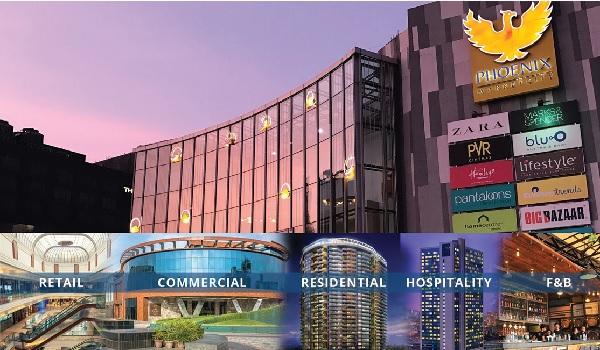
Etablished in 1905, Phoenix Mills Ltd. is India’s largest retail-led mixed use developer with presence across major metros including Mumbai, Bengaluru, Chennai, Pune, Agra, Indore, Lucknow and Ahmedabad. It is one of the leading players in the operations and management of malls, construction of commercial and residential properties and hotel businesses in India. The company has a glorious history of more than 100 years. Phoenix Mills commenced its operations as a textile manufacturer at Lower Parel in Mumbai. Later, in 1987, it entered the real estate market where High Street Phoenix emerged as the most frequented destination in Mumbai.
In 2001, it introduced India’s first hyper market concept by launching Big Bazaar in Mumbai. Then the business got diversified with the help of Pantaloons, lifestyle departmental stores, a five-star luxury hotel, Phoenix Market City malls, and many more. The company operates in four major segments such as retail, commercial residential and hospitality. It has nine large-scale assets across six Indian cities and has delivered five commercial properties with high-end amenities and contemporary designs of international standards.
‘One Bangalore West’ and ‘Kessaku’ are two premium residential properties developed with unique design and DALAL STREET INVESTMENT JOURNAL I MAY 23 - JUNE 05, 202220DSIJ. in quality. The company has best-in-class hotels, namely, The St. Regis, Mumbai and Courtyard by Mariott, Agra, managed by renowned global operators. The company’s vision is to create shareholder value by generating exceptional yields from capital growth, sales and lease of architecturally superior and difficult to replicate assets that are truly world-class in quality and infrastructure and to create superior business environment by building a loyal customer base.
Sector Overview
The real estate sector is one of the most recognised and crucial sectors for the growth of an economy. The growth of this sector depends on the demand for commercial spaces and residential properties. The demand has surged due to increase in household income and urbanisation. The Indian construction industry ranks third among the 13 major sectors of the economy and is the second-largest employment generator after the agricultural sector. If everything goes well, the real estate sector is expected to reach USD 1 trillion in market size by 2030 and expected to register a CAGR of nearly 15 per cent. It will contribute 12-15 per cent to the country’s GDP by the year 2025.
The hospitality industry in India is classified by type i.e. chain hotels and independent hotels and by segment such as service apartments, economy hotels, mid and upper mid-scale hotels and luxury hotels. The Indian tourism and hospitality industry is one of the key drivers of growth among the services’ sector in India. The foreign exchange earnings from 2016 to 2019 grew at a CAGR of 7 per cent but dipped in 2020 due to the corona virus pandemic. But, in 2020, the Indian tourism sector accounted for 39 million jobs, which was nearly 8 per cent of the total employment in the country. The travel market in India is projected to reach USD 125 billion by FY27 from an estimated USD 75 billion in FY20. New technologies and academic advancement have helped the industry grow. The transformation in hospitality is due to a number of factors such as globalisation, localisation, increased income, digitisation and easy access to information.
Financial Overview
Considering the financial performance of the company recorded for the third quarter of FY22, on a consolidated basis the company recorded net sales and other operating income of ₹ 425.01 crore, thus reporting growth of 29.5 per cent from ₹ 328.20 crore reported in Q3FY21. On the other hand, the operating profit was recorded at ₹ 252.48 crore in Q3FY22 as compared to operating profit of ₹ 173.93 crore in Q3FY21.


Q3FY22 recorded net profit of ₹ 102.26 crore in comparison with net profit of ₹ 60.12 crore in the same quarter in the previous year, posting a strong rise of 70.09 per cent. As for the annual results, its net sales and operating income fell by 44.71 per cent from ₹ 1,941.14 crore in FY20 to ₹ 1,073.29 crore in FY21.
The operating profit also declined by 42.82 per cent in FY21 as compared to FY20, recording at ₹ 586.47 crore compared to ₹ 1,025.65 crore. On similar lines, net profit declined by 90.47 per cent in FY21, recording ₹ 33.91 crore as compared to ₹ 355.88 crore in FY20. On the ratios front, the current and quick ratios of the company are much stable which depicts that the company has less chances of facing any kind of liquidity issue in the near future. It has a low debt-equity ratio of 0.83 times.
It was 1.17 times in the quarter ended March 2020, which clearly indicates that Phoenix Mills is getting more of its finance by funding through equity rather than by debt. The earnings per share (EPS) declined to ₹ 3.06 from ₹ 21.81 as company’s profitability was affected by uncontrollable events. Its business witnessed a disruption due to the second wave of the pandemic in the first quarter. The pandemic impacted many businesses and one of the hardest hit was the hospitality sector. Now, the company is performing well in terms of net sales as well as net profit as all restrictions have been lifted.
The company has successfully recovered all the losses as the net profit margin is getting better quarter-on-quarter with profit of ₹ 102.26 crore in December 2021, ₹ 63.16 crore in September 2021 and loss of ₹ 34.78 in June 2021. Its EBIT and PAT margins have decreased from 42.56 per cent to 35.14 per cent and 18.33 per cent to 3.16 per cent, respectively. On the other hand, enterprise value has surged from ₹ 14,024.42 crore to ₹ 17,903.44 crore. The company is all set to expand its operations in all segments such as hospitality, commercial and residential.
Outlook
A lot of events are happening in India which will help the real estate industry to grow in the near future. The Securities and Exchange Board of India has lowered the minimum application value for Real Estate Investment Trusts (REITs) from ₹ 50,000 to ₹ 10,000-15,000 in order to make the market more accessible to Peer ComparisonCompany Name Market Cap (₹ Cr) ROA (%) ROE (%) ROCE (%) Adjusted PE (x) EV/EBITDA(x) Adjusted EPS (₹ ) DS small and retail investors. As a result, home sales volume across seven major cities in India surged 113 per cent YoY in the third quarter of 2021. In the first half of FY21-22, private equity investment inflows in the real estate sector in India stood at USD 3.3 billion. The top three cities – Mumbai (39 per cent), Delhi (19 per cent) and Bengaluru (19 per cent) – together attracted nearly 77 per cent of the total investments. The government’s Smart City Project with a plan to build 100 smart cities is a prime opportunity for real estate companies.
The Reserve Bank of India (RBI) also announced that it would keep the interest rate unchanged at 4 per cent, which will give a major boost to the real estate sector. As per the Union Budget 2021-22, tax deduction up to ₹ 1.5 lakhs on interest on housing loan has been extended until the end of fiscal 2021-22. In case of the tourism and hospitality sector, the government is providing free loans to MSMEs in order to help them in dealing with the crisis and to revive the tourism sector. In the Union Budget 2022-23, an additional USD 316.3 million was allocated for Ministry of Tourism.
In November 2021, the Ministry of Tourism signed a Memorandum of Understanding (MoU) with Indian Railway Catering and Tourism Corporation (IRCTC) to strengthen the hospitality and tourism industry. The ministry has also signed MoUs with Easy My Trip, Cleartrip, Yatra, Make My Trip and Goibibo, which are all online platforms. Considering the company’s outlook, Phoenix Mills has four malls under construction and one upcoming huge commercial project. It has already acquired the land and started working on some commercial projects like Phoenix Millennium (Pune), Palladium (Chennai), Phoenix Market City (Bengaluru) and The Rise (Mumbai).
The company has occupancy of 78 per cent and 65 per cent at St. Regis Hotel and Courtyard by Mariott, respectively, and wishes to increase these levels to deliver the best experience to its customers. It is also planning to spread its wings in the residential sector as it currently has only two projects limited to Bengaluru. Hence, considering the positive long-term outlook for the real estate and hospitality industry and the company’s relentless focus on innovation, quality services and better efficiencies, we recommend HOLD.