Piramal Pharma
 Join Us
 Follow Us
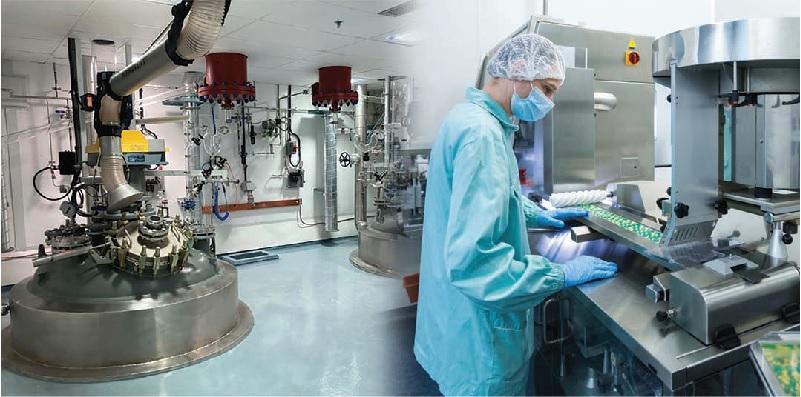
With strong brands that have already established themselves in the market, the company has now declared intentions for massive capital investments and output expansion.
✨ Key Takeaways
The Piramal Group has interests in a variety of industries, including financial services (Piramal Enterprises), real estate (Piramal Realty) and pharmaceuticals (Piramal Pharma). The Group's revenue is expected to be around USD 1.9 billion in FY 2022 with operations in 30 countries and brand recognition in more than 100 markets.
Piramal Pharma provides a range of unique products and services through end-to-end production capabilities spanning 15 global facilities and a distribution network in more than 100 countries. It has a three-tier quality governance approach, and facilities in the Piramal network have cleared 1,130 customer audits, 169 regulatory audits, and 36 USFDA inspections since January 2011.
Piramal Pharma comprises three business verticals: Piramal Critical Care (PCC), a complex hospital generics business;Piramal Pharma Solutions (PPS), an integrated contract development and manufacturing organization; and the India Consumer Healthcare business, which sells over-the-counter goods.
The major business units of Piramal Pharma Solutions include drug discovery, pharmaceutical development, manufacturing, antibody drug conjugation, generic APIs, and nutrition solutions. The Consumer Product segment is one of the fastest-growing players in the domestic consumer healthcare market. Among the well-known brands produced by the company are Lacto Calamine, Saridon, Polycrol, i-know, and Little's baby care line.
There is a joint venture between Piramal Pharma and Allergan. With the successful launch of a variety of cutting-edge medications and devices for conditions like glaucoma, dry eye, infections, and inflammations, the speciality pharmaceutical company Allergan India has become the market leader in thequickly expanding ophthalmic sector.
Sector Overview
The pharmaceutical industry in India contributes an enormous economic contribution to the country and is significant to the global pharmaceutical industry, coming in third place globally in terms of production volume and fourteenth in terms of value. India is renowned for producing high-quality generic drugs and vaccines at reasonable prices. With a 20 per cent share of all pharmaceutical exports worldwide, India is the largest volume supplier of generic medications in the world. India is the world's 12th largest exporter of medical goods. With the United States being the key market, Indian drugs are distributed throughout the world.
More than 50 per cent of all vaccines produced globally are supplied by it, making it the leading vaccine supplier globally in terms of volume. Major economies appreciated India's crucial contribution to the supply of vaccinations against COVID-19 and recognized the significance of the country for the global pharmaceutical industry.
Vadodara, Ahmedabad, Vapi, Kolkata, Visakhapatnam, Hyderabad, Bengaluru, Chennai, Mumbai, Pune, and Aurangabad are major pharmaceutical hubs in India. Additionally, India is home to more than 3,000 pharmaceutical companies, a robust network of over 10,000 manufacturing facilities, and a pool of highly qualified resources. It also boasts the most US-FDA-compliant pharmaceutical plants outside of the United States. In 60 therapeutic areas, the Indian pharmaceutical industry offers more than 60,000 generic brands. Generic medications, over-the-counter medications, API/bulk drugs, vaccines, contract research and manufacturing, biosimilars, and biologics are some of the major segments. Some of the bodies that deal with medical-related concerns are the Indian Pharmaceutical Association, the Organisation of Pharmaceutical Producers of India, and the Indian Drug Manufacturer' Association.
Indian exports satisfy the standards and requirements of the highly regulated markets of the United States, the United Kingdom, the European Union, and Canada thanks to its industry standards compliance massive production capacities and a significant number of skilled domestic workers. In the coming ten years, the domestic market is anticipated to expand by three times, according to the Indian Economic Survey 2021. The domestic market, which was valued at USD 42 billion in 2021, is projected to grow to USD 65 billion by 2024 and then USD 120 to 130 billion by 2030.
Financial Overview
Piramal Pharma Ltd (PPL) reported that the Securities and Exchange Board of India (SEBI) has permitted it to list shares on domestic stock exchanges. The demerger was also approved by the National Company Law Tribunal (NCLT). With the demerger from Piramal Enterprises Ltd (PEL), Piramal Pharma will be fully empowered to pursue its growth goals on its own with greater independence and concentration.


For every fully paid-up equity share in PEL that a PEL shareholder has with a face value of ₹2, the company stated that four fully paid-up equity shares of PPL, with a face value of ₹10 apiece, will be issued to them under the demerger plan. On October 19, 2022, shares of Piramal Pharma were listed on the exchanges, making their stock market debut. The market value of the company is close to ₹19,000 crore.
In October 2020, US private equity firm Carlyle Group invested USD 360 million in Piramal Pharma in exchange for a 20 per cent ownership. Piramal Pharma declared that it would focus on scalability and margin expansion through a combination of organic growth and acquisitions in the fields of complicated generics and contract development & manufacturing services (CDMO) and added that over the next 12 to 18 months, the company would invest ₹1,200 crore in antibody-drug conjugate capacity at Grangemouth (UK).
Outlook
The Covid 19 pandemic drew everyone's attention to the need for basic medical facilities across the country. It increased the importance of the pharmaceutical industry and compelled the government to give it more attention. The Indian government is working diligently to strengthen the pharmaceutical sector in light of the industry's great potential as well as the necessity for the country.
According to the Union Budget 2022-23, ₹3,201 crore has been designated for research, along with ₹83,000 crore and ₹37,000 crore for the Ministry of Health and Family Welfare and the National Health Mission, respectively
The Union Cabinet has approved a change to the current foreign direct investment (FDI) policy in the pharmaceutical industry that will permit FDI up to 100 per cent through the automatic route for medical device production. The Indian pharmaceutical industry as a result received FDI worth USD 19.41 billion between April 2000 and March 2022 and produced a USD 15.81 billion trade surplus in FY22.
The National Digital Health Blueprint (NDHB) offers a strategy for establishing the fundamental IT building blocks necessary for the health ecosystem to streamline information flows among ecosystem participants while maintaining the privacy and security of data for citizens. Over the next ten years, India's healthcare industry might gain an additional USD 200 billion in economic value thanks to the National Digital Health Blueprint. The Department of Pharmaceuticals launched a PLI scheme to boost domestic production by establishing greenfield plants to attain self-reliance and reduce import dependency on the country's vital bulk drugs.
The ageing population, the rise in diseases, the establishment of pharmacies offering low-cost generic medications, and government initiatives such as the National Health Protection Scheme, which aims to provide universal healthcare, should all contribute to the growth of the Indian pharmaceutical industry
Returning to the company, it has a strong pedigree of the Piramal Group and is also backed by US private equity firm the Carlyle Group. It has a wide distribution network and offers high-quality differentiated products and services through end-to-end manufacturing capabilities. Significant capital investment and output expansion plans are expected to be undertaken by the company in the near future.
Without a doubt, the Indian pharmaceutical industry has promising future prospects. However, Piramal Pharma has recently made its debut on the bourses post demerger from Piramal Enterprises Limited (PEL). With limited historical financial data available, it seems that an investment decision would be premature. Investors should track the company's financials over the next few quarters and conduct peer analysis to gain a better understanding of operating performance. We recommend HOLD.