Plastic Gets Into A Profitable Position
 Join Us
 Follow Us
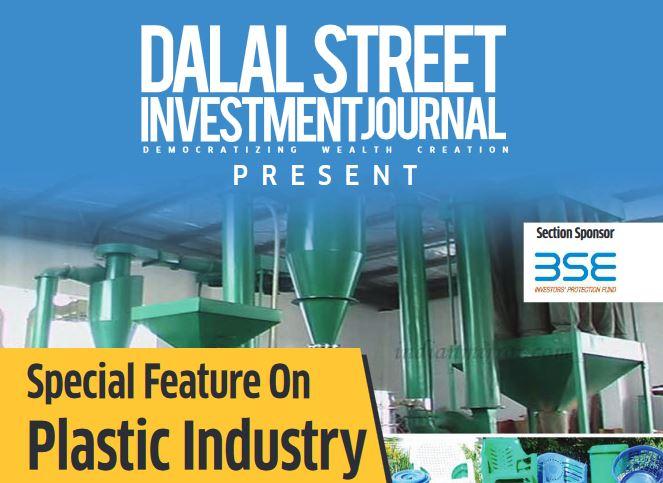
Despite the various campaigns about banning plastic from daily use, its consumption has grown steadily and now more than ever due to the greater insistence on hygiene in the food and beverages sector. Mandar Wagh explains how the plastic industry in India is poised for posting an impressive growth curve.
✨ Key Takeaways
Despite the various campaigns about banning plastic from daily use, its consumption has grown steadily and now more than ever due to the greater insistence on hygiene in the food and beverages sector. Mandar Wagh explains how the plastic industry in India is poised for posting an impressive growth curve.
The Indian plastic industry is one of the most significant contributors to the country’s economy. The first thermoplastics (polystyrene) were created in 1957, and the history goes back to 1947 when phenolics were first produced in India. Over 4 million people are employed by India’s plastic industry, which has expanded significantly since its inception and is now a major player in the manufacture of plastics worldwide. The industry employs more than 2,000 exporters, has more than 20,000 processing units, and is widespread throughout the country.
As a part of the chemicals industry, it produces the polymer materials known as plastics and provides services related to plastics that are crucial to a number of sectors. These include packaging, building and construction, electronics, aircraft and transportation. Floor coverings, fishnets, furniture, medical equipment, packaging supplies, plastic films, pipes and other raw materials are among the numerous plastic products manufactured. In fact, such is the widespread use of plastic in all spheres that several campaigns calling for its ban have not led to any significant changes.
Market Size and Exports
In 2021, the size of the global plastic market was estimated at USD 440 billion. According to projections, the market may grow from USD 457 billion in 2022 to USD 643 billion in 2029. India’s consumption of plastic has surged 23-fold to almost 21 million tonnes over the past three decades. The Indian plastics industry experienced a significant volume rebound over FY22 primarily as a result of a persistent demand growth. Currently, India is the third-largest consumer of plastics after China and the United States, using about 6 per cent of the world’s total quantity.
In the next 4-5 years, the Indian government aims to increase economic activity in the plastic industry from its current level of USD 37.8 billion to USD 125 billion. The country’s plastic exports in FY22 prospered, expanding strongly despite the supply chain bottlenecks. India’s exports of plastics, which had largely been fluctuating between USD 8 billion and USD 10 billion for the previous few years, rose significantly to USD 13 billion in FY22, registering a healthy year-on-year growth of over 30 per cent.
If we break down exports by category, plastic raw materials were the most popular exports and made up 30 per cent of all exports in 2021-2022. The second-largest category, totalling 15 per cent of exports, was plastic films and sheets. United States, China, the United Arab Emirates, Germany, Italy and the United Kingdom are the key markets for India’s exports of plastic and associated goods. Up to 10 plastic parks have been approved in the country by The Department of Chemicals and Petrochemicals. Among these, six plastic parks have received final approval.
Plastic and Equity Markets
The year 2022 sparked off the Russia-Ukraine war along with an increase in inflation, a slowing economy and weaker economic data, thus raising concerns about a possible recession. Major economies across the globe have started posting stronger economic data than before as a result of aggressive actions taken by all central banks worldwide. Despite outpacing the global markets, the Indian domestic indices have only gained nearly 4-5 per cent this year. Whereas most industry majors are struggling to gain positive momentum, several overlooked stocks have amazed investors with their excellent returns despite all the challenges.
When it comes to the best-performing plastic products stocks, Innocorp Ltd. led the way and astounded investors with phenomenal gains of over 90 per cent in just one month. When looking at the market capitalisation of the stocks, the majority of micro-cap stocks performed exceptionally well. Innocorp Ltd., in addition to manufacturing plastic products, also provides infrastructure services for the power transmission and distribution industry. Investors are drawn to this stock as it is affordable, has a low PE and a very impressive ROE. The shares of Kaiser Corporation have skyrocketed over 1,858 per cent, making it one of the year’s top multi-baggers across all sectors. Kaiser Corporation is in the business of printing labels, articles of stationery, magazines and cartons. Reliance Industries is the top producer of polymers in India with the multinational corporation responsible for about half of the country’s polyolefins manufacturing capacity. The largest production capacity for several polymers, such as polypropylene and polyethylene terephthalate, is held by Reliance Industries. Supreme Industries, Astral, VIP Industries, Prince Pipes, Finolex Industries, Jai Corp and Nilkamal Ltd. are some of India’s leading plastic product manufacturers.
Impact of the Pandemic
The corona virus pandemic unleashed havoc on the entire value chain system at all points and scales. The availability of raw materials and price inflation became major issues. Lockdowns resulted in cost overruns, significant delays and major business disruptions due to a lack of timely execution. The demand for plastic from the building, construction and automobile industries fell drastically. While the plastics industry was in a crisis, the medical industry rescued it by providing enormous opportunities.
The workers in the plastic industry were fully occupied by the demand for PPE kits that included masks, goggles, gloves, gowns and other essentials. Companies in the plastic and chemical industries reported unprecedentedly large orders and revenues. The pandemic has significantly increased consumer demand for plastic food and beverage containers. Improved hygiene awareness and a rise in the buying of disposable goods designed to lower the risk of viral infections have revived the industry.
Potential Threats As public awareness over the environmental harm that polymers cause has grown, more strict government laws and policies have been implemented. Straws, ear buds, plastic sticks and other items with limited utility but a tendency to be left lying around were among the single-use plastic goods that the Indian government urged the population to get rid of. Polyethylene Terephthalate (PET), high-density Polyethylene (2 HDPE) and Polypropylene are three forms of plastic that are regarded safer than others. In order to survive and prevent business disruption, companies may engage in the production of these types of products. Many businesses and governments have started using more environmental friendly and nonplastic alternatives to avoid the harmful impact on environment. If businesses do not adapt to this transformation, it could have an impact on market growth in the future.

Outlook
Plastic is embedded in our lives and is used in everything from furniture to water bottles. There is no sector in the country that does not use plastic, and this is why the Indian plastic market is enjoying healthy capitalisation. The sports, fashion, textile and consumer goods industries are using polymers more frequently as a result of their great durability and resistance to physical stress. Plastic manufacturing businesses have developed tremendously and are anticipated to grow in the next few years. The industry’s major players are optimistic about the demand situation and anticipate that pipe realisations and volumes will grow rapidly in the upcoming quarters thanks to rising prices brought on by higher PVC costs, a favourable product mix and distribution expansion.


To improve the country’s output of plastic manufacturing and to create employment, numerous plastic parks are being established in stages across the country. Meanwhile, the six approved plastic parks are in Madhya Pradesh (2), Assam (1), Tamil Nadu (1), Odisha (1) and Jharkhand (1). Funds of up to 50 per cent of the project costs, or a maximum cost of `40 crore per project, are available under the plastic park schemes. In order to advance the country’s petrochemical technology and promote a research environment essential to the industry, the government has also initiated a programme for establishing Centres of Excellence. This will assist in promoting and creating new applications for plastics and polymers in the country. Given such initiatives and the promising future of the sector, keep a close eye on the industry and its stocks.