Railway Stocks at 52-Week Lows: Here's Why
 Join Us
 Follow Us
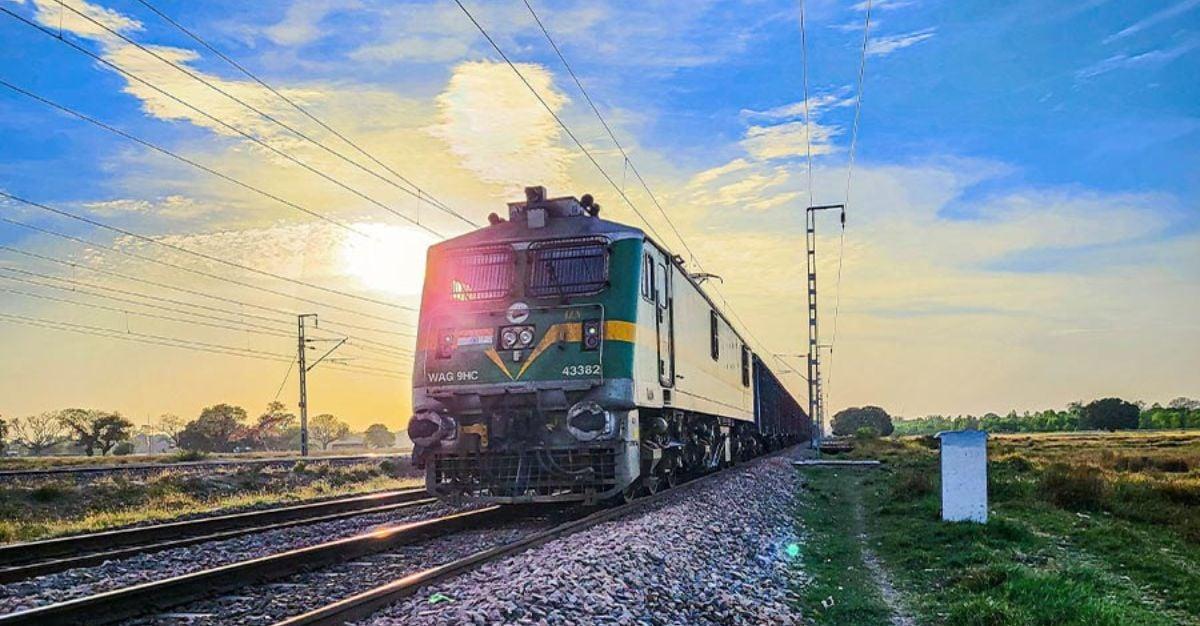
Railway stocks including IRCTC, RVNL and IRFC have hit 52-week lows despite strong government railway spending. Here are the key reasons behind the decline.
✨ Key Takeaways
On September 2, 2026, major Railway-linked stocks including Indian Railway Catering and Tourism Corporation Ltd (IRCTC), Rail Vikas Nigam Ltd (RVNL) and Indian Railway Finance Corporation Ltd (IRFC) touched fresh 52-week lows.
The weakness has also extended beyond these three stocks, with several companies associated with the railway ecosystem facing selling pressure.
This raises an important question: why are railway stocks falling?
There are several factors behind the correction.
1. High Expectations and Profit Booking
One of the biggest reasons behind the correction is the sharp re-rating that railway stocks witnessed during their previous rally.
The gains between 2021 and 2024 were not driven only by actual earnings growth. Expectations of higher government spending, rising Order Books, infrastructure development and stronger future earnings were also aggressively priced into several stocks.
For instance, RVNL delivered gains of around 2,300 per cent, while IRFC gained more than 800 per cent during the broader rally. IRCTC also delivered returns of around 300 per cent.
At the same time, investors who have accumulated substantial gains may choose to book profits, particularly when the broader market sentiment turns cautious.
This combination of rich valuations and profit booking can put significant pressure on stocks even when the underlying sector story remains intact.
2. Government Stake Dilution and FII Selling
Foreign Institutional Investors (FIIs) have also reduced their exposure to several railway stocks, adding to the selling pressure.
The government has previously used stake sales to dilute its holding in some railway companies. For instance, the government diluted a 5.36 per cent stake in RVNL through an Offer for Sale (OFS) in July 2023.
However, the more recent trend in FII ownership is also worth noting.
In RVNL, FII holding declined from around 5.10 per cent in December 2024 to 2.41 per cent in June 2026.
A similar trend has been visible in IRCTC. FII holding declined from 7.78 per cent in March 2024 to around 3.91 per cent in June 2026.
IRFC has also remained in focus after the government announced plans in February 2026 to divest up to a 4 per cent stake in the company.
3. Rising Metal Prices Could Pressure Margins
Another factor that could affect parts of the railway ecosystem is the movement in metal prices.
Infrastructure companies, wagon manufacturers and engineering businesses linked to the railway sector use steel and other metals as important raw materials.
A rise in input costs can increase the cost of executing projects and manufacturing equipment.
The impact on profitability depends on how easily companies can pass these higher costs on to customers.
If higher input costs cannot be passed on immediately, companies may face pressure on operating margins.
This is particularly relevant for businesses where project margins are already closely linked to execution costs and commodity prices.
Also Read - Infra Stock Jumps Over 10% After Emerging L1 for Rs 483.7 Crore Railway Order
So, Has the Railway Story Ended?
Not necessarily.
The correction in railway stocks does not automatically mean that the long-term railway investment story is over.
The government continues to focus heavily on railway infrastructure, modernisation, freight capacity, electrification and related projects. This provides a sizeable opportunity for companies operating across the railway ecosystem.
Several railway-linked companies also continue to have sizeable order books and are targeting new opportunities.
Disclaimer: The article is for informational purposes only and not investment advice.