Rossell Techsys posts record Q2 revenue as semiconductor business gains momentum
 Join Us
 Follow Us

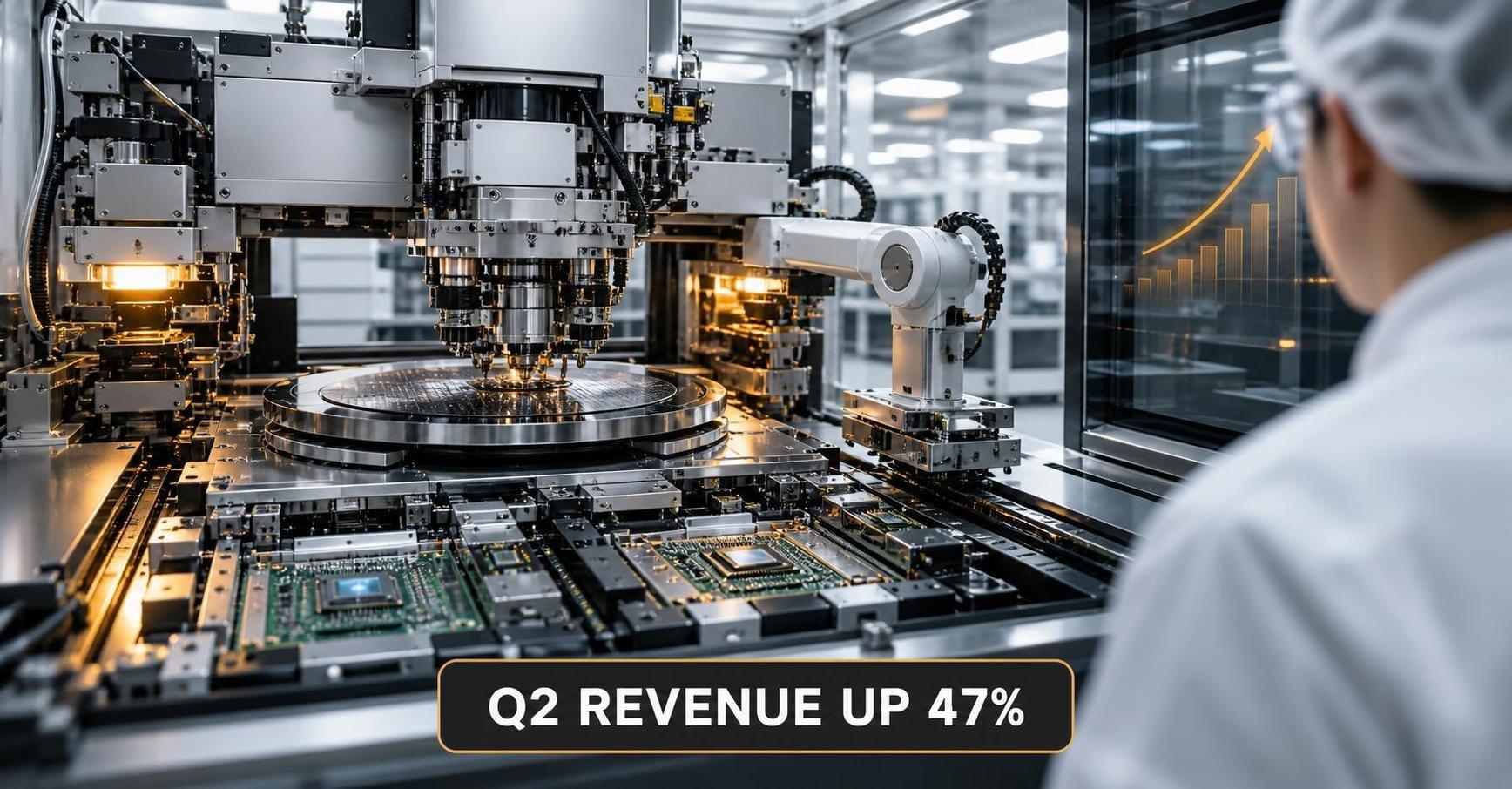
Rossell Techsys just hit a major milestone, posting a record Q2 FY27 revenue of ₹185.56 crore and a PBT of ₹12.91 crore. What’s driving the surge? A strategic push beyond defence into booming sectors like semiconductors
✨ Key Takeaways
Rossell Techsys is broadening its engineering and manufacturing platform beyond Aerospace and Defence into Semiconductor equipment, space and aftermarket services. The diversification is starting to contribute more materially, with the company reporting its highest-ever quarterly revenue of Rs 185.56 crore in the second quarter of FY27, up 47 per cent YoY.
Earnings before interest, Tax, depreciation and amortisation, or EBITDA, rose to Rs 29 crore during the quarter, while profit before tax, or PBT, reached a record Rs 12.91 crore. It was the first time quarterly PBT crossed Rs 10 crore. For the first half of FY27, revenue stood at Rs 345 crore, EBITDA was Rs 52 crore and PBT was Rs 22.3 crore.
Non-aerospace and defence operations accounted for about Rs 130 crore to Rs 140 crore of first-half revenue. Management said space and semiconductor businesses had generated around Rs 100 crore in FY26, while non-aerospace and defence revenue had already exceeded Rs 140 crore in the first six months of FY27. The company added a second large multinational semiconductor equipment customer during the period and expects segment revenue to increase significantly in the third and fourth quarters.
Order visibility has also strengthened. Rossell Techsys secured fresh orders worth about Rs 430 crore in the first half and held confirmed purchase orders of Rs 910 crore, scheduled for execution over the next 2.5 years. It also reported strategic agreements exceeding Rs 3,100 crore over five years. These agreements provide a broader opportunity pipeline, although conversion into revenue will depend on customer approvals, production schedules and programme execution.
The company completed a Rs 300 crore capital raise, bringing SBI Mutual Fund and Kotak Mutual Fund into its shareholder base. A substantial part of the proceeds will be used to repay working-capital limits, which management expects will reduce finance costs from the third quarter. Inventory carrying levels improved to 6.67 months from 7.98 months a year earlier. Rossell Techsys is targeting inventory equivalent to four months over the next 24 months.
It has also inaugurated a leased 1,40,000 sq ft facility at the Aerospace Park, with scope to expand to 2,10,000 sq ft. Operations are expected to begin early in the next quarter and are intended to add capacity for semiconductor and other non-defence programmes.
As of 9:51 am on November 12, 2026, Rossell Techsys shares were trading at Rs 1,475.00, up 3.23 per cent from the previous close. The stock has gained 115.60 per cent over one year, compared with a marginal 0.08 per cent decline in the BSE 500 over the same period. At the prevailing price, the shares remained below their 52-week high of Rs 1,624.05. Domestic institutional ownership rose to 5.02 per cent from 0.78 per cent in the previous period.
What This Means for Investors
The record quarter supports Rossell Techsys’ strategy of using its high-reliability manufacturing capabilities across aerospace, defence, semiconductor and space programmes. Semiconductor customer additions, expanding non-defence revenue and the new facility could widen the revenue base beyond its traditional aerospace and defence operations. The Rs 300 crore equity raise is important because repayment of working-capital borrowings could improve cash generation and profitability if management delivers the indicated reduction in finance costs from Q3.
The investment case remains dependent on execution over the next few quarters. Investors will watch semiconductor revenue conversion, ramp-up at the new facility, inventory reduction and the pace of margin improvement towards management’s 18 per cent to 23 per cent EBITDA margin aspiration. The Rs 910 crore confirmed Order Book provides useful medium-term visibility, but qualification cycles and customer programme schedules remain important variables. At 193.58 times trailing twelve-month earnings and 68.27 times enterprise value to EBITDA, the valuation leaves limited room for delays in margin expansion or order conversion.
Disclaimer: The article is for informational purposes only and not investment advice.