SAIL and BCCL sign pact to develop 4 MTPA coking coal blocks in West Bengal
 Join Us
 Follow Us
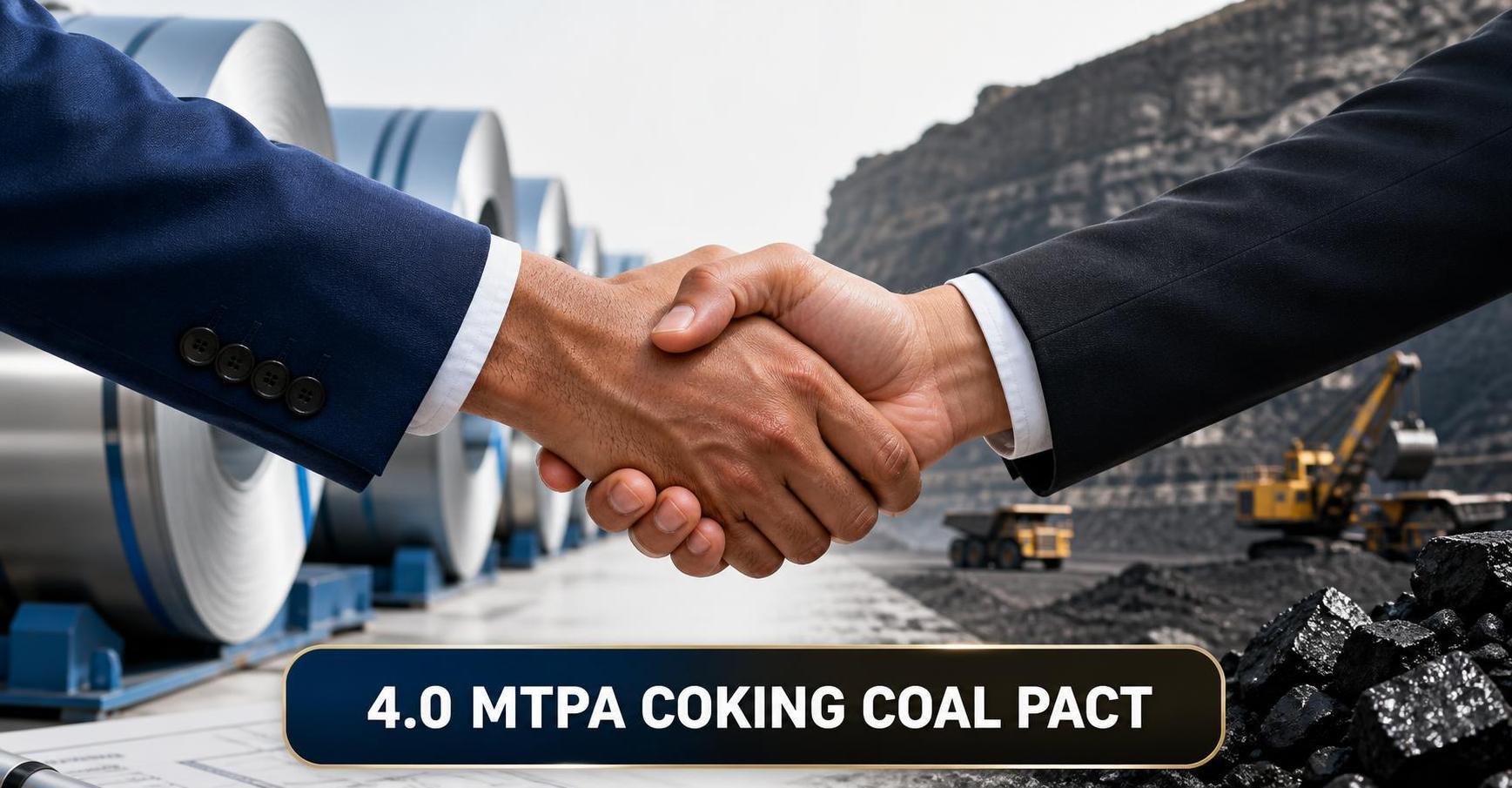
SAIL and BCCL will coordinate mining and overburden management at two West Bengal coal blocks with a combined peak capacity of 4 MTPA and Phase I extractable reserves of about 79 million tonnes.
✨ Key Takeaways
Steel Authority of India Ltd and Bharat Coking Coal Ltd have signed a memorandum of understanding to jointly develop and operate two coking coal blocks in West Bengal, a move aimed at improving domestic raw-material availability for the steel industry.
The arrangement covers SAIL's Indikatta Ramnagore Coal Block and BCCL’s East of Damagoria, or Kalyaneshwari, Coal Block. Together, the blocks have a combined peak rated capacity of 4.0 million tonnes per annum, while Phase I is estimated to hold around 79 million tonnes of extractable reserves.
The agreement proposes an integrated mining model in which coal extraction and overburden management will be coordinated between the adjoining blocks. During Phase I, mining will be undertaken at the Kalyaneshwari block, while overburden dumping will take place at the Ramnagore block. The arrangement will be reversed in Phase II.
The coordinated approach could help address a key operational requirement in opencast mining, where the management and disposal of overburden can influence mine planning, extraction efficiency and the pace of development. The announcement, however, did not disclose investment commitments, development timelines or the proposed production start date for the blocks.
For BCCL, the 4.0 MTPA combined capacity is meaningful in relation to its existing operations. The capacity is equivalent to about 11.3 per cent of the company’s raw coal production of 35.521 million tonnes in FY2025-26, based on a calculation using its reported annual output. BCCL produced 33.702 million tonnes of coking coal during the year, underlining the strategic fit of the proposed development with its coking coal-focused business.
The MoU also reinforces BCCL’s stated strategy of expanding domestic coking coal availability and supporting import substitution for Indian steelmakers. BCCL, a Coal India subsidiary, operates mines in the Jharia and Raniganj coalfields and has washing capacity for converting raw coal into higher-quality washed coking coal for steel-sector customers.
SAIL is already among BCCL’s major customers. In FY2025-26, SAIL, Damodar Valley Corporation and Uttar Pradesh Rajya Vidyut Utpadan Nigam together accounted for 57.52 per cent of BCCL’s revenue from major customers. The new arrangement could therefore deepen an existing commercial linkage between the two central public sector enterprises while giving SAIL greater visibility over domestic coking coal supply.
The project comes after a weaker FY2025-26 for BCCL, when revenue from operations declined to Rs 13,644.78 crore from Rs 15,917.21 crore a year earlier. Profit after Tax fell to Rs 128.28 crore from Rs 1,240.19 crore, alongside lower coal production and offtake. Developing additional coking coal resources is consistent with management’s previously stated priority of raising output capacity and improving coal quality.
Execution will remain dependent on mining development, environmental and statutory approvals, land access and evacuation infrastructure. BCCL has previously identified geological complexity, land-acquisition challenges, mine fires and environmental considerations as operational constraints across its mining portfolio.
As of 3.44 pm on September 25, 2026, BCCL shares were trading at Rs 32.04, down 0.25 per cent from the previous close. The stock was about 24.8 per cent below its 52-week high of Rs 42.62 and around 7.0 per cent above its 52-week low of Rs 29.94.
Disclaimer: The article is for informational purposes only and not investment advice.