Should You Buy a House or Rent One?
 Join Us
 Follow Us
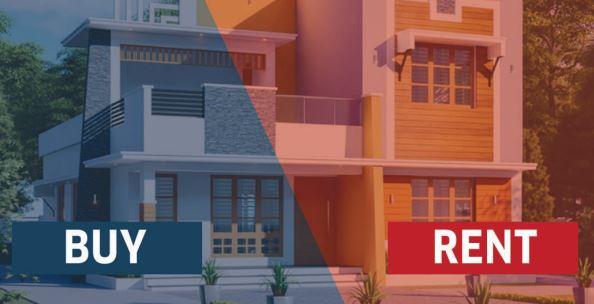
You probably have read a number of articles on how renting a property is better than purchasing one. In fact, there are several calculators accessible online that explain the process. However, there are advantages and disadvantages to both renting and purchasing a home. In this article, Henil Shah discusses whether you should purchase or rent a home
✨ Key Takeaways
It is difficult to choose between purchasing and renting. It necessitates extensive financial and emotional planning. Some individuals take pleasure in their home ownership, whilst others prefer to live in leased housing to avoid long-term financial obligations. Buying property was difficult in previous decades, therefore individuals opted to rent. However, it is now a lot simpler due to housing finance. Now the most essential question is: what is the correct decision? Should you buy or rent a home? This choice is influenced by a number of things. Here are some factors to consider based on your financial objectives.
When it comes to purchasing your first home, you have two choices. You may either organise your own finances or obtain a housing loan from a financial institution. With whatever amount of self-funding, you will still need to save at least 20-40 per cent of the house’s basic price and you can borrow the balance. To pay the home loan EMIs, you must have a consistent source of income. You can purchase if you have money and a stable salary. If not, you should keep renting. It’s a smart idea to take your time building a credit history and increasing your money so that you may buy a property when you are ready.

Pros of Renting a House
⏩ Lower Rent —Rent will be less than the EMI on a property loan. In Pune, you may rent property worth ₹1 crore (3 BHK apartment) for ₹30,000 per month but the EMI with 20 per cent down and 8 per cent interest will be ₹60,000 per month for 30 years.
⏩ Down Payment — You do not need to save a substantial down payment early in your career. You just need to give a 2-3-month security deposit when renting.
⏩ No Allied Costs — You won’t have to pay property taxes, maintenance charges, repair bills, parking fees or anything else.
⏩ Ease of Job Shifting — If your profession requires you to relocate to a different city or country, you won’t have to worry about maintaining or renting your home.
⏩ Flexibility of Location — You may choose where to live based on its proximity to your business or school, lowering your transit expenditures.
Cons of Renting a House
⏩ Rent Rise — Aside from the annual increase of 8-10 per cent, the landlord can raise the rent at any moment or ask you to leave.
⏩ No Tax Benefits — Renting does not qualify for any tax breaks.
⏩ No Freedom — You have no choice to alter or make structural improvements to the house without the landlord’s permission.
⏩ Outflow after Retirement — When you retire and have no source of income, you will have to continue paying rent.
⏩ Society Limitations — You must follow the regulations of the society, which may include restrictions on pets, limited vehicles, and so on.

Pros of Buying a House
⏩ Building an Asset — Rent money may be used to pay the EMI on a home loan, allowing you to establish a longterm asset.
⏩ Tax Benefits — Section 24 allows you to deduct up to Rs 2 lakhs in interest paid on a self-occupied property, while Section 80C allows you to deduct up to Rs 1.5 lakhs in principal.
⏩ Low Interest Rates on Loan and Higher Appreciation — Home loan rates are currently low, ranging from 7-8 per cent. Property prices are expected to rise after dropping in the past few years. ⏩ No Worry of Shifting — You don’t have to worry about continuously moving if your landlord wants you to go.
⏩ No Landlord Issues — You don’t have to put up with the landlord’s whims when it comes to house upkeep, or quarrel over who pays for repairs, painting and other maintenance tasks.
⏩ Emotional Security — Having one’s own home brings calm and mental stability, as well as the flexibility to maintain it as one sees fit.
Cons of Buying a House
⏩ More Expensive — Purchasing a home is more expensive than renting. Aside from the purchase price, there are expenses for maintenance, property tax, renovation and repairs.
⏩ Illiquid Asset — Real estate has far lesser liquidity, which implies that if you need money right now, you cannot sell a property.
⏩ Depreciation — There is no certainty that property prices will always climb, as we have witnessed in recent years,
Commitment versus Freedom
Renting a residence allows you to move around freely. However, if you do not want to move, living in a leased house may be difficult if you are asked to do so. Your lease may be coming to an end, you may desire to move on, or your landlord may be selling the property and requesting you to vacate. Rent continues to rise, and if your income does not rise in tandem, you will be compelled to relocate to the outskirts of a city or town in search of a cheaper apartment. Buying a house, on the other hand, provides stability. You can stay anchored in one spot.
Your EMIs may be far greater than your rent, but they will be constant year after year. Buying a property also necessitates financial discipline in order to pay your EMIs on time. As a result, renting is simple now but becomes more difficult later in life, whereas buying will shock your finances at first but strengthen with time as you develop equity in your home. Living in your own home provides you and your family with independence and security, in addition to capital appreciation. It is your property, and you may enjoy it however you choose.
The Duration Factor
It is much easier to make a decision if you are clear about your criteria. For example, if you want to stay in one place for a long time, say 10-20 years, it makes sense to have your own house if you can afford it. You may compare rental expenses to EMIs. However, if your job needs you to relocate frequently, renting is preferable. Renting also allows you to enjoy low-cost housing, which frees up your money for investment and wealth accumulation. Buying a house for a short period of time and then reselling it after you move is challenging. Real estate is illiquid and difficult to dispose of.
Income and Higher Credit Score
Buying a property with a home loan necessitates timely payment of EMIs. You must have a consistent source of income and a solid job. You should also maintain a contingency fund to cover your loan EMIs for 6-12 months in case of a difficulty, such as job loss. However, if you have a transitory employment or an unpredictable income, it is best to live on rent until you are financially stable. A solid credit score is also required to borrow at a reasonable interest rate. If your credit score is poor, as for example less than 750, you may need to improve it before applying for a loan. Without a decent credit score, your loan may become more expensive and in the worst-case scenario, you may not be able to obtain it at all.
Opportunity Costs
Purchasing a home is one of the most significant choices you will make in your life. It necessitates an examination of your opportunity costs. You may be financially capable of purchasing a home, but doing so may come at the expense of other life objectives, such as educating your children. Consider how the decision affects other goals. You may still need to purchase the house. However, you must find a way to balance the opportunity costs so that your other goals may be met in due time.
Number Crunching
Understanding things using numbers helps clarify. So, consider the story of two buddies, Aakash Malhotra and Siddharth Shah. Aakash chose purchasing a property worth ₹1 crore with a down payment of ₹20 lakhs and the remainder paid by a home loan at 8 per cent interest for 30 years. Aakash’s equated monthly instalments (EMI) for the next 30 years would roughly be ₹60,000.

Siddharth, on the other hand, preferred renting a property worth ₹1 crore with a monthly rent of ₹30,000 and a security deposit of ₹1 lakh. Siddharth would end up paying ₹2.4 crore after 30 years if the rent increased by 5 per cent every year (gross). Siddharth would accumulate ₹2.01 crore if he invests ₹20 lakhs (which otherwise would have gone as a down payment for buying a house) in debt mutual funds at 8 per cent annualised returns. As a result, he would end up paying ₹40 lakhs (net).
Conclusion
Many personal finance experts believe that renting a property is preferable to purchasing one. In quantitative terms, this is undeniably accurate. After performing some math, it appears that when you buy a property, you end up paying more than when you rent. However, while this appears to be a good deal on paper, renting a property has its own set of drawbacks. As a result, while purchasing your dream house is a worthy objective, if you truly want to enjoy the sense of being at home, good planning is required.
Otherwise, you may own a property but have a large loan with insufficient funds for goals such as retirement or your children’s education, which may bring more worry than enjoyment. So, consider renting in the short term while purchasing in the long term. Buy when you have the funds, credit score and income stability, as well as the certainty that you will stay in one place. Till then, renting makes more sense.