Suzlon Energy
 Join Us
 Follow Us
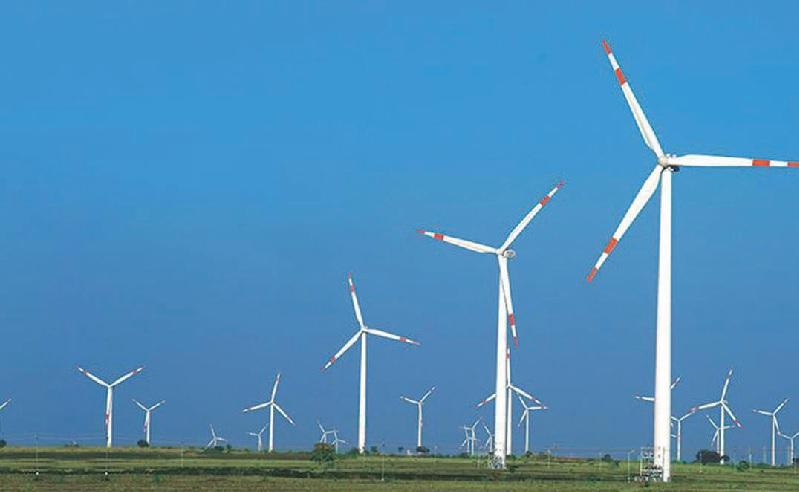
Having emerged from the dark woods when it had turned into a debt-ridden company, Suzlon Energy Limited is now back to commanding a powerful performance and investors would do well to keep their sights on how it restructures its growth story
✨ Key Takeaways
Having emerged from the dark woods when it had turned into a debt-ridden company, Suzlon Energy Limited is now back to commanding a powerful performance and investors would do well to keep their sights on how it restructures its growth story
Suzlon Energy Limited is primarily focused on manufacturing and operations and maintenance services (OMS) of wind turbine generators and related components. Having more than two decades of experience, it has scripted OMS best practices, thus setting industry benchmarks that ensure operational efficiency across various climatic zones. The company’s global OMS team is custodian of a fleet of more than 9,470 wind turbines across 17 countries on six continents. Suzlon Energy Australia and Suzlon South Africa command the biggest international presence. In Australia, the company services the contract of Hallett and Hallett Hill Wind Farms, a leading energy service provider.
Cookhouse Wind Farm, South Africa’s largest wind farm, utilises 136.8 MV of Suzlon South Africa’s turbines which helps them produce green electricity power for 94,000 low income and 43,000 medium income South African homes every year. Suzlon Energy has had a presence for more than 25 years. It has been a market leader in the wind energy segment. The company has close to 19,500 megawatts of installed wind energy capacity with 5,500 people on board and a market share in India on a cumulative basis of over 33 per cent, which means one out of three turbines in India are ‘Suzlon’ brand turbines.
Unlike some of their competitors who make turbines for the entire world and therefore different wind regimes, Suzlon Energy’s turbines are designed for Indian wind conditions. The company’s technical design is adapted for Indian conditions and therefore, in terms of efficiencies and outputs, Indian ‘Suzlon’ brand wind turbines command technology leadership. In addition to that, it also has a vast customer base which includes Enel Group, Sembcorp Industries, Adani Limited, Aditya Birla, Bajaj Group, ONGC, Shree Cement, Torrent Power, Tata Power, and others.
Financials
The company recently released its consolidated Quarterly Results for September 2022. The net revenue is up by 6.16 per cent at ₹1,430 crore on a year-on-year basis. The EBITDA level was up by 8.33 per cent from the previous quarter last year, standing at ₹208 crore. The company reported net profit of 56 crore after witnessing net loss of ₹13 crore from the corresponding quarter last year. Post the successful rights issue, the company was able to reduce its debt by ₹600 crore with the net debt currently at ₹2,139 crore. This will of course bring down the interest cost. After a period of five years this has been the first quarter when the company has been able to report positive PAT on a purely operational basis.
In Q2FY23, the company posted its highest Q2 revenue since FY19 with strong volume growth. Some part of the commodity price impact was passed on to customers to minimise margin pressure. The company maintained strong control over fixed costs despite inflationary trends. It faces healthy traction in the order pipeline in addition to a sizeable order backlog with the net worth significantly improving as compared to March 2022. It has posted a healthy balancesheet with reduced debt post rights issue due to which the finance costs are reduced significantly on YoY basis. The company’s wind order book as on September 30, 2022 was 759.2 MW, which constitutes central auctions of 417 MW, state auctions of 56.7 MW and captive, retail and PSUs of 284.6 MW.

Additionally, post Q2FY23 the company has also announced new orders worth 193.2 MW and is constantly in discussion to beef up the already strong order pipeline. As regards the shareholding pattern, the promoter holding stands at mere 14.50 per cent with FIIs holding 6.94 per cent, DIIs holding 5.81 per cent and retail investors having more than 72 per cent shares of the company. The promoters have also pledged their shares with total equity pledged with SBICAP Trustee at 9.92 per cent. Earlier, a group of 16 banks, led by State Bank of India (SBI), sold more than ₹8,000 crore of Suzlon Energy loans to Rural Electrification Corporation (REC) and state-owned Indian Renewable Energy Development Agency (IRDEA).

Sector Highlights
Due to its size and tremendous potential for growth and development, India’s energy demand is anticipated to rise more than that of any other nation over the next few decades. The majority of this additional energy demand must therefore be satisfied by renewable, low-carbon sources. An important turning point in the global fight to tackle climate change has been reached with India’s announcement that it plans to achieve net zero carbon emissions by 2070 and meet 50 per cent of its electricity needs from renewable sources by 2030. The Indian renewable energy sector is the world’s fourth most appealing renewable energy market.
As of 2020, India was ranked fourth in wind power, fifth in solar power and fourth in renewable power installed capacity. The installed capacity of renewable power generation has grown rapidly in recent years with a CAGR of 15.92 per cent between FY16 and FY22. India is a market with the fastest growth in renewable energy with new capacity additions expected to double by 2026. With increased government support and improved economics, the sector has become more appealing to investors. As India attempts to meet its own energy demand, which is expected to reach 15,820 TWh by 2040, renewable energy will play an important role. India’s ambitious renewable energy targets are transforming the country’s power sector.
The demand for energy to power homes, businesses and communities is being fuelled by rising population and widespread electrification in rural homes. Clean energy will reduce pollution levels as villages become self-sufficient in clean energy use. India’s renewable energy sector is expected to boom in 2022 with a likely investment of USD 15 billion this year as the government focuses on electric vehicles, green hydrogen and solar equipment manufacturing. For the past few years, thegovernment has prioritised renewable energy, which has been a huge success. The government’s five-point agenda includes a target of 500 giga tonnes of renewable energy by 2030, carbon reduction, a net zero target of 2070 and a 50 per cent increase in energy mix by 2030.

Outlook
Previously, investors who had been in the market for a while would recall Suzlon Energy being placed in the same category as Larsen and Toubro and being a component of Nifty. Since then, the stock has experienced a massive correction and many retail investors have joined the burning forest. With numerous corporate issues and a massive pile of debt, the company was unable to maintain its position at the top. However, with new management in place, things appear to be interesting in terms of how they are constantly manoeuvring the business back to its normal strengths. It is expected that by 2040 renewable energy will generate approximately 49 per cent of total electricity as more efficient batteries will be used to store electricity, thus lowering solar energy costs by 66 per cent compared to the current costs.
The use of renewable energy instead of coal will save India₹54,000 crore per year. In the period 2020 and 2025, approximately 15,000 MW of wind and solar hybrid capacity is expected to be added. The company understands the sector’s strengths and opportunities and has the necessary manufacturing capacities that will not necessitate significant capital expenditure for the next generation of turbines. According to the Central Electricity Authority (CEA), renewable energy generation will increase from 18 per cent to 44 per cent by 2029-30 while thermal energy generation will decrease from 78 per cent to 52 per cent.
The CEA also predicts that India’s power demand will rise to 817 GW by 2030. The government allocated ₹19,500 crore in the Union Budget for a PLI scheme to boost the production of high-efficiency solar modules. The government’s consistent initiatives and support could be the company’s key growth trigger. Suzlon Energy has definitely recovered from where it was 2-3 years ago in terms of business. The fact that the company has taken initiatives to reduce debt is commendable. However, it still has a long way to go and everything depends on how it performs in the coming quarters. The management has expressed optimism about the overall business situation and the sector. As a result, we recommend HOLD.