Tata Group Crisis Explained: Why Tata Trusts And The Board Are At Odds
 Join Us
 Follow Us
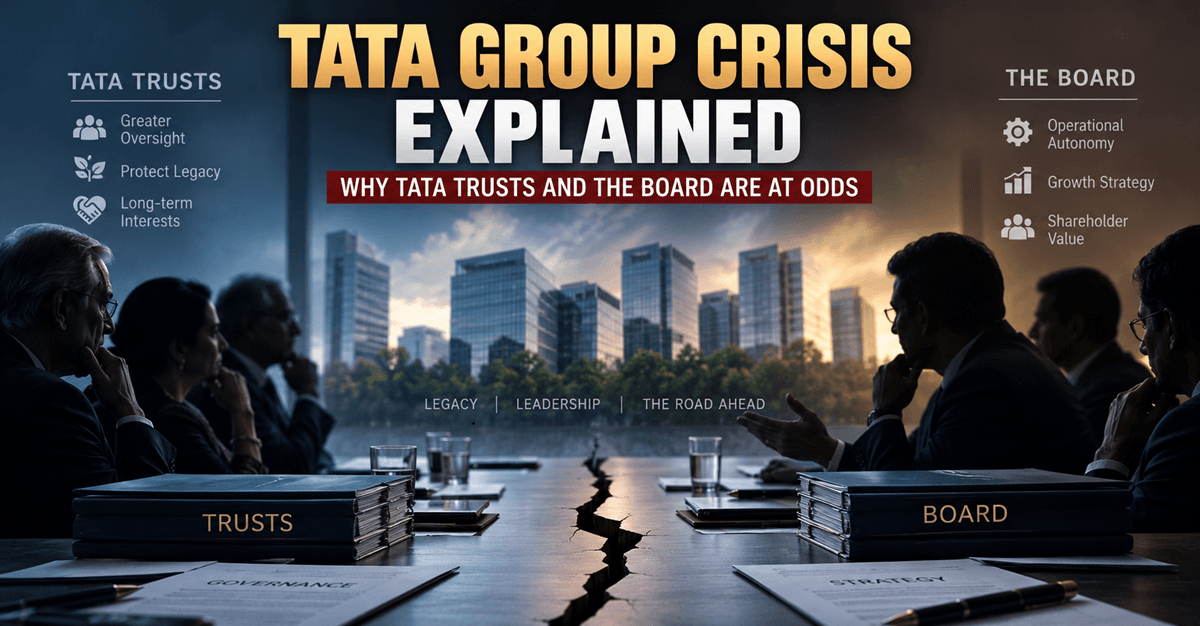
A dispute over N Chandrasekaran’s reappointment has brought Tata Sons’ governance structure into focus, while the RBI’s regulatory position has added another layer to the issue.
✨ Key Takeaways
A dispute over N Chandrasekaran’s reappointment has brought Tata Sons’ governance and proposed listing into focus. Here is what has happened so far.
A boardroom dispute at Tata Sons has put the Tata Group’s holding company in the spotlight. The issue is not about the performance of a particular listed Tata company. It is about who should lead Tata Sons and what the company should do about a possible stock market listing.
Looking for High-Growth Stocks Below ₹100?
Explore DSIJ’s Penny Pick - a research-driven service focused on uncovering fundamentally strong low-priced stocks with long-term growth potential.
Download Service BrochureWhy Is Chandrasekaran’s Reappointment Being Questioned?
N Chandrasekaran’s current term as Tata Sons chairman ends in February 2027. According to Tata Trusts, he had indicated in August that he would not seek another term.
However, at the September 17 board meeting, Tata Sons approved another five-year term for Chandrasekaran. Tata Trusts Chairman Noel Tata opposed the resolution. The board ultimately approved it after a casting vote.
Tata Trusts has challenged the validity of the decision. It argues that the company’s Articles of Association require support from its nominated directors for certain important matters and that a casting vote cannot override those provisions.
What Does Tata Trusts Have To Do With Tata Sons?
Tata Trusts collectively own around 66 per cent of Tata Sons, making them the largest shareholder. The Shapoorji Pallonji Group holds around 18.4 per cent.
This ownership structure explains why the Trusts have a significant role in the governance of Tata Sons. The current disagreement has therefore become a matter of shareholder rights as well as boardroom governance.
Why Is The Listing Issue Creating More Tension?
The dispute is also linked to the future of Tata Sons. The Reserve Bank of India has classified Tata Sons as an upper-layer NBFC. Tata Sons had sought to surrender its Core Investment Company registration, but the RBI rejected the request on September 11.
Following this, the Tata Sons board moved towards exploring a public listing. Tata Trusts, however, has opposed the move and has asked the company to examine alternatives.
The Shapoorji Pallonji Group has taken a different position and supports a listing. Tata Trusts has also disclosed a proposal involving monetisation of part of the SP Group’s Tata Sons stake, with the proposed transaction aimed at raising at least Rs 25,000 crore.
What Happens Next?
As of September 21, the disagreement remains unresolved. Tata Trusts continues to maintain that Chandrasekaran’s reappointment was not validly approved, while the board has backed the decision. The listing question is also still open, with Tata Sons needing to address the RBI’s regulatory position.
The matter could eventually move beyond the boardroom if the two sides cannot reach an agreement. For now, the key developments to watch are the response from Tata Sons, Tata Trusts and the RBI, along with any legal proceedings concerning the board’s decision.
Disclaimer: The article is for informational purposes only and not investment advice