Trump Targets Tablets
 Join Us
 Follow Us
All sectors echoed this volatile trajectory, but the pharmaceutical sector stood out.
✨ Key Takeaways
While Donald Trump has paused tariffs for now, signals suggest the pharma sector may not be spared if they return. With Indian pharma companies having nearly ₹1 lakh crore exposure to the U.S. market, investors could feel the heat. Mandar Wagh explains the resilience of the Indian pharmaceutical industry, how the U.S. drug shortage is becoming India’s advantage, why the sector might still come under pressure, and which companies could be affected or benefit as India stands to gain more than it loses amidst the ongoing U.S.-China trade tensions
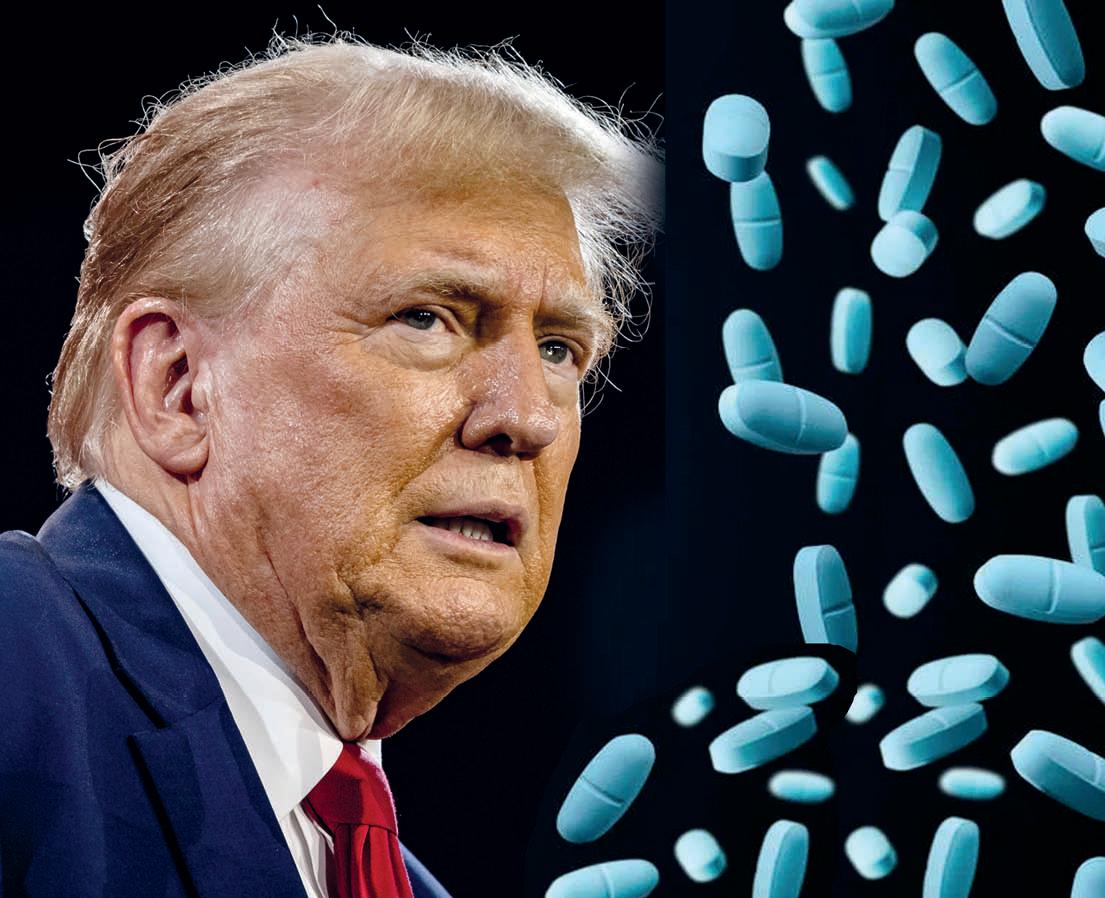
Global markets have recently experienced extreme volatility, initially tumbling heavily after the U.S. President Donald Trump announced sweeping reciprocal tariffs on several countries — including a steep 26 per cent tariffs on Indian goods. However, markets made a surprising turnaround following his decision to impose a 90-day pause on the tariffs, offering much-needed relief across the board. All sectors echoed this volatile trajectory, but the pharmaceutical sector stood out. It initially caught global attention after being exempted from the tariff list.
The relief was short-lived, though, as a sudden announcement hinted that “major” tariffs on pharma imports were also on the horizon. This unexpected shift sent ripples of concern across the industry and rattled investor sentiment. Considering the pharmaceutical sector's significant contribution to India’s export basket, any future tariff imposition could have farreaching consequences. It becomes crucial to assess whether the current strong performance of Indian pharma companies can withstand these headwinds. Are there new growth opportunities for India in the face of disrupted global trade flows? And how does the road ahead look for the Indian pharmaceutical industry? Let’s take a look!
India: Pharmacy of the World
India’s pharmaceutical industry has emerged as one of the strongest pillars of the country's economy and a significant player in the global healthcare ecosystem. Valued at around USD 65 billion in 2024, the industry is projected to grow at a CAGR of 10-12 per cent, potentially reaching USD 130 billion by 2030. The Indian pharma industry boasts a rich portfolio of over 60,000 generic brands, encompassing a wide range of products—generic medicines, over-the-counter drugs, Active Pharmaceutical Ingredients (APIs), vaccines, contract research and manufacturing, biosimilars, and biologics. It ranks third globally in terms of production volume and fourteenth in value.
India plays a crucial role in global healthcare system as the largest supplier of generic medicines, accounting for 20 per cent of global exports by volume, and is the world’s largest vaccine producer, contributing to more than 50 per cent of global vaccine output. The country also holds the distinction of being the twelfth largest exporter of medical goods, firmly cementing its reputation as the ‘Pharmacy of the World’. The industry's relevance was further magnified during the COVID-19 pandemic when India emerged as a key global supplier of vaccines and essential medicines, earning global recognition and strengthening international ties.
India is rapidly embracing technology to elevate its pharmaceutical industry and maintain its global leadership in generics and vaccine production. Post-pandemic, Indian pharma companies have accelerated digital transformation— adopting Artificial Intelligence (AI), Machine Learning, and advanced data analytics to enhance drug discovery, streamline R&D, and reduce time-to-market. Technologies like blockchain are being used to ensure supply chain transparency, product traceability, and patient safety. Nanotechnology is paving the way for precision medicine, while bioprinting holds promise for drug testing and regenerative medicine. With increasing government and private sector collaboration, India is positioning itself as a hub for affordable, tech-driven healthcare—creating new growth opportunities for investors.
America’s Shortage, India’s Supply Advantage
The United States is currently facing one of the most severe drug shortages in over a decade, with more than 300 medications across 22 therapeutic categories in critically short supply. This crisis stems from a mix of factors, including increased regulatory scrutiny, raw material shortages, and the withdrawal of low-margin generic drugs by global manufacturers. Amidst this disruption, Indian pharmaceutical companies are emerging as crucial players. India is a dominant exporter of generics and active pharmaceutical ingredients (APIs) to the U.S. market.
Leveraging their cost-efficient production capabilities, robust compliance track records, and scalable manufacturing infrastructure, Indian companies stepping in to bridge the supply gap. This surge in demand presents a golden opportunity for Indian drugmakers to expand their market share, reinforce global relevance, and unlock fresh revenue streams—cementing their position in the world's largest pharmaceutical market during a time of strategic importance. While India’s pharmaceutical imports from the U.S. remain below the USD 1 billion mark, U.S. imports from India have surged past USD 12 billion, showing a significant surge over the past 2-3 years.

the U.S. President Donald Trump has been vocal about his belief that previous administrations allowed other nations to exploit the U.S. through unfair trade deals and higher tariffs. He often stated that “old leaderships were not good for America” and accused trading partners of “robbing” the U.S. by benefiting from one-sided agreements. This viewpoint has been the foundation of his aggressive tariff policies, particularly targeting countries with significant trade surpluses. In Trump’s view, reciprocal tariffs are essential to protect American industries, reduce trade deficits, and rebuild domestic manufacturing capabilities.
The pharmaceutical sector has emerged as a key battleground, given the U.S.'s considerable dependence on imports from countries like India and China. By imposing tariffs on pharma imports, Trump aims to encourage local production, ensure better supply chain security, and generate jobs within the U.S. economy—especially in critical sectors like healthcare that are vital to national interest. While few anticipated that Trump would extend tariffs to the pharmaceutical sector, the move has materialized, raising the pressing question: what lies ahead for global pharma trade and Indian exporters?
₹1 Lakh Crore at Stake in U.S.
Indian pharmaceutical companies have significant exposure to the U.S. market, which remains their largest export destination. With over 30 per cent of their total exports directed to the U.S., Indian companies play a vital role in supplying affordable generics and Active Pharmaceutical Ingredients (APIs). Companies like Sun Pharma, Dr Reddy’s, Zydus Lifesciences, Cipla, and Aurobindo Pharma have established a strong presence through U.S. FDA-approved facilities and extensive product pipelines. However, this dependency also makes them vulnerable to regulatory risks, pricing pressure, and evolving trade policies, especially under tariff-driven regimes.

While analysing FY24 financials, we found that Indian pharmaceutical companies collectively have an exposure of nearly ₹1 lakh crore to the U.S. market, based on their net sales and revenue contribution from the region. Presented above is a list of the top 20 listed Indian pharma companies with the highest revenue exposure to the U.S. market—shedding light on the key players positioned to gain or face challenges amid evolving global trade dynamics. Let’s examine how the evolving tariff scenario has influenced the stock performance of these key pharmaceutical players.

The first half of FY25 marked an impressive rally on Dalal Street, with benchmark indices BSE Sensex and Nifty 50 scaling new all-time highs. Among the best-performing pockets, pharmaceutical stocks led the charge, riding strong bullish momentum. The Nifty Pharma index soared nearly 25 per cent during H1FY25, buoyed by consistent optimism in the sector, which stemmed from robust quarterly earnings, accelerating digital transformation, and ever-rising demand owing to the essential nature of healthcare.
However, the tides shifted entering the second half. Since October 2024, Indian equity markets have faced significant headwinds, dragged down by weakening macroeconomic indicators, decelerating growth trends, overvalued stock prices, and persistent foreign institutional investor (FII) outflows. In this challenging environment, the pharma sector stood out for its resilience. While several sectoral indices saw individual stocks crashing by as much as 40-50 per cent, pharmaceutical counters managed to limit their downside to a more reasonable 15-20 per cent, underscoring their defensive appeal.
But even pharma wasn’t immune for long. Despite holding up over the past six months amid broader market weakness, the sector witnessed a sharp correction within just 5–6 trading sessions in April. The trigger? A sudden move by U.S. President Donald Trump, announcing fresh tariff measures on pharma imports. Though stocks recovered partially following reports of a 90-day pause in tariff implementation, the episode clearly highlighted the sector’s vulnerability to geopolitical and policy shocks. On the flip side, it's equally crucial to assess the competitive edge we hold during challenging times. Let’s take a look.
India’s Edge in the Tariff War
The escalating trade tensions between the United States and China, particularly with regard to pharmaceutical tariffs, have opened a strategic window of opportunity for India’s pharmaceutical sector. As the U.S. seeks to diversify its supply chains and reduce dependence on China — historically its largest supplier of active pharmaceutical ingredients (APIs) and key drug formulations — India stands out as a credible, scalable, and quality-driven alternative.
With tariff barriers impacting the cost competitiveness of Chinese pharma products, U.S. companies are expected to increasingly turn to Indian drug makers for both APIs and finished dosage forms. The domestic API ecosystem is also undergoing a transformation. Encouraged by government schemes, Indian companies are investing in backward integration to reduce dependence on Chinese imports. This realignment could result in stronger export orders, deeper partnerships with U.S. pharma giants, and even potential investment inflows aimed at capacity expansion in India.
Several states are rapidly developing pharma parks with advanced infrastructure, creating scale and efficiency advantages. Additionally, government initiatives such as the Production Linked Incentive (PLI) scheme and regulatory reforms are further strengthening India’s readiness to capture this global opportunity. Policy support goes beyond PLI schemes, including fast-track approvals, tax incentives, and pharma-focused trade discussions with major economies.
Meanwhile, shifting U.S. policies are encouraging “friend-shoring” — sourcing critical supplies from trusted partners like India. This creates long-term visibility for Indian exporters. Indian pharma players with U.S. FDA-approved facilities and a strong generic portfolio are particularly wellpositioned to benefit. Additionally, Indian contract manufacturing and development services are seeing rising demand as foreign players outsource R&D and production to manage costs and geopolitical risks. Moreover, Indian pharma’s digital transformation—ranging from AI-enabled drug discovery to automation in manufacturing—adds an innovation edge that appeals to global clients.
While the geopolitical situation remains fluid, one thing is clear: the tariff war is not just a short-term disruption but a longterm structural shift in global pharma supply chains. If leveraged effectively, this shift could translate into sustained growth, enhanced global presence, and stronger financial performance for Indian pharma companies in the years to come.
Conclusion
As trade tensions escalate and policy shifts grow more unpredictable, the Indian pharmaceutical industry finds itself at a strategic crossroads. On one hand, U.S. tariffs could pose near-term risks for exporters, but on the other, India’s reputation as a reliable, high-quality, and cost-efficient pharma supplier is gaining unprecedented momentum. In the evolving global order, where the U.S. is actively seeking to diversify away from China, India stands to gain more than it loses. For investors, this is a time for selective optimism. Rather than adopting a blanket approach, they should focus on companies with strong U.S. FDA compliance records, backward integration in APIs, and robust global supply chains. These companies are likely to be less impacted. Investors can also consider shifting focus to domestic-focused pharma companies that generate a majority of their revenues from the Indian market.
These players are less vulnerable to tariff-related uncertainties and benefit from rising healthcare demand, government initiatives, and expanding rural access—offering a more stable investment avenue amid global trade tensions. Mid-Cap companies investing in digital innovation, biosimilars, and CDMO services may offer multi-year growth potential. While volatility may persist in the short term, patient investors with an eye on structural trends could find India’s pharma story to be a rewarding long-term play.