Union Budget 2026: Focus on Rare Earth Magnets, Carbon Capture, Utilisation and Storage, and Critical Minerals
 Join Us
 Follow Us
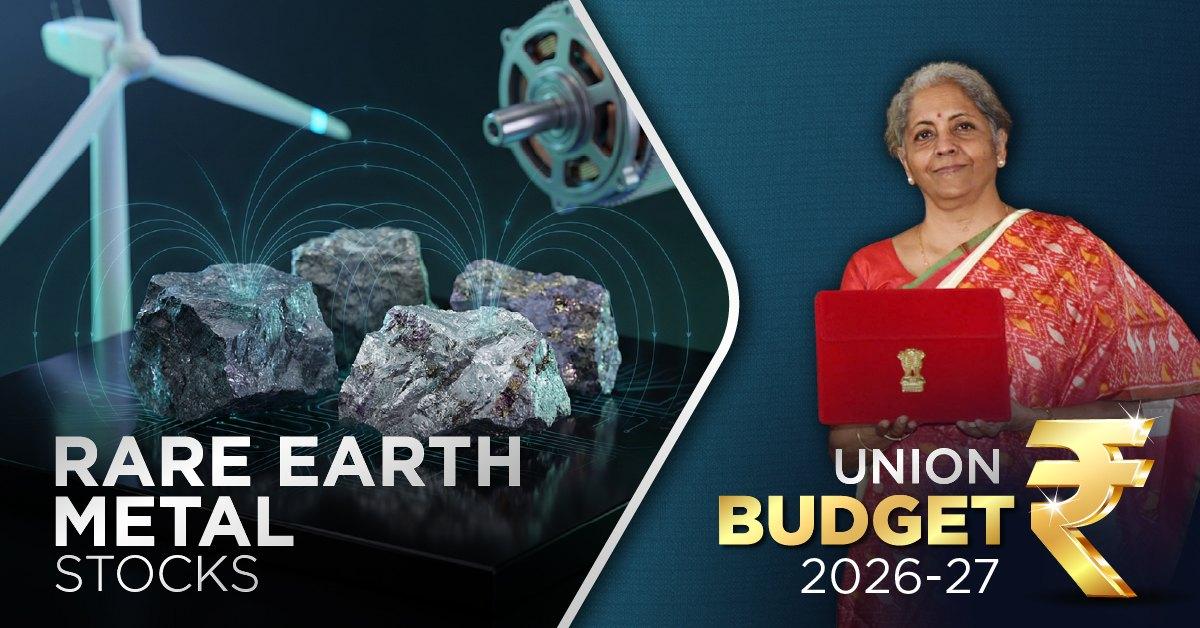
India’s metals, minerals, and gems ecosystem is entering a new phase—less about exporting raw material, and more about building processing, research and manufacturing capabilities at home.
✨ Key Takeaways
In Union Budget 2026, Finance Minister Nirmala Sitharaman’s message is clear: secure supply chains for critical minerals, push value addition inside India, and make heavy industry cleaner without slowing growth.
Rare earths move to the centre stage
A Scheme for Rare Earth Permanent Magnets, launched in November 2025, is now being followed up with a bigger, more targeted push. The Budget proposes support for the mineral-rich States of Odisha, Kerala, Andhra Pradesh, and Tamil Nadu to establish dedicated Rare Earth Corridors—covering mining, processing, research, and manufacturing.
Why this matters: rare earth permanent magnets are a critical input for the modern economy—think EV traction motors, wind turbines, consumer electronics and several high-precision industrial applications. Corridors that link resource + processing + R&D + manufacturing can help reduce import dependence and create a domestic ecosystem that captures more value per tonne.
Cleaner industry gets a ₹20,000 crore runway
Aligning with a roadmap launched in December 2025, the Budget proposes an outlay of ₹20,000 crore over five years to scale up Carbon Capture, Utilisation and Storage (CCUS) technologies. The focus is on five hard-to-abate sectors: power, steel, cement, refineries and chemicals.
Why it matters: CCUS is not a quick fix, but it is becoming an important lever for industries that cannot decarbonise easily through electrification alone. If executed well, it can support India’s climate commitments while keeping domestic production competitive in a world that is steadily tightening carbon-related standards.
Customs relief to boost domestic processing
On critical minerals, the Budget proposes a basic customs duty exemption on the import of capital goods required for processing critical minerals in India.
Why it matters: processing is where value is created—and also where costs can be a barrier. Lowering the duty burden on specialised equipment can make projects more viable, encourage capacity creation, and support downstream industries that rely on a stable domestic supply.
Infrastructure remains the steady demand engine.
Even as the Budget sharpens its focus on critical minerals and cleaner industrial technologies, the broader push on transport corridors, ports, rail connectivity and Logistics upgrades indirectly supports base metal consumption. Large public works typically translate into sustained demand for steel, cement-linked metals, aluminium and copper through higher requirements for structures, transmission, rolling stock, warehousing, and urban utilities. For the metals and minerals ecosystem, this matters because it helps keep the domestic demand cycle resilient—providing an anchor even when global commodity cycles turn volatile.
Companies to focus on: Gujarat Mineral Development Corporation, Tata Steel