Vedanta Ltd.
 Join Us
 Follow Us
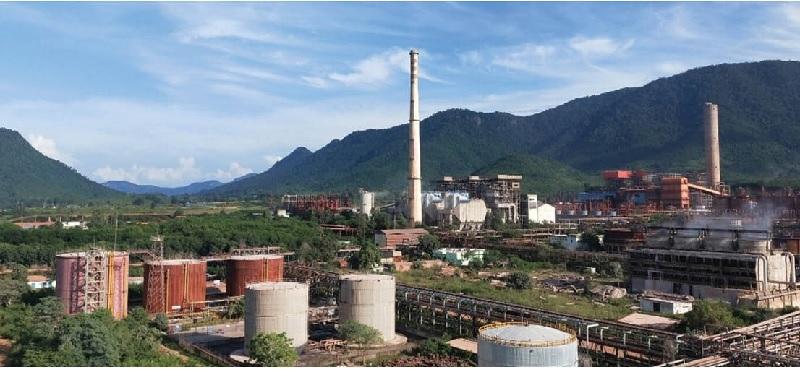
Vedanta Limited, a subsidiary of Vedanta Resources Limited, is a prominent global natural resources’ company with a presence in India, South Africa, Namibia, Liberia, the UAE, Korea, Taiwan and Japan.
✨ Key Takeaways
With a debt to equity ratio of 2.04, Vedanta relies significantly on debt for financing, which can increase both potential returns and risks
Vedanta Limited, a subsidiary of Vedanta Resources Limited, is a prominent global natural resources’ company with a presence in India, South Africa, Namibia, Liberia, the UAE, Korea, Taiwan and Japan. It operates across a diverse range of sectors, including oil and gas, zinc, lead, silver, copper, iron ore, steel, nickel, aluminium, power and glass substrate, and is also venturing into semiconductors and display glass. Over the past two decades, Vedanta has made substantial contributions to national development.
At the heart of Vedanta’s approach lies a commitment to governance and sustainable development, with a strong emphasis on health, safety and environmental considerations. The company has established a comprehensive framework to lead in ESG (environmental, social and governance) practices within the natural resources’ sector. Vedanta is dedicated to achieving net-zero carbon emissions by 2050 or earlier and has allocated USD 5 billion over the next decade to expedite this transition. Additionally, giving back to local communities is ingrained in Vedanta’s ethos as it actively strives to improve the wellbeing of these communities.

Sector Overview
The Indian economy has outperformed global expectations, positioning itself as a beacon of economic promise in 2023. The International Monetary Fund (IMF) predicts that India will continue to shine, potentially contributing a substantial 15 per cent to global GDP growth. This impressive growth trajectory follows an estimated 6.8 per cent expansion in FY 2023, cementing India’s status as one of the fastest-growing major economies. In FY 2024, the Indian economy is projected to maintain its upward trajectory with a growth rate of 5.9 per cent.
In the realm of aluminium, the global demand is on a steady rise, set to achieve a compound annual growth rate (CAGR) of approximately 3 per cent. By 2030, global aluminium demand is expected to reach 122 million tonnes, up from 96 million tonnes in 2022. This surge in demand can be attributed to various factors, including the push for decarbonisation in transportation and packaging, increased utilisation in renewable energy, and the growing popularity of electric vehicles.
Moving on to zinc, the global demand is set to increase by 3.5 per cent in 2023, primarily due to elevated consumption in China and India. India’s zinc demand is expected to surge by an impressive 10 per cent, driven by infrastructure development and the automobile sector. Notable contributors include Indian Railways’ expansion initiatives and infrastructure projects encompassing roads, power generation, transmission and 5G networks. Hindustan Zinc Limited (HZL), India’s largest primary zinc producer, is a major player, holding a substantial 77 per cent share of the domestic market.
Copper is also poised for growth in 2023. A global economic rebound, coupled with resurgence in China’s construction and automotive sectors, will fuel copper demand, potentially resulting in a supply deficit. China’s refined copper consumption is projected to grow by 2.5 per cent, while that of India is expected to surge by a remarkable 12.5 per cent. India’s long-term outlook indicates a rising total copper demand, reaching 2.8 million tonnes by 2030, driven by sectors like construction, manufacturing, transportation and consumer durables, with electric vehicles (EVs) playing a pivotal role.

Financial Overview
Looking further towards the financial performance of Vedanta, in Q1FY24 on a consolidated basis the company reported revenue of ₹ 33,342 crore which declined by 13 per cent as compared to Q1FY23, while the EBITDA of the company also declined by 36 per cent and stood at ₹ 6,966 crore as compared to Q1FY23. Similarly, the net profit of the company dipped 41 per cent to ₹ 3,308 crore as compared to Q1FY23. Moreover, the EBITDA margin of the company has declined by 800 bps from 29 per cent to 21 per cent on a YoY basis as the prices of commodities significantly dropped from Q1FY22.
On an annual consolidated basis, in FY23, Vedanta reported revenue of ₹ 150,159 crore which was an increase of 11 per cent from ₹ 135,332 crore in FY22 while the EBITDA of the company stood at ₹ 37,273 crore, which declined by 21 per cent from ₹ 47,424 crore in FY22. Similarly, the net profit of the company also declined by 39 per cent and stood at ₹ 14,503 crore as against to ₹ 23,709 crore in FY22. The EBITDA margin on an annual basis also declined 1,000 basis points to 25 per cent from 35 per cent in FY22.
In terms of Vedanta’s financial health, while focusing on liquidity and solvency the key ratios reveal that the company has an interest coverage ratio of 4.26, indicating that it can comfortably meet its interest payments. However, with a debt to equity ratio of 2.04, Vedanta relies significantly on debt for financing, which can increase both potential returns and risks.
Furthermore, a current ratio of 0.69 suggests potential liquidity challenges, as it falls below 1, indicating the company may have difficulty meeting short-term obligations. While the interest coverage is strong, the high debt level and low current ratio raise concerns about solvency and liquidity.
Moreover, an internal debt between related companies has been replaced with an external debt, resulting in a foreign exchange gain. This gain has subsequently been distributed as dividend. Additionally, when examining Vedanta’s financial performance, several other critical metrics stand out. The company boasts a ROE of 27.7 per cent. The ROCE is at 21.3 per cent, illustrating its efficiency in generating returns from all invested capital, including debt, while the return on assets (ROA) of 7.6 per cent signifies the company’s ability to generate profits from its total assets and the asset turnover ratio, which is at 0.77 times, indicates that for every dollar of assets, the company generates 77 cents in revenue.
Outlook
VEDL has recently announced its plan to separate its existing business divisions into six distinct and specialised companies. The primary objective behind this initiative is to unlock value for stakeholders, attract strategic investments, enhance capabilities and ensure greater transparency. The anticipated completion of this demerger is expected within the next 12-15 months, pending requisite approvals from shareholders, lenders, creditors and regulatory authorities. The demerger will follow a straightforward vertical split approach, wherein shareholders will receive one additional share of the newly listed entities for every one share held in VEDL. Importantly, VEDL will retain its listing status and will continue to include the newly proposed semiconductor and display divisions, while also serving as the holding company for Hindustan Zinc Limited.
The existing company will be split into Vedanta Aluminium, Vedanta Oil and Gas, Vedanta Power, Vedanta Steel and Ferrous Materials, Vedanta Base Metals and VEDL. In Q1FY24, Vedanta achieved a robust operational performance marked by record aluminium production and lower production costs. The company anticipates a consistent and progressive performance enhancement throughout the fiscal year. A strategic review of its iron and steel business is in progress, with a 3-6-month timeline for evaluation and decision-making.
Furthermore, Vedanta has made a strategic move into the semiconductor and display fabrication industry by acquiring SPV from Twin Star Technologies. It is also exploring options to optimise shareholder value in the steel and raw materials business, potentially through sales. Additionally, the brand fee has been raised to 3 per cent and will be effective for the next three years. However, it’s essential to note that the debt positions at both VEDL and Hold Co. have not changed.
Both continue to face challenges in refinancing and debt repayment. This is especially so with a substantial portion of debt maturing by CY25. Going forward, keeping a close eye on developments related to the company’s debt will be critical. Furthermore, the present stock price reflects a price-toearnings (PE) multiple of 11.3, surpassing its historical median of 7.5 times. In addition, the company’s EV/EBITDA stands at 4.26 times, with a price-to-book value of 2.15 and a PEG ratio of 3.24, collectively indicating a slight level of overvaluation. Hence, we recommend AVOID.
