Gujarat-Based Construction Materials Stock Reports 31% Revenue Growth in H1 FY27; Net Loss Narrows
 आमच्यासोबत जोडा
 आम्हाला फॉलो करा

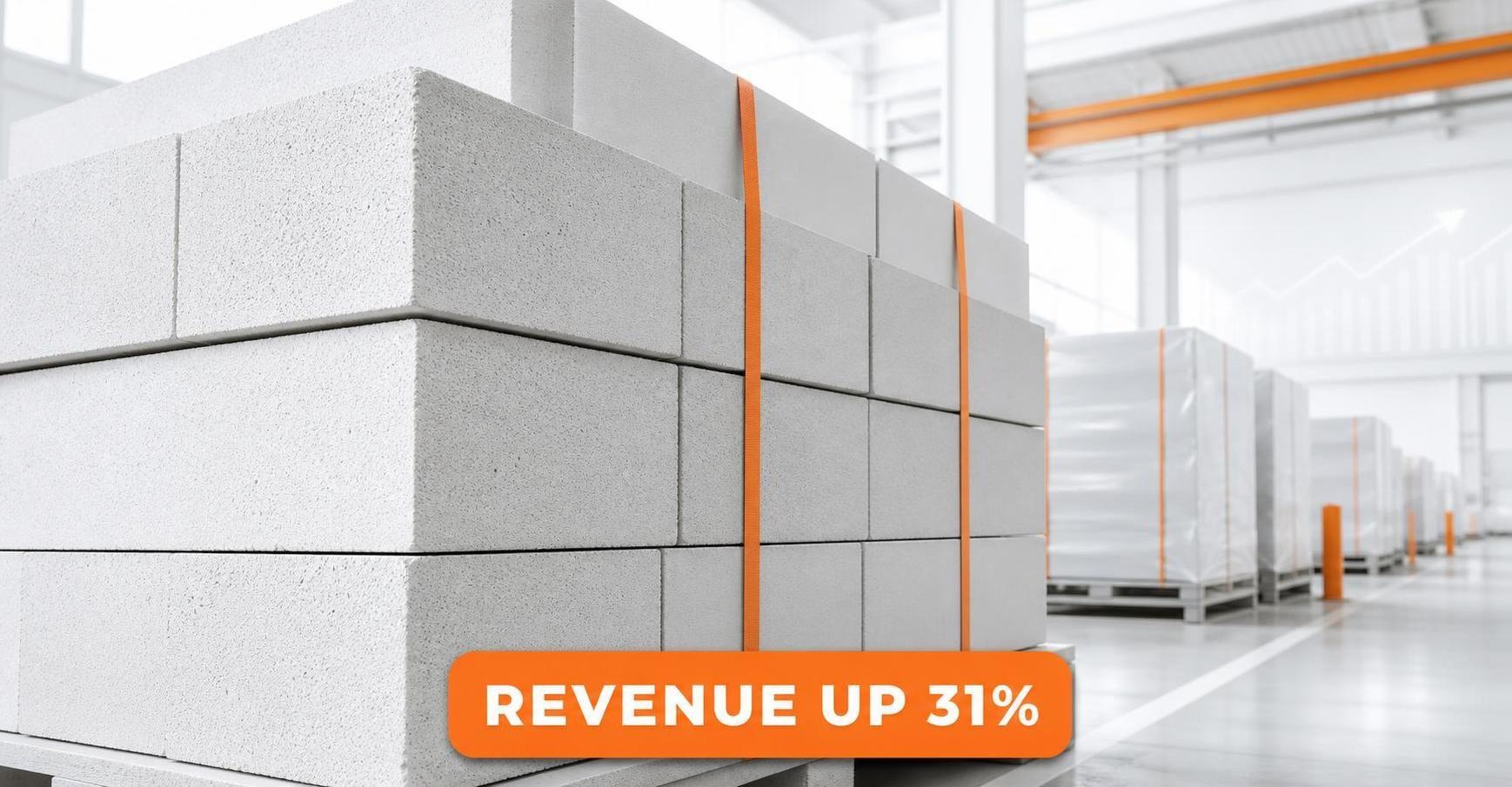
EBITDA margin improved by 334 basis points to 5.93 per cent, reflecting better operating leverage as sales volumes increased 22 per cent YoY to 4,46,769 cubic metres. Capacity utilisation stood at 68.74 per cent for H1 FY27.
✨ महत्त्वाचे मुद्दे
BigBloc Construction has been focused on improving utilisation after a large capacity expansion in its autoclaved aerated concrete (AAC) blocks business. The construction materials maker reported a 31 per cent YoY rise in consolidated revenue from operations to Rs 162 crore for H1 FY27, while its net loss narrowed to Rs 3.5 crore from Rs 8.1 crore a year earlier.
Earnings before interest, Tax, depreciation and amortisation (EBITDA) rose to Rs 9.6 crore from Rs 3.2 crore in the first half. EBITDA margin improved by 334 basis points to 5.93 per cent, reflecting better operating leverage as sales volumes increased 22 per cent YoY to 4,46,769 cubic metres. Capacity utilisation stood at 68.74 per cent for H1 FY27.
The improvement in the first-half result follows a period in which the company expanded capacity from about 5.5 lakh cubic metres to around 13 lakh cubic metres. The higher asset base had raised depreciation and finance costs while newer facilities were being ramped up. For H1 FY27, depreciation rose 7.2 per cent to Rs 8.9 crore, while finance costs remained at Rs 7.9 crore.
The September quarter presented a more mixed picture. Revenue rose 23.2 per cent YoY and 4.8 per cent QoQ to Rs 82.9 crore. However, quarterly EBITDA fell 47.6 per cent QoQ to Rs 3.3 crore, pulling the margin down to 3.98 per cent from 7.96 per cent in the June quarter. The consolidated net loss widened sequentially to Rs 2.7 crore from Rs 0.7 crore in Q1 FY27, although it was lower than the Rs 3.2 crore loss reported a year earlier.
Management attributed margin pressure to higher costs of lime, coal and other inputs, while saying it has undertaken gradual price revisions to protect profitability without compromising competitiveness. It is also increasing automation, including in boiler and material-handling operations, and replacing rented forklifts with an owned electric fleet.
Growth initiatives include the acquisition of 57,500 square metres of land in Madhya Pradesh to expand the AAC blocks business in central India. BigBloc is also building its presence in AAC wall panels and construction chemicals through NXTGRIP tile adhesive. These newer categories could broaden the product mix, although their scale-up and profitability will remain important execution factors.
As of 3:50 pm on November 4, 2026, BigBloc Construction shares were trading at Rs 34.65, down 2.75 per cent from the previous close. The stock was near its 52-week low of Rs 33.66 and substantially below its 52-week high of Rs 78.10. Over one year, the shares have declined 33.53 per cent, compared with a 5.73 per cent fall in the BSE 500, highlighting the market’s continued focus on the company’s ability to convert higher capacity utilisation into sustained profitability.
What This Means for Investors
The H1 performance supports BigBloc’s argument that its capacity build-out is beginning to deliver better fixed-cost absorption. Higher volumes and utilisation lifted EBITDA margin sharply from the year-earlier period, while the narrower loss indicates progress in absorbing depreciation and finance costs. The Madhya Pradesh expansion, wall panels and construction chemicals provide additional growth avenues, but these initiatives will require disciplined capital deployment and a successful ramp-up.
The Q2 result also shows that the recovery remains uneven. EBITDA margin fell nearly four percentage points QoQ as operating expenses rose faster than revenue, underlining the company’s sensitivity to raw material, energy and freight costs. The key test is whether selective price increases, automation and utilisation gains can restore margins over the next few quarters. At an enterprise value-to-trailing 12-month EBITDA multiple of 24.51 times, the valuation continues to place importance on a sustained earnings and cash-generation recovery rather than a one-half improvement alone.
Disclaimer: The article is for informational purposes only and not investment advice.