Rating Shock: Jai Balaji Faces Crisil Downgrade As DI Pipe Business Weakens
 आमच्यासोबत जोडा
 आम्हाला फॉलो करा
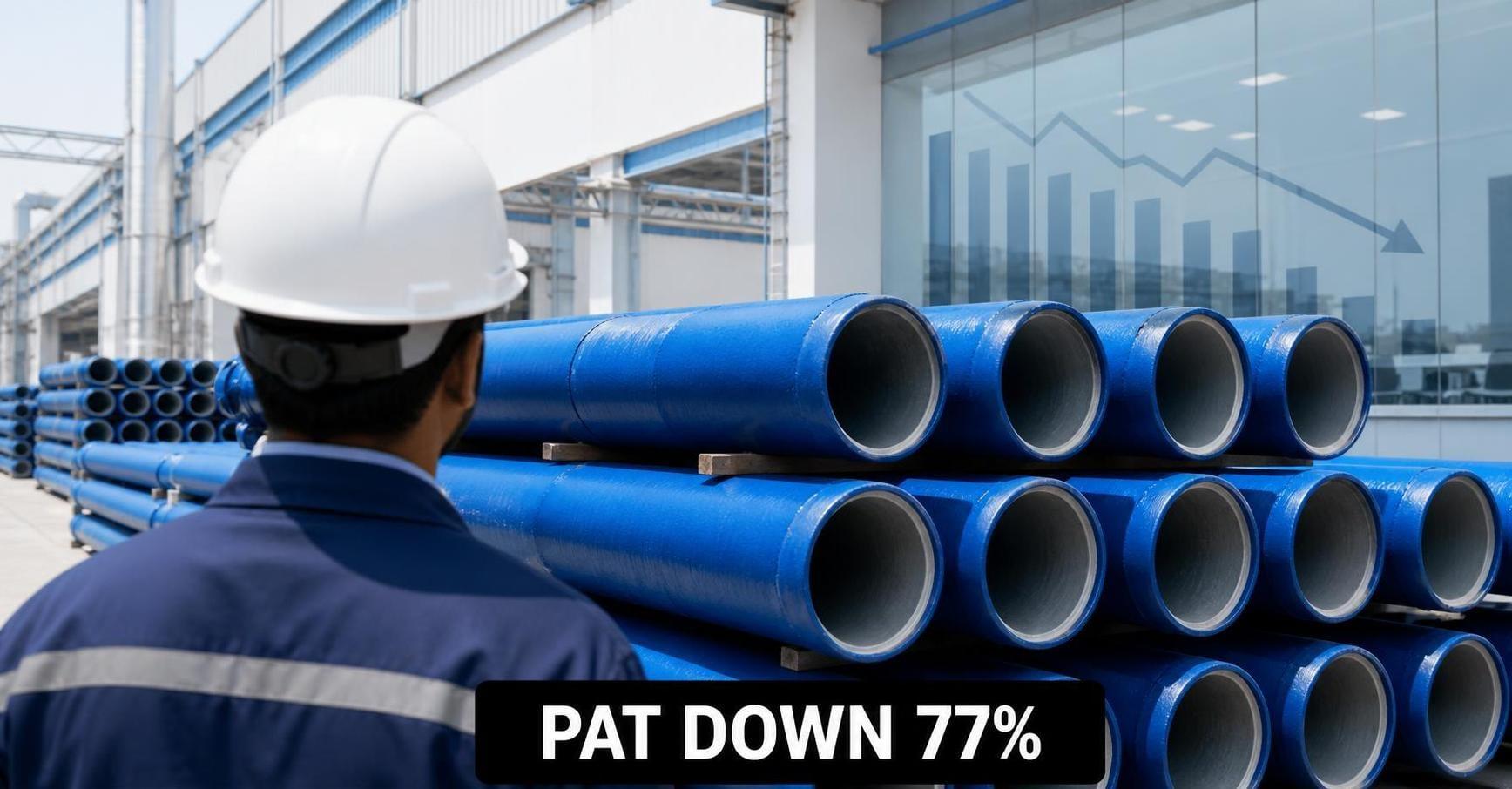
Crisil downgraded Jai Balaji Industries’ bank-facility ratings after weak government water-project execution reduced DI pipe demand, resulting in lower FY26 revenue, a sharp margin contraction and a steep fall in profit.
✨ महत्त्वाचे मुद्दे
Jai Balaji Industries has been downgraded by Crisil Ratings after a sharp deterioration in its fiscal 2026 operating performance, driven largely by a slump in ductile iron, or DI, pipe demand from government-linked water infrastructure projects.
Crisil lowered the company’s long-term Bank-facility rating to ‘Crisil BBB/Stable’ from ‘Crisil BBB+/Stable’ and its short-term rating to ‘Crisil A3+’ from ‘Crisil A2’. The ratings cover total bank loan facilities of Rs 995 crore.
The downgrade follows an 8 per cent year-on-year decline in operating income to Rs 5,786 crore in fiscal 2026 from Rs 6,361.92 crore. Reported profit after Tax fell far more sharply to Rs 129.93 crore from Rs 557.88 crore, while PAT margin narrowed to 2.25 per cent from 8.77 per cent.
Looking for High-Growth Stocks Below ₹100?
Explore DSIJ’s Penny Pick - a research-driven service focused on uncovering fundamentally strong low-priced stocks with long-term growth potential.
Download Service BrochureThe principal pressure came from slower execution and ordering under government water programmes, including the Jal Jeevan Mission and AMRUT. This weakened demand for the company’s relatively higher-margin DI pipes. Muted Construction and infrastructure activity also affected demand for TMT bars and allied products, although improved ferro-alloy performance partly cushioned the impact.
The scale of the setback is visible in DI pipe utilisation, which declined to around 30 per cent in fiscal 2026 from 80 per cent a year earlier. Lower sales contribution from DI pipes, weaker realisations in other products and lower-than-expected savings from captive power led EBITDA margin to contract by 764 basis points to 6 per cent from 14 per cent.
Crisil said return on capital employed fell to 8.8 per cent in fiscal 2026, compared with more than 20 per cent in each of the preceding three fiscals. The pressure on profitability is particularly significant because DI pipes have been central to Jai Balaji’s strategy of expanding its value-added product mix beyond commodity steel products.
There are, however, early signs of an operational improvement in fiscal 2027. Revenue in the first quarter stood at Rs 1,683 crore, while EBITDA margin improved to 9 per cent, supported by better realisations in TMT bars, allied products and ferro alloys. DI pipe utilisation remained around 30 per cent, underlining that the recovery has so far been driven more by product mix and pricing than a revival in the water-pipe market.
The latest quarterly financial data also show PAT of Rs 85.23 crore, up from Rs 21.37 crore in the preceding quarter, although DI demand remains the key variable for a sustained earnings recovery. Management has indicated that delayed government payments to contractors have slowed fresh order conversion, despite continuing project enquiries.
Crisil noted that low internal accruals and higher working-capital needs in the DI pipe business increased the company’s Reliance on short-term debt during fiscal 2026. While cash flow from operations was adequate for debt servicing, the rating agency said sustained improvement in revenue scale, sales volumes, EBITDA margin and return on capital would be essential, especially given sizeable debt obligations in fiscal 2027.
As of March 31, 2026, Jai Balaji’s net worth was Rs 2,253 crore and gearing stood at 0.2 times. Bank-limit utilisation averaged 71 per cent over the 12 months through May 2026, while free cash and bank balances were estimated at over Rs 20 crore as of July 30, 2026.
The company still plans to complete the balance of its Rs 1,112 crore expansion programme and expects to incur Rs 35 crore to Rs 40 crore in fiscal 2027. It is also targeting additional DI pipe capacity of 0.5 lakh tonnes per annum and ferro-alloy capacity of 0.3 lakh tonnes per annum.
As of 3:17 pm on September 23, 2026, Jai Balaji Industries shares were trading at Rs 66.62, up 3.4 per cent from the previous close. The stock remains about 33.6 per cent below its 52-week high of Rs 100.36 and has declined 35.44 per cent over one year, compared with a 3.73 per cent fall in the BSE 500.
Disclaimer: The article is for informational purposes only and not investment advice.