Asgard Alcobev quarterly results show sharper margins despite QoQ revenue decline
 Join Us
 Follow Us

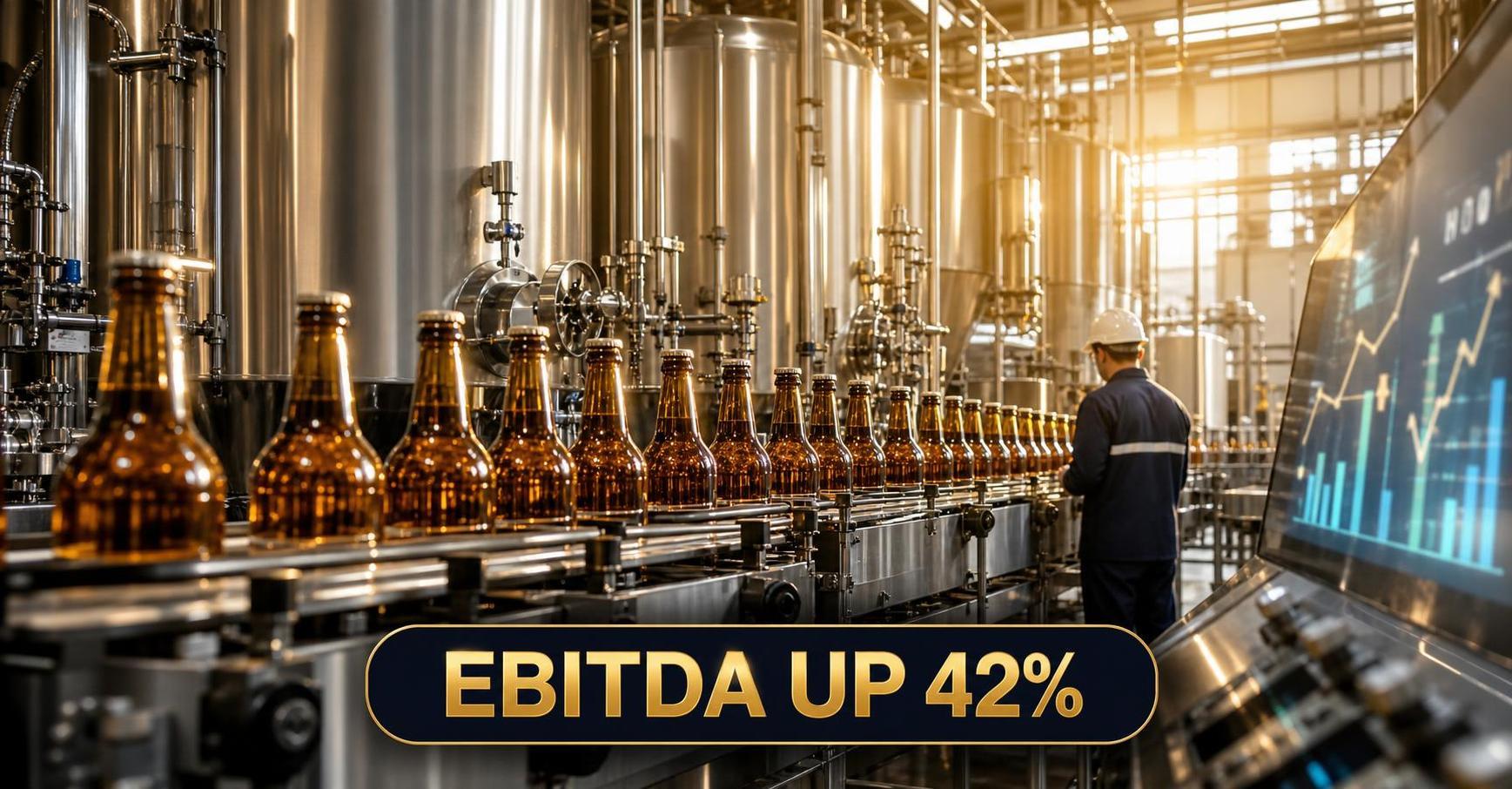
Asgard Alcobev reported Q2 FY27 revenue of Rs 48.93 crore and PAT of Rs 2.55 crore, with improved utilisation lifting profitability despite a sequential revenue decline. Shares traded higher in morning trade.
✨ Key Takeaways
Asgard Alcobev reported revenue of Rs 48.93 crore and profit after Tax (PAT) of Rs 2.55 crore for the September quarter of FY27, with improving manufacturing efficiency lifting profitability despite lower sequential sales. Its shares traded higher in morning trade as the Quarterly Results highlighted stronger margins at its brewing business.
Revenue increased 102.8 per cent YoY but declined 7.75 per cent QoQ. Earnings before interest, tax, depreciation and amortisation (EBITDA) rose 42.3 per cent QoQ to Rs 7.33 crore, while PAT increased 50.5 per cent. EBITDA margin expanded by 527 basis points to 14.98 per cent.
The headline annual growth rates require context. Asgard acquired a controlling stake in CMJ Breweries on February 17, 2026, shifting from its earlier business into brewing. Consequently, the reported 1,402.3 per cent YoY PAT increase is not a like-for-like measure of brewing performance. Sequential operating trends offer a clearer assesSMEnt of the business after the change.
Production increased 18.6 per cent QoQ to 13.82 lakh cases, while dispatches rose 14 per cent to 13.58 lakh cases. Capacity utilisation reached 78.6 per cent from 63.1 per cent. Cans accounted for 36.1 per cent of production, against 25.5 per cent in the preceding quarter.
CMJ operates the Byrnihat brewery in Meghalaya, manufacturing partner brands including Kingfisher, Carlsberg and Tuborg alongside its own labels. This contract-brewing platform underpins Asgard's current scale-up strategy.
For H1 FY27, revenue stood at Rs 101.96 crore, EBITDA at Rs 12.48 crore and PAT at Rs 4.24 crore. Gross borrowings fell by Rs 11.70 crore during the half-year to Rs 60.84 crore as of September 30, 2026.
Management is targeting FY27 EBITDA of Rs 24–28 crore. It also plans to increase annual manufacturing capacity from 84 lakh cases to 108 lakh cases by March 2027. Absorbing that additional capacity will depend on expanding contracted demand and sustaining partner relationships.
Key Positives
- Higher throughput and utilisation supported better profitability despite lower sequential revenue.
- Borrowing reduction improved financial flexibility ahead of the planned capacity expansion.
Key Negatives
- Revenue declined sequentially even as dispatch volumes increased.
- The business transition limits the usefulness of headline YoY growth comparisons.
As of 11.37 am on November 16, 2026, Asgard shares were trading at Rs 35.26, up 1.09 per cent from the previous close. The stock remained 11.9 per cent lower over one year and below its 52-week high of Rs 57.89. The trading gain therefore sits within a weaker longer-term price trend, rather than establishing a sustained market reassessment of the brewing business.
Asgard's Margin Gains Put Capacity Absorption in Focus
For Asgard, the strongest signal is that higher production translated into better operating profitability even with lower revenue. This supports management's case that fuller plant loading can improve fixed-cost absorption. The larger can contribution also broadens packaging capability for brewing partners. However, the divergence between dispatch growth and revenue means volume gains alone should not be treated as evidence of stronger revenue conversion.
The next test is whether these efficiencies endure as capacity expands. New equipment creates headroom, but returns will depend on contracted volumes, commissioning discipline and utilisation after expansion. Lower borrowings are supportive, although funding requirements and cash conversion remain important during the build-out. Customer concentration, state excise rules and packaging costs can also affect earnings durability. Sustained margins across subsequent quarters would carry more weight than exceptionally high annual growth rates against the former business.
Disclaimer: The article is for informational purposes only and not investment advice.