When Should You Sell a Stock? 7 Warning Signs Investors Should Never Ignore
 Join Us
 Follow Us

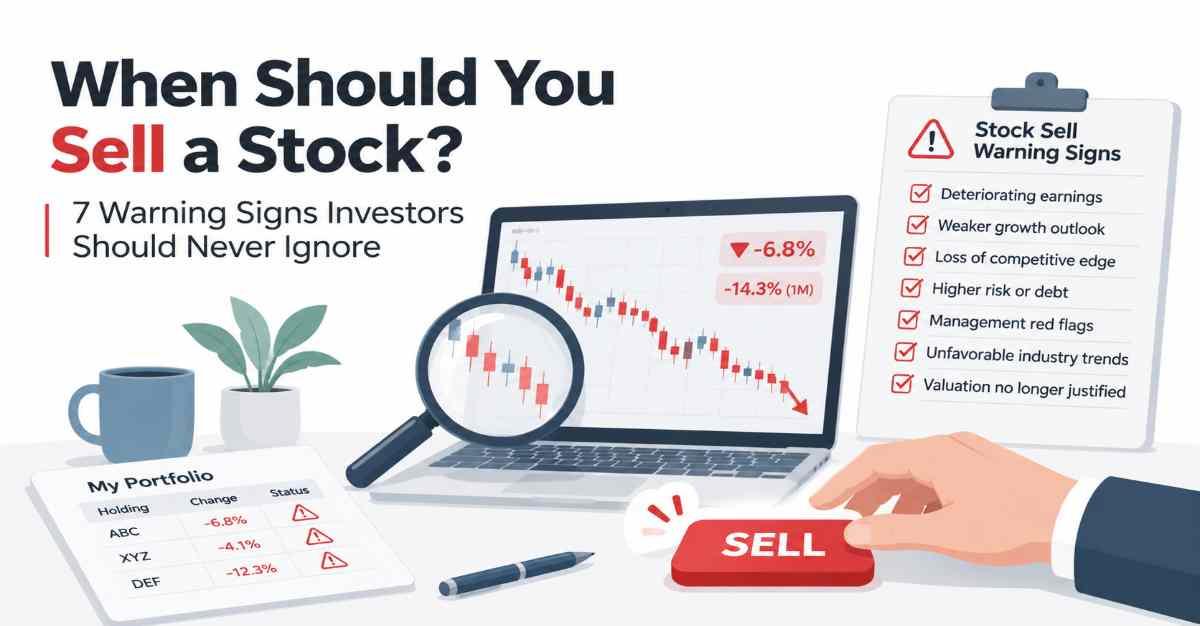
Knowing when to sell a stock is just as important as knowing when to buy. Here are seven warning signs that could indicate it is time to reconsider your investment
✨ Key Takeaways
Buying a stock often gets more attention than selling one. Investors spend hours identifying promising companies but sometimes hold on to disappointing investments simply because they expect prices to recover. Yet knowing when to sell a stock is essential for protecting capital and maintaining a healthy portfolio.
A falling share price alone is not a reason to exit. Markets can correct even when a company's business remains strong. The real concern begins when the reasons for owning a stock start to weaken. Here are seven warning signs worth monitoring.
1. Profits Keep Declining
One disappointing quarter may reflect seasonal demand or temporary costs. However, falling revenue, shrinking operating margins and declining profits over several quarters deserve attention. Compare the company's performance with industry peers. If competitors are growing while the company continues losing ground, its competitive position may be weakening.
2. Debt Is Growing Faster Than the Business
Borrowing can help companies expand, but debt becomes a concern when earnings and cash flows cannot support repayments. Watch for rising interest expenses, falling interest coverage and repeated borrowing to meet routine expenses. A company struggling to service debt has less flexibility during an economic slowdown.
3. Profits Are Not Turning Into Cash
A company may report healthy accounting profits without generating sufficient operating cash flow. Consistently weak cash flow, particularly alongside rising receivables or inventories, warrants closer examination. For example, if sales are increasing but customers are taking much longer to pay, reported growth may not be translating into usable cash.
4. Promoters Are Increasingly Pledging Their Shares
Promoter share pledging is not automatically a sign of trouble. However, a sharp increase in pledged holdings can introduce additional risk, especially if the promoter faces repayment pressure. A sustained fall in the share price may also increase the possibility of lenders seeking additional security or selling pledged shares. Examine the purpose and trend of pledging.
5. Corporate Governance Raises Questions
Frequent auditor resignations, unexplained related-party transactions, delayed financial disclosures or repeated changes in key management positions should not be ignored. Such developments do not necessarily establish wrongdoing, but they can make a company's financial position harder to assess. Read stock exchange announcements and auditor remarks before deciding whether to remain invested.
6. Valuation Has Moved Far Ahead of Fundamentals
Even a good business can become a poor investment at an excessive price. If a stock's price-to-earnings ratio rises sharply without comparable improvement in earnings prospects, future returns may depend on investors continuing to pay higher valuations. Compare valuation with historical levels, peers and realistic growth expectations rather than price momentum alone.
7. Your Original Investment Thesis No Longer Holds
Perhaps you purchased a company expecting new capacity, stronger demand or better profitability. If those developments fail to materialise, reassess the investment. Holding a stock only to recover the original purchase price can prevent you from making an objective decision. Ask whether you would still buy the company today at its current valuation.
The Bottom Line
Knowing when to exit a stock requires judgement, not panic. Review Quarterly Results, cash flows, debt, management disclosures and valuation together. One warning sign may call for further research; several persistent warning signs may justify reducing exposure or exiting, depending on your goals and risk tolerance. Successful stock portfolio management involves regularly checking whether the business still deserves a place in your portfolio.