BHEL Wins Rs 600 Crore to Rs 900 Crore Grid Stability Order for Gujarat Renewable Energy Zone
 Join Us
 Follow Us

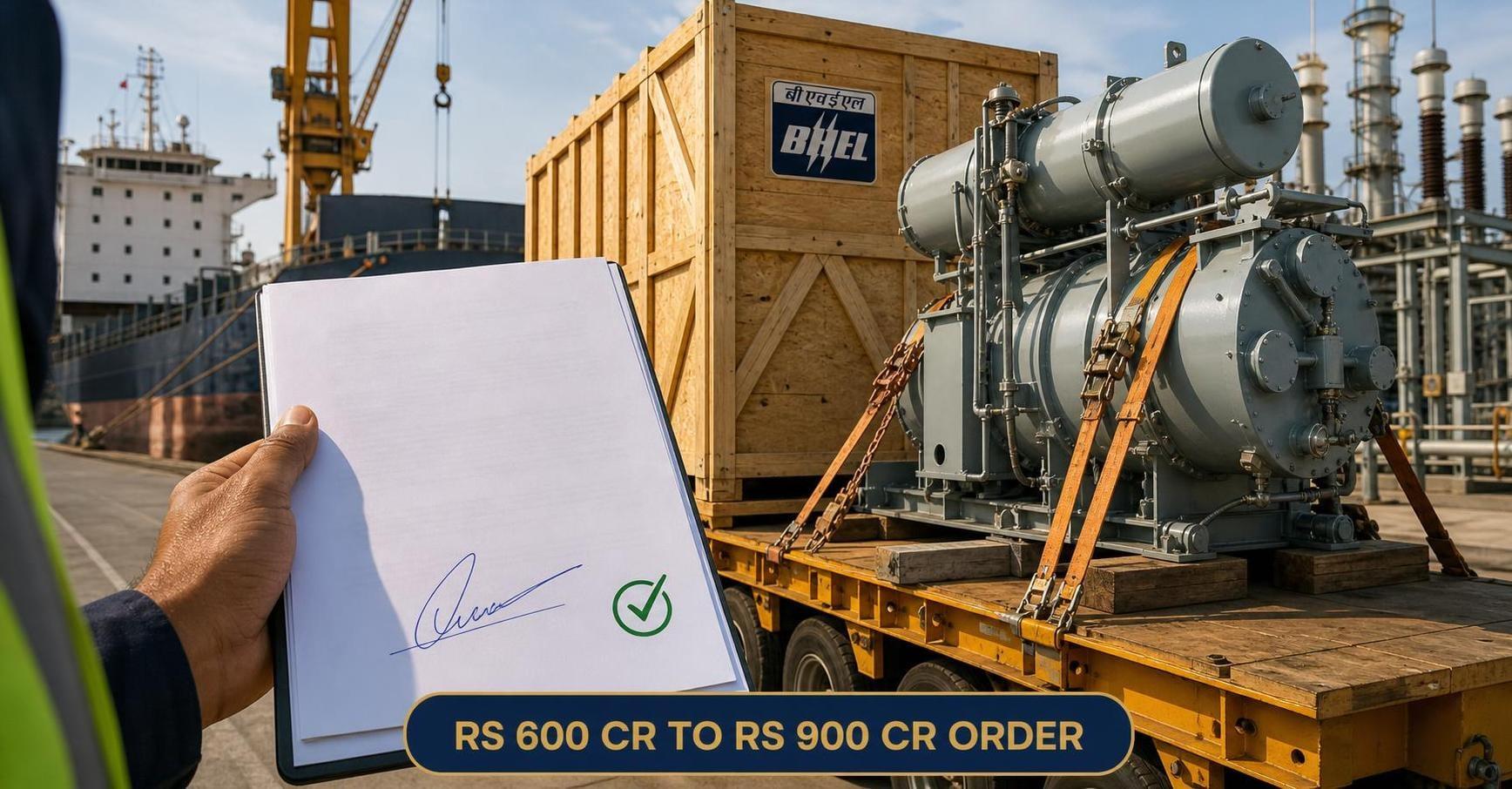
BHEL has received a Rs 600 crore to Rs 900 crore order from Power Grid for two synchronous condensers in Gujarat, supporting renewable power evacuation from the Jam Khambhaliya Renewable Energy Zone.
✨ Key Takeaways
Bharat Heavy Electricals Limited (BHEL) is expanding its presence in transmission-linked projects alongside its core power-equipment business. The company has received a notification of award valued at Rs 600 crore to Rs 900 crore from Power Grid Corporation of India Limited for grid-support equipment associated with renewable-energy integration in Gujarat.
The contract covers the design, engineering, manufacturing, supply, erection, testing and commissioning of two +300/-200 megavolt ampere reactive (MVAR) synchronous condensers at Kalyanpur. The equipment will be linked to the transmission system being developed for the evacuation of power from renewable projects in the Jam Khambhaliya Renewable Energy Zone.
Power Grid awarded the contract on behalf of its project special purpose vehicle. BHEL classified the order as domestic and said that the contract is not a related-party transaction. The project is to be completed within 35 months, and its value excludes goods and services Tax (GST).
Synchronous condensers are relevant for grids absorbing larger volumes of renewable generation because they support voltage management and grid stability. For BHEL, the order adds to its transmission and industrial portfolio at a time when the company is seeking to diversify beyond conventional generation equipment into transmission, Railways, Defence, energy storage and other infrastructure businesses.
The order is modest relative to BHEL’s scale but remains strategically relevant. Its value represents about 1.8 per cent to 2.7 per cent of the company’s consolidated revenue from operations of Rs 33,782.18 crore in financial year 2025-26. It is also a small addition to BHEL’s record Order Book of Rs 2,39,057 crore as of March 31, 2026, which remains heavily weighted towards the power business.
The company’s Industry segment, which includes transmission equipment and project work, reported external revenue of Rs 8,375.47 crore in financial year 2025-26, up 13.1 per cent from the preceding year. The segment’s order inflow rose 50 per cent during the year, supported by activity across transmission, transport, rail systems and process industries. Timely execution will be important because BHEL’s large projects are milestone-driven and can require significant working-capital management.
As of 3:00 pm on November 11, 2026, BHEL shares were trading at Rs 431.20, up 2.18 per cent from the previous close. The stock was about 7 per cent below its 52-week high of Rs 463.50. Over the past year, BHEL has gained 77.8 per cent, compared with a 0.08 per cent decline in the BSE 500 over the same period. The company’s market capitalisation stood at Rs 1,46,943 crore.
What This Means for Investors
The order supports BHEL’s attempt to build a larger role in transmission infrastructure and renewable-energy integration, where its manufacturing and project-execution capabilities can complement its traditional power-equipment franchise. The contract is not large enough to materially alter the company’s order-book profile, but it adds another domestic grid-modernisation project with a defined 35-month execution schedule. It also broadens BHEL’s participation in renewable-linked infrastructure without depending solely on renewable generation equipment.
For investors, the development is supportive of the company’s diversification strategy, although its financial contribution will be spread over the execution period rather than recognised immediately. BHEL’s recent operating recovery has been accompanied by stronger revenue, profitability and order inflow, but project delivery and working-capital conversion remain central tests. At 51.05 times trailing 12-month earnings, the valuation reflects expectations of sustained execution and margin improvement. Delivery discipline, procurement costs and timely customer milestone payments will determine how effectively such orders translate into earnings and cash flow.
Disclaimer: The article is for informational purposes only and not investment advice.