Chemical Sector in Focus: Key Measures, Tax Reforms, and Infrastructure Push in Budget 2026
 Join Us
 Follow Us
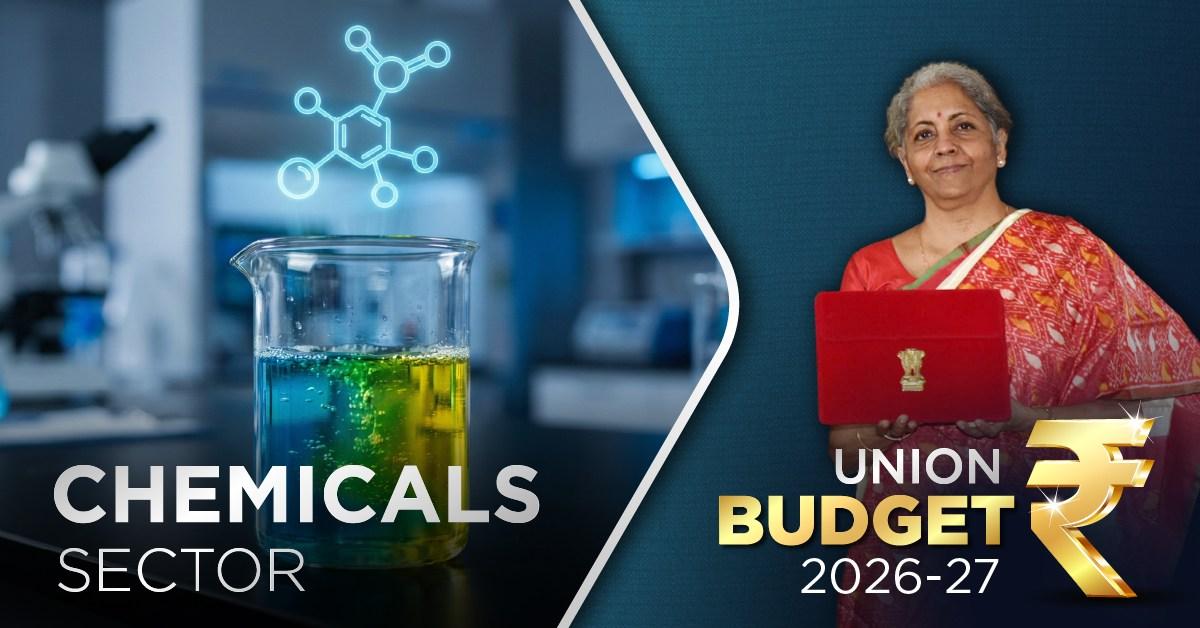
Union Budget 2026 boosts India’s chemical sector with chemical parks, CCUS, customs duty reforms, cooperative tax benefits, and critical minerals support.
✨ Key Takeaways
The Union Budget 2026 outlines a series of strategic interventions to strengthen India’s chemical sector, focusing on reducing import dependency, enhancing domestic manufacturing infrastructure, and integrating sustainable technologies. These measures aim to position the sector as a key driver of industrial growth while promoting self-Reliance and environmental sustainability.
Dedicated Chemical Parks to Enhance Manufacturing
To bolster domestic production capacity, the government will launch a scheme supporting States in establishing three dedicated Chemical Parks. These parks will be developed through a challenge route using a cluster-based plug-and-play model, ensuring streamlined infrastructure and faster operationalisation. The scheme has been allocated Rs 600 crore in the Budget Estimate (BE) for 2026. This initiative aligns with the broader vision to scale up manufacturing in strategic and frontier sectors, enhancing India’s self-reliance in chemicals.
Carbon Capture, Utilisation and Storage (CCUS)
The chemical sector has been identified as one of five key industrial sectors—alongside power, steel, cement, and refineries- for large-scale implementation of Carbon Capture Utilisation and Storage (CCUS) technologies. The government proposes a total outlay of Rs 20,000 crore over five years to achieve higher readiness levels for these technologies in end-use applications. Specifically, Rs 500 crore has been allocated in the BE 2026-27 to support this initiative, marking a significant step towards sustainable industrial practices.
Customs Duty and Tariff Reforms
The Budget introduces several indirect Tax reforms to protect domestic manufacturers and improve monitoring:
- Potassium Hydroxide: Basic Customs Duty (BCD) increased from Nil to 7.5 per cent, effective from February 2, 2026.
- Naphtha: The customs duty exemption for use in fertilizer manufacturing lapses on April 1, 2026.
- Alpha Pinene: Exemption lapses on February 2, 2026.
- Other lapsing exemptions on April 1, 2026, include:
- Maltol (used in deferiprone manufacturing)
- Zeolite (for wash coats in catalytic converters)
- Spent catalyst or ash containing precious metals
- Ethylene–Propylene–Non-Conjugated Diene Rubber (EPDM) used in insulated wires and cables
Additionally, the First Schedule of the Customs Tariff Act, 1975 will include 148 new tariff lines across various chapters, simplifying rates and enabling more effective monitoring.
Monitoring and Export Policy
To improve regulatory oversight and export tracking, the government is introducing:
- Precursor Chemicals: New tariff lines will allow the collection of actual transaction data, aiding policy-making and monitoring.
- Plant-Based Extracts: New tariff lines will track exports, enabling data-driven policy interventions.
These measures aim to streamline customs processes, protect domestic manufacturers, and enhance transparency in chemical trade.
Direct Tax Benefits for Cooperatives
The Budget expands tax benefits for primary cooperative societies, which directly impacts the production of chemical-adjacent agricultural inputs. The existing deduction for societies supplying milk, oilseeds, fruits, or vegetables will now include cotton seed and cattle feed produced by their members, providing broader support to allied chemical sectors.
Critical Minerals and Processing
In line with India’s push for critical minerals, the Budget proposes:
- BCD exemption on capital goods required for processing critical minerals domestically.
- BCD exemption on Sodium antimonate specifically for manufacturing Solar glass.
These measures are expected to strengthen domestic value chains and reduce dependency on imports for strategic materials.
Overall, the Union Budget 2026 identifies the chemical sector as a strategic area for boosting domestic production, reducing import dependency, and implementing sustainable industrial practices, backed by infrastructure development, fiscal incentives, and regulatory reforms.
Disclaimer: The article is for informational purposes only and not investment advice.