Closing Bell: Nifty 50 Ends Lower Near 24,050 Mark as Crude Oil Hits USD 92
 Join Us
 Follow Us
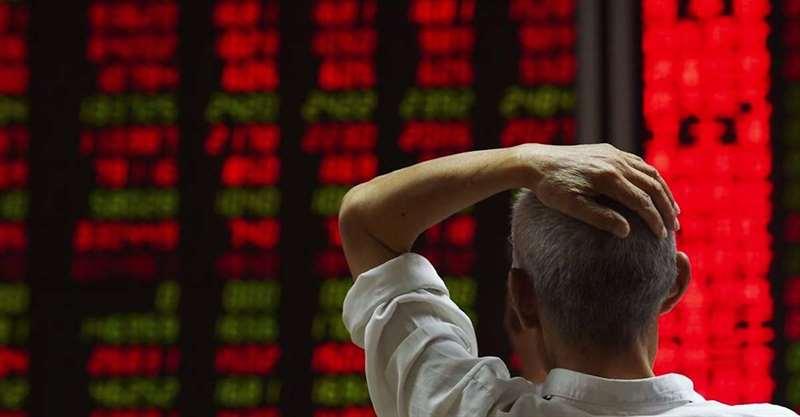
At the close, the Nifty 50 settled at 24,055.80, down 24.60 points, or 0.10 per cent. The Sensex declined 12.99 points to close at 76,944.28, while Bank Nifty ended 1.06 per cent lower.
✨ Key Takeaways
Market Update at 04:00 PM: The benchmark equity indices, Sensex and Nifty, closed in negative territory on Tuesday as rising crude oil prices and bond yields amid escalating Middle East tensions offset optimism over stronger-than-expected domestic economic growth.
The Nifty 50 touched an Intraday high of 24,143.15 but failed to sustain above the 24,100 mark, with selling pressure intensifying during the second half of the session. After holding above 24,050 for much of the morning, the index slipped below this level around 1:30 PM and remained under pressure. It touched an intraday low of 23,952.55 before recovering modestly towards the close.
At the close, the Nifty 50 settled at 24,055.80, down 24.60 points, or 0.10 per cent. The Sensex declined 12.99 points to close at 76,944.28, while Bank Nifty ended 1.06 per cent lower. India VIX remained unchanged.
Crude oil prices rose more than 1 per cent on Tuesday as renewed U.S.-Iran fighting heightened concerns over potential disruptions to energy flows through the Strait of Hormuz. Brent crude gained 1.7 per cent to USD 92.18 per barrel, while WTI futures rose 1.8 per cent to USD 87.10 per barrel. The rise in crude oil prices increased concerns over inflation and borrowing costs, adding pressure to domestic equities despite strong economic growth data.
India’s real GDP grew 7.8 per cent year on year in Q1 FY27, beating the RBI’s 7 per cent forecast. Growth was supported by strong investment, manufacturing, services and exports. Gross fixed capital formation surged 11.9 per cent, while manufacturing and services grew 9.2 per cent and 10 per cent, respectively. Private consumption also remained resilient. However, weak agriculture and mining activity, higher energy prices and global uncertainties could pose challenges to sustaining growth above 7 per cent.
India’s manufacturing PMI fell to a five-year low of 52.8 in August from 53.5 in July, marking the third consecutive monthly decline as growth in output and new orders slowed. Export growth also moderated, while manufacturing employment declined for the first time in two-and-a-half years. However, easing input cost pressures and improving business confidence provided some support, keeping the PMI above the 50 mark that indicates expansion.
India’s gross GST collections rose 14.8 per cent year on year to nearly Rs 2 lakh crore in August 2026, marking the third consecutive month of double-digit growth. The increase was driven mainly by a 29 per cent surge in GST revenue from imports. Net GST collections increased 8.3 per cent to Rs 1.68 lakh crore as refunds jumped 68 per cent. Cumulative gross GST collections during April-August rose 11 per cent to Rs 10.43 lakh crore. Maharashtra’s GST collections increased 8 per cent to Rs 28,779 crore during August.
The broader market remained under pressure, with the Nifty Midcap 100 index declining 1.39 per cent and touching a monthly low. The Nifty Smallcap 100 index fell 0.23 per cent, extending its previous losses.
Sectorally, only three of the 11 sectoral indices ended in positive territory. The Nifty IT index jumped 0.98 per cent, with seven of its 10 constituents closing in positive territory. In contrast, the Nifty Pharma index declined 1.45 per cent, snapping a five-day winning streak. The index had touched its 50-DEMA on Monday.
Among individual stocks, Tribhovandas Bhimji Zaveri surged 20 per cent after Chennai-based GRT Jewellers agreed to acquire a controlling stake in the jewellery retailer.
Happiest Minds declined 10.87 per cent after ITC announced that its IT unit would acquire a 22.1 per cent stake in the software services provider. ITC gained 4.34 per cent.
Newly listed Milky Mist Dairy gained 10 per cent after reporting a rise in quarterly profit.
Reliance Industries was the biggest contributor to the Nifty 50's performance, adding 46.58 points, followed by Bharti Airtel, which contributed 44.27 points. ITC added another 23.34 points.
On the other hand, Axis Bank was the biggest drag on the index, reducing it by 26.26 points. ICICI Bank and State Bank of India weighed by 24.97 points and 22.95 points, respectively.
Market breadth remained firmly in favour of declining stocks on September 1, 2026. Out of 3,649 stocks traded on the NSE, 1,345 advanced, 2,196 declined and 108 remained unchanged.
A total of 119 stocks touched their 52-week highs, while 111 stocks hit their 52-week lows. Additionally, 107 stocks were locked in their Upper Circuits, whereas 98 stocks were locked in Lower Circuits.
Market Update at 2:30 PM: The benchmark indices erased some of their losses in afternoon trade, supported by gains in metal, auto and FMCG shares.
As of 2:00 PM, the Sensex fell 176.11 points, or 0.23 per cent, to 76,781.16, while the Nifty 50 declined 92.35 points, or 0.38 per cent, to 23,988.05.
Shriram Finance, Maruti Suzuki India and Nestle India were the top losers in the Nifty 50 index.
In the broader markets, the Nifty MidCap index declined 0.96 per cent, while the Nifty SmallCap index gained 0.06 per cent.
Sector-wise, the Nifty Healthcare, Nifty Pharma and Nifty Realty indices declined the most. On the other hand, the Nifty FMCG, Nifty Metal and Nifty Auto indices outperformed the broader market.
Market Update at 12:30 PM: The benchmark indices erased their early losses and turned positive on Tuesday, supported by gains in metal, auto and FMCG stocks. As of 12:00 PM, the Sensex rose 236.46 points, or 0.31 per cent, to 77,193.73, while the Nifty 50 gained 41.95 points, or 0.17 per cent, to 24,122.35.
Max Healthcare Institute, Shriram Finance and InterGlobe Aviation were the top losers in the Nifty 50 index. In the broader markets, the Nifty MidCap index declined 0.96 per cent, while the Nifty SmallCap index edged up 0.06 per cent.
Sector-wise, the Nifty Healthcare, Nifty Pharma and Nifty Realty indices declined the most. On the other hand, the Nifty FMCG, Nifty Metal and Nifty Auto indices outperformed, providing support to the benchmark indices.
Bharti Airtel gained around 2.7 per cent, supporting the Nifty 50, while ITC rose around 3 per cent in early trade. Aurobindo Pharma advanced more than 3 per cent after its subsidiary launched a generic version of Advair Diskus in the U.S.
On the other hand, Happiest Minds fell more than 7 per cent amid continued weakness following developments related to the company's acquisition. Mahindra & Mahindra remained a notable gainer after its August sales jumped 50 per cent.
Market Update at 11:00 PM:The benchmark indices were trading nearly flat on Tuesday after opening lower, as global equities declined amid renewed tensions in West Asia and concerns over monetary tightening in the U.S.
As of 10:52 AM, the Nifty 50 fell 4.20 points, or 0.02 per cent, to 24,076.20. The Sensex gained 60.82 points, or 0.08 per cent, to 77,018.09.
Among the Nifty 50 constituents, Max Healthcare Institute, Shriram Finance, and InterGlobe Aviation were the top losers.
In the broader markets, the Nifty MidCap index declined 0.83 per cent, while the Nifty SmallCap index fell 0.17 per cent.
Sector-wise, Nifty Healthcare, Nifty Pharma, and Nifty Realty declined the most. Meanwhile, Nifty FMCG, Nifty Metal, and Nifty Auto outperformed the broader market.
Market Update at 09:30 AM: The benchmark equity indices were trading lower in early trade as global equities declined amid renewed tensions in West Asia and concerns over monetary tightening in the U.S.
As of 9:21 AM, the Sensex fell 38.13 points, or 0.05 per cent, to 76,919.14, while the Nifty 50 declined 31.55 points, or 0.13 per cent, to 24,048.85.
Max Healthcare Institute, Shriram Finance and InterGlobe Aviation were the top losers in the Nifty 50 index during early trade.
In the broader markets, the Nifty MidCap index declined 0.83 per cent, while the Nifty SmallCap index was trading 0.17 per cent lower.
Sector-wise, the Nifty Healthcare, Nifty Pharma and Nifty Realty indices declined the most. On the other hand, the Nifty FMCG, Nifty Metal and Nifty Auto indices outperformed the broader market.
Pre-Market Update at 7:40 AM: Indian benchmark indices are likely to open lower on Tuesday, September 1, as weak Asian markets, rising crude oil prices and renewed U.S.-Iran tensions weigh on investor sentiment. Gift Nifty was trading around 24,195, down nearly 41 points from the previous close of Nifty futures, signalling a negative start for the domestic market.
On Monday, the Sensex declined 307.24 points, or 0.40 per cent, to close at 76,957.27, while the Nifty 50 fell 95.25 points, or 0.39 per cent, to settle at 24,080.40. Selling pressure was visible across utility, IT and FMCG stocks.
Asian markets largely traded lower on Tuesday as renewed concerns over the Middle East conflict affected risk sentiment. Japan's Nikkei 225 declined 0.91 per cent, while the broader Topix remained largely unchanged. South Korea's Kospi and Kosdaq fell more than 1 per cent in early trade, while Australia's S&P/ASX 200 declined 0.36 per cent.
Gift Nifty was trading around 24,195, down nearly 41 points from the previous close of Nifty futures. The movement indicates that Indian equity benchmarks could begin Tuesday's session on a weak note.
U.S. stock futures remained largely muted after Wall Street ended lower in the previous session. Dow Jones Industrial Average futures rose 48 points, while S&P 500 futures gained less than 0.1 per cent. Nasdaq-100 futures were little changed.
Despite the weak final session, U.S. equities recorded monthly gains in August. The S&P 500 advanced 2.6 per cent, the Nasdaq Composite gained 3.9 per cent and the Dow Jones Industrial Average rose 1.3 per cent, marking its fifth consecutive monthly increase.
Renewed military tensions between the U.S. and Iran remain a key risk for global markets. U.S. President Donald Trump warned of further military action after the two countries exchanged direct attacks, raising concerns over energy supplies and the broader economic impact of the conflict.
The Strait of Hormuz remains a major focus for investors. The number of visible commodity vessels passing through the waterway fell to just five a day over the weekend, according to shipping data cited in the report. Diplomatic efforts involving mediators including Qatar and Oman have so far failed to make meaningful progress on reopening the crucial waterway, which handled around one-fifth of global oil supplies before the conflict.
Crude oil prices continued to rise amid concerns over potential supply disruptions. Brent crude futures climbed 56 cents, or 0.35 per cent, to USD 91.05 a barrel, while U.S. West Texas Intermediate crude gained 83 cents, or 0.13 per cent, to USD 86.59 a barrel. Brent had already risen 2.7 per cent in the previous session.
Higher crude prices could remain negative for India by putting pressure on inflation, the rupee and the country's external balances.
India's real GDP growth stood at 7.8 per cent in the April-June 2026 quarter, or Q1 FY27, compared with 6.9 per cent in the corresponding quarter of the previous year. However, growth moderated from 8.6 per cent recorded in Q4 FY26.
Manufacturing was a key driver, with the sector growing 9.2 per cent in Q1 FY27 compared with 8.3 per cent a year earlier. Construction grew 7.7 per cent, while electricity, gas, water supply and other utility services expanded 8.9 per cent.
The services sector grew 10 per cent during the quarter. Within services, financial, real estate, ownership of dwelling, IT and professional services grew 12.1 per cent.
Agriculture growth slowed to 3.6 per cent from 4.4 per cent in the year-ago quarter, while mining and quarrying contracted 2.4 per cent.
Nominal GDP growth stood at 10.3 per cent, while real GVA growth was 8.2 per cent. Economists, however, have flagged risks to future growth from a potentially deficient southwest monsoon, El Niño conditions and unfavourable base effects.
Foreign portfolio investors remained net sellers in Indian equities, offloading shares worth Rs 7,985 crore on Monday. Domestic institutional investors, however, provided support by purchasing shares worth Rs 4,589 crore.
The Indian rupee ended August near a four-week high against the U.S. dollar and recorded a monthly gain, supported by inflows linked to a stock index rejig and intervention by the central bank.
Investors will also track India's August manufacturing PMI and monthly automobile sales during Tuesday's session. The manufacturing PMI consensus is around 52.9 to 53.5, depending on the survey series. Auto sales could trigger stock-specific movements across the automobile sector.
SAIL and LIC Housing Finance are in the F&O ban period on Tuesday. Securities enter the F&O ban when their open positions cross 95 per cent of the market-wide position limit.
Indian equities are likely to begin Tuesday's session with a cautious bias as rising crude oil prices and renewed U.S.-Iran tensions create fresh macroeconomic risks. At the same time, India's stronger-than-expected Q1 FY27 GDP growth provides a positive domestic backdrop. Investors will closely monitor crude prices, the rupee, institutional flows, manufacturing PMI, auto sales and developments in the Middle East for further market direction.
Disclaimer: The article is for informational purposes only and not investment advice.
What’s your strategy for today’s volatile market? Share in the comments!