In conversation with Asit Bhandarkar, Senior Fund Manager - Equity, JM Financial Asset Management Ltd.
 Join Us
 Follow Us
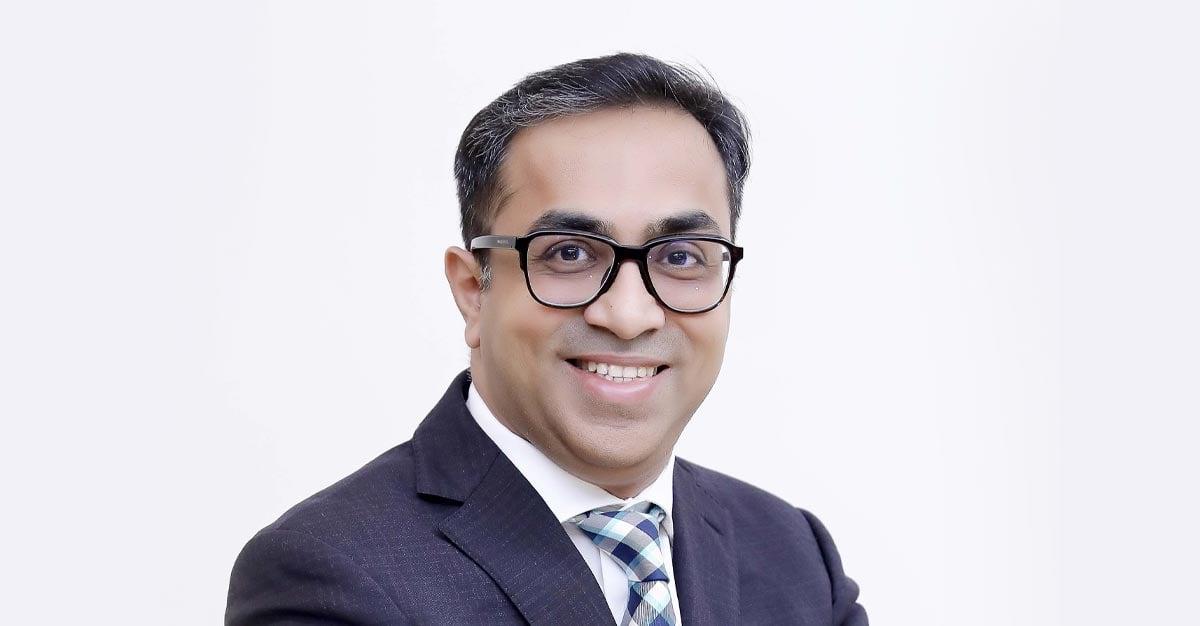
An overview of expert insights on key trends emerging from the Q4 earnings season, sectors with strong investment potential, opportunities unfolding in the broader markets, the overall market outlook, and the key takeaways for mutual fund investors.
✨ Key Takeaways
Considering the current geopolitical uncertainties, persistent inflationary pressures, and fading expectations of near-term rate cuts, what is your outlook on Indian equities over the next year?
Our base case is constructive but selective. India’s medium-term story, a long capex cycle, healthier corporate and Bank balance sheets, and stable domestic flows as a FII risk-off shock absorber. We’re watching three swing factors closely: the path of oil given the geopolitical noise; the trajectory of global rates and the INR-USD dynamics; and whether the earnings recovery broadens beyond financials. We are endeavouring to position the portfolio such that we may own higher-growth businesses whose earnings may grow through a slightly slower nominal-growth phase.
Volatility is likely to stay elevated, and we could use sharp corrections as opportunities to add to high-conviction names. Valuations are no longer as expensive as they were in 2024, but they are not dirt cheap either. Large-Cap and Small-Cap indices are still lower than the all-time highs, while corporate profitability has continued to grow. Broader markets are already reflecting a bottom formation, and a reversal in prices is already underway. Since it is difficult to predict global geopolitics and the impact on global macro, a valuation re-rating of indices may be challenging in the short term. Markets might remain stock-specific, with broader markets presenting opportunities.
How would you assess the overall Q4FY26 earnings performance? Since the U.S.-Iran conflict intensified towards the end of the quarter, Q4 earnings may not fully reflect its impact. Do you expect the June quarter to witness a more meaningful effect on earnings, margins, and investor sentiment?
Q4FY26 earnings exhibited robust year-on-year growth for the Mid-Cap and small-cap segments, as demand momentum remained strong and inflation driven by the war ended up pushing margins up, as companies benefited from lower-cost inventories. The June quarter is likely to be more modest, with the full impact of cost pressures and demand slowdown, if any, likely to be felt in the results. Investors and corporates expect this pressure, and the expectation in the demand scenario is robust enough for companies to be able to pass on the higher costs through H1FY27, and business operations may likely return to normalcy in H2FY27.
Which sectors appear most attractive from a risk-reward perspective today?
On sectors, we prefer capex-linked themes, private financials and select NBFCs, capital goods and industrials tied to the investment cycle, manufacturing exporters and ‘Make-in-India’ beneficiaries, and the power sector. We are more cautious on consumer staples and businesses where the margin structures are at risk from higher input costs. We are willing to pay a fair premium for genuine quality compounders, but we won’t chase stocks where valuations already reflect reasonable expectations of growth.
The Nifty Midcap 100 Index recently scaled a record high. In your view, are we witnessing the early stages of a sustained mid-cap cycle, or is the segment vulnerable to a correction given current valuation?
Mid-caps are where India’s structural growth stories often compound fastest, and we are bullish about their long-term prospects. While corrections are part of this journey, we must remember that earnings momentum here remains extremely strong. In fact, throughout the volatile period of the last 6-7 quarters, the mid-cap segment has posted class-leading growth. Companies with proven execution, clean balance sheets, real cash flows, and credible earnings visibility find favour among investors, and in the current context, unless growth structurally slows down, volatility here would be an opportunity to invest with a horizon of 2-3 years.
What is your key message for investors looking to create wealth in the current market environment?
Three things. First, anchor on asset allocation and your own goals, not on headlines or the last year’s returns. Recency bias tends to distract investors if they are not clear about their long-term objective. Second, embrace SIPs and disciplined, staggered investing. When market volatility is elevated, systematic investing takes the timing decision off your plate and lets you accumulate through corrections, and there could be corrections, driven by uncertainties in the environment. Third, match your fund choices to your risk appetite and horizon. Investors erroneously tend to take more risk during buoyant market conditions and become risk-averse when markets bottom.
Stay invested through the noise; the biggest destroyer of long-term returns is reacting emotionally to short-term swings. India’s structural story, demographics, formalisation, the capex cycle, rising financialisation of savings, and manufacturing for the world, is a multi-decade opportunity. Keep expectations realistic, review periodically, but do not react constantly. Be patient. Be realistic. Be disciplined.