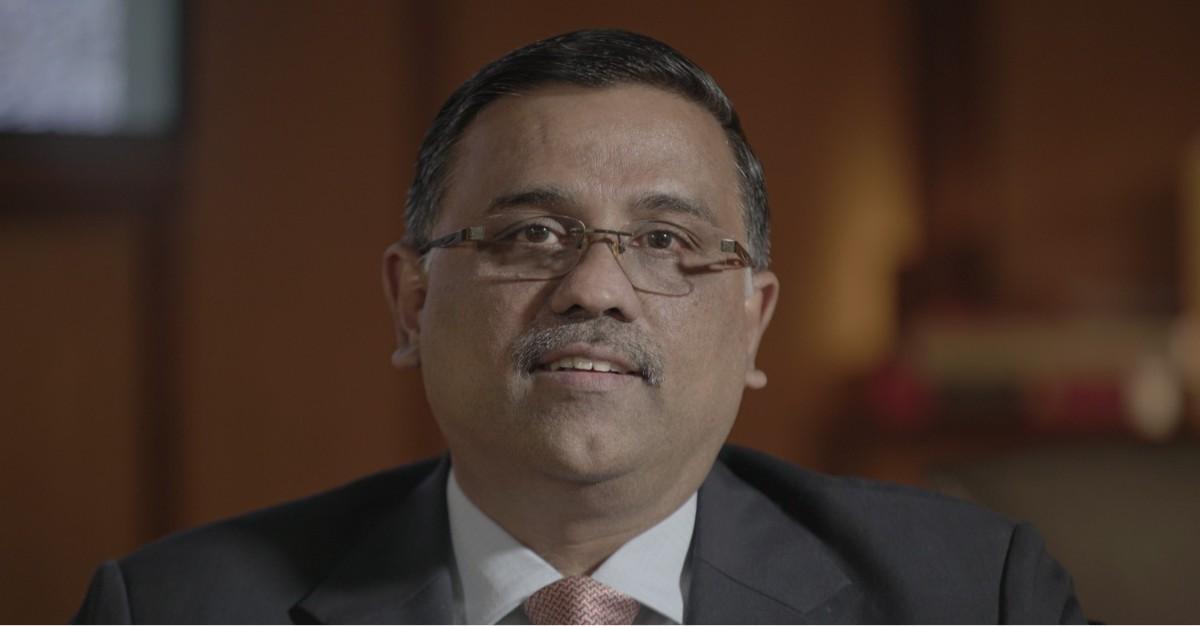
In conversation with Mahesh Viswanathan, Chief Executive Officer (CEO), Finolex Cables Limited
 Join Us
 Follow Us
Finolex Cables Bets on Brand Strength, Technology and Capacity Scale-Up to Drive Next Phase of Growth
✨ Key Takeaways
1. Finolex Cables achieved 19 per cent revenue growth in FY26, yet volume expansion in the core building wire segment remained marginal due to retail trade resistance toward volatile copper prices. How does the company plan to structurally decouple volume growth from commodity price sensitivity in its retail distribution channel?
Finolex is consciously working to reduce the impact of commodity price fluctuations on volume growth by building stronger brand-led demand. As volatility in copper and other raw material prices influences buying behaviour, the company is focused on driving customer preference beyond price considerations. To achieve this, Finolex continues to invest in its brand, emphasising safety, reliability, and long-term product performance. Through focused marketing initiatives and customer awareness programmes, the company aims to strengthen its value proposition versus purely price-driven alternatives. At the same time, Finolex is deepening engagement with key influencers such as electricians, contractors, architects, and builders to drive product preference at the specification and purchase stage. The company is also increasing its focus on residential, commercial, and infrastructure projects where performance, brand reputation, and service support are more important than short-term commodity movements. This project-led approach supports sustainable volume growth and stronger stakeholder relationships.Together, these initiatives are intended to create a more resilient, demand-driven business model that supports consistent volume growth while reducing reliance on commodity cycles.
2. The company initiated a defensive inventory build-up of over Rs 300 crore following Middle East geopolitical disturbances to secure production for early FY27. As these higher-cost inputs flow through the P&L, what specific pricing or operational levers will be deployed to prevent a sustained drag on EBITDA margins?
Finolex follows a disciplined pricing strategy that balances competitiveness with margin protection against fluctuations in key raw materials, particularly copper. As communicated earlier, changes in input costs are generally passed through to the market via price revisions. While there may be a short lag due to inventory cycles, channel stock levels, and market conditions, this approach helps ensure a smooth transition across the distribution network. This pricing discipline is consistent with broader industry practice. Similarly, reductions in commodity costs are also passed on to customers, ensuring fair and transparent pricing aligned with market realities.
3. While export revenues currently sit below 1 per cent, you are targeting a significant ramp-up to 3 per cent within the next two years. Considering the geopolitical 'covenants' often attached to raw materials used in defence and data centre applications, how will you navigate international trade barriers to achieve this scalability?
There remains a significant opportunity for Indian products in international markets. Historically, Finolex has been primarily focused on the domestic market. At current revenue levels, a 3 per cent export contribution translates to roughly Rs 200 crore, which the company believes is achievable with sustained focus and execution.
4. The Extra High Voltage JV with Sumitomo has reached a profitability inflection point, supported by an 80 per cent utilisation of key machinery. In a utility market projected to expand toward USD 5 billion, how will you defend your technological positioning as competitors increasingly adopt similar vertical insulation processes?
The partnership with Sumitomo has provided Finolex access to advanced technology, engineering expertise, manufacturing practices, and quality standards essential for the EHV segment. It has also helped build in-house capabilities across design, testing, project execution, quality assurance, and customer support. As the utility market expands, customers will increasingly value reliability, execution capability, product performance, lifecycle economics, and technical support alongside manufacturing technology. Finolex is therefore focused on offering a differentiated value proposition that combines technology with strong execution and customer relationships. While the growing EHV market offers opportunities for multiple players, the company believes its technology partnership, manufacturing expertise, and execution capabilities position it well to participate in this growth. Finolex also continues to evaluate opportunities for capacity expansion within the JV. The JV has recently crossed an important milestone by turning profitable, supported by improved capacity utilisation, a stronger mix of supply and turnkey orders, and better fixed-cost absorption.
5. High-growth frontiers like solar cables are already nearing capacity utilisation, prompting immediate doubling of production lines. Given the entry of several large-scale industrial players into the wire and cable sector, what structural moats allow Finolex to maintain dominance in these emerging high-margin applications?
The entry of large players into the solar cable segment reflects the strong long-term opportunity in India's renewable energy sector. However, building manufacturing expertise, securing certifications, ensuring consistent quality, and earning customer trust takes time. In specialised applications such as solar cables, reliability, performance, and durability remain critical differentiators. These capabilities are developed through experience and operational excellence. Accordingly, Finolex does not foresee any material disruption to its competitive position in the near term. The company believes its brand strength, execution capabilities, product reliability, and market reach will continue to support sustainable growth in this segment. The solar cable demand has been particularly strong, with utilisation levels reaching around 80 to 85 per cent, prompting plans for capacity expansion.
6. The strategic transition toward optical fibre solutions is occurring as global fibre prices harden due to data centre and military demand. Given that a significant portion of your domestic business is tied to fixed-price yearly contracts, how will you manage the margin lag until these agreements are renegotiated in the second half of the year?
Over the past few years, Finolex has invested significantly in capacity expansion. As utilisation improves, a higher contribution from value-added business is expected to help offset any temporary pressure from fixed-price contracts. It is also important to note that these contracts are not long-term in nature. A meaningful portion will be renewed during the second half of FY27, creating an opportunity to align commercial terms with prevailing input costs and market conditions. The company views this as a temporary transition rather than a structural issue. The combination of higher-value opportunities from expanded capacities and upcoming contract renewals should support margin normalisation over time.