Lord’s Mark clears final trial stage for AI breast cancer screening wearable
 Join Us
 Follow Us
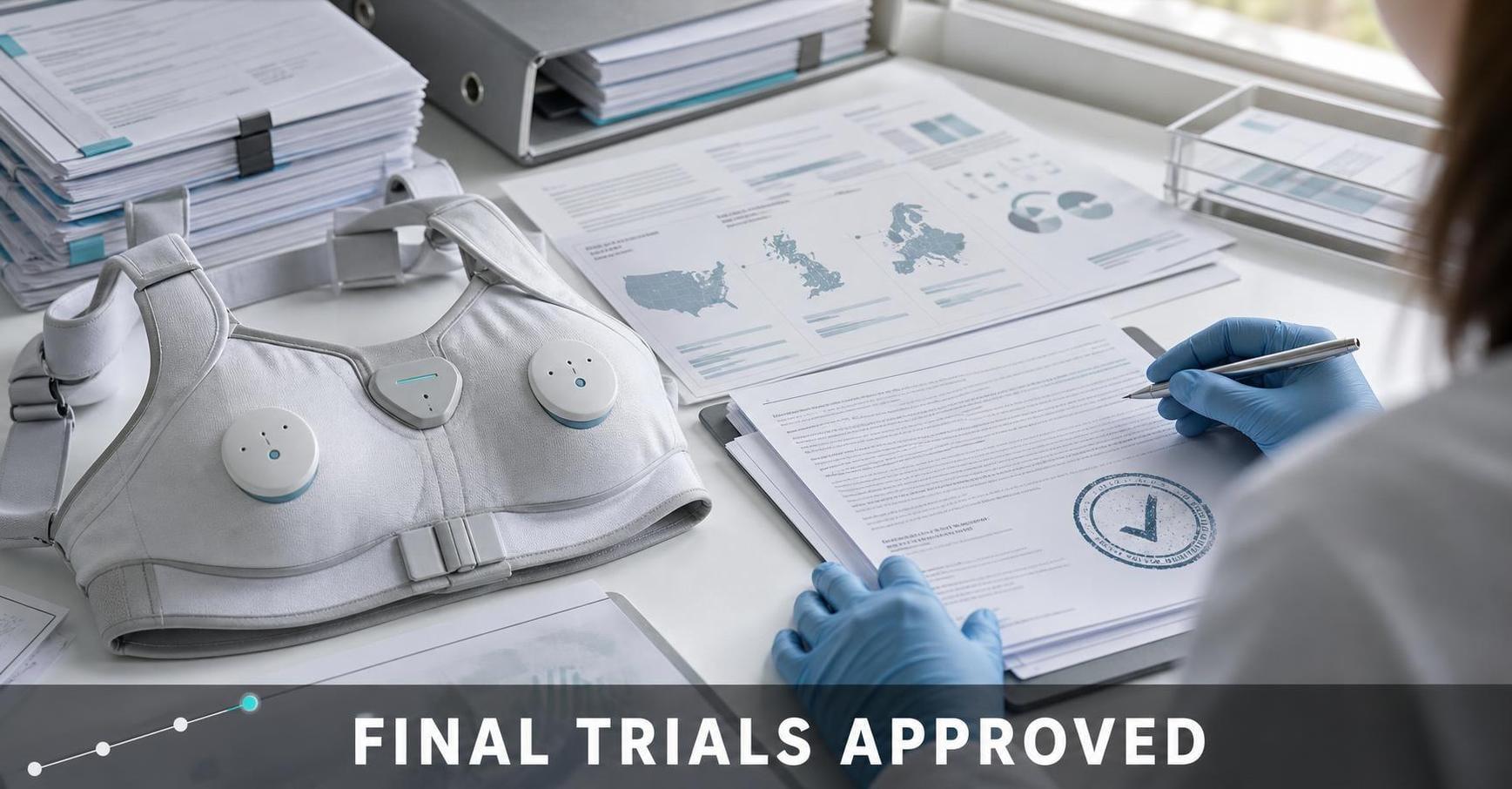
Lord’s Mark Industries has approved final clinical trials in the USA, Great Britain and Europe for its AI-enabled wearable breast cancer screening technology, with commercial placement targeted from April 2027, subject to validation and regulatory clearances.
✨ Key Takeaways
Lord’s Mark Industries Limited has moved its AI-powered, radiation-free breast cancer screening wearable into the final clinical trial stage, marking a key step in its attempt to build a global medical technology business beyond its existing diagnostics and renewable energy operations.
The company said its Technical Committee has approved final trials across the USA, Great Britain and Europe, subject to requirements in each jurisdiction. Lord’s Mark is targeting completion of the trials and key regulatory milestones before March 2027, followed by commercial placement from April 2027. Both timelines remain conditional on clinical outcomes, independent evaluation and regulatory approvals.
The wearable has been developed with the Centre for Materials for Electronic Technology, or C-MET. It uses high-precision thermal sensors and artificial intelligence-based temperature mapping to identify abnormal temperature patterns associated with breast cancer. The device is battery-operated, non-invasive and does not use radiation, according to the company.
Lord’s Mark said it has completed clinical trials in India, where the technology accurately identified cases evaluated during the trials. However, it did not disclose the sample size, clinical study design, accuracy rate or independent peer-reviewed assesSMEnt of the Indian trials. Those details will be important as the device progresses through larger international validation programmes.
The company holds exclusive commercialisation rights for the technology and said it has undergone high-accuracy and conformity testing. It is pursuing regulatory evaluation in India, where CDSCO approval is in process, while also working towards applicable European, British and US requirements, including European conformity requirements and relevant US FDA pathways.
The development fits into Lord’s Mark’s stated strategy of building healthcare and diagnostics into a larger growth engine. During its recent investor communication, management had highlighted MedTech as a future area of focus, alongside dialysis systems, in vitro diagnostics, sickle-cell screening and oncology-related products. Several of those initiatives, however, remain at the prototype, regulatory or early commercialisation stage.
The breast cancer wearable could potentially strengthen that pipeline because its portability and low infrastructure requirement may allow deployment beyond large hospitals. Lord’s Mark said the device could be used at clinics, community centres, remote villages and underserved areas, including locations with constrained electricity access. Its commercial relevance will depend on whether final studies establish performance comparable with accepted screening pathways and whether it receives approvals for use in intended markets.
The company has also planned Phase 2 trials for cancer detection at the cell level from January 2027 in India, the USA, Europe and Great Britain. It is targeting 98 per cent accuracy in those trials, although this remains an objective rather than a demonstrated clinical outcome. Lord’s Mark said recognised medical-device companies have expressed interest in participating.
The overseas trials will add to the company’s execution demands at a time when it is investing in multiple medical technology programmes. In FY2025-26, the merged group reported consolidated revenue from operations of Rs 684.75 crore and profit after Tax of Rs 48.59 crore. The company’s latest reported quarter showed net sales of Rs 307.68 crore, down 37.36 per cent sequentially, while profit after tax declined 16.08 per cent quarter-on-quarter to Rs 33.18 crore. Operating margins improved sequentially, with PBIDT margin rising to 15.98 per cent from 12.13 per cent.
As of 9:51 AM on September 23, 2026, Lord’s Mark Industries shares were trading at Rs 96.10, up 0.72 per cent from the previous close. The stock was about 85.7 per cent below its 52-week high of Rs 669.70, while remaining around 52.5 per cent above its 52-week low of Rs 63.00.
For investors, the next milestones are likely to be the design and progress of global trials, evidence of clinical performance, CDSCO and overseas regulatory outcomes, and the company’s ability to convert the wearable from a development-stage product into a commercially deployable screening platform.
Disclaimer: The article is for informational purposes only and not investment advice.