Opening Bell: Sensex Falls 568 Points, Nifty 50 Drops 197 Amid Middle East Tensions and RBI Policy Caution
 Join Us
 Follow Us
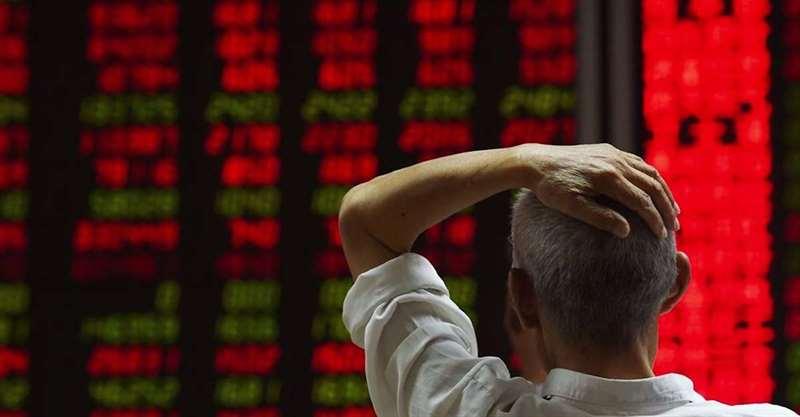
The BSE Sensex declined 568.71 points, or 0.77 per cent, to 73,538.14, while the Nifty 50 fell 197.50 points, or 0.86 per cent, to 22,770.75 as of 09:21 AM.
✨ Key Takeaways
Market Update at 09:35 AM: India’s benchmark indices, the BSE Sensex and the Nifty 50, traded lower on Tuesday, April 7, as investors remained cautious amid escalating geopolitical tensions in the Middle East and ahead of the Reserve Bank of India’s (RBI) monetary policy decision.
The BSE Sensex declined 568.71 points, or 0.77 per cent, to 73,538.14, while the Nifty 50 fell 197.50 points, or 0.86 per cent, to 22,770.75 as of 09:21 AM.
Investor sentiment remained subdued as traders closely tracked developments between the U.S. and Iran. U.S. President Donald Trump termed the proposed ceasefire with Iran as “not good enough” as his deadline approaches. Over the weekend, he warned that the U.S. could target Iran’s power plants and civilian infrastructure if the Strait of Hormuz is not fully reopened.
On the domestic front, caution also prevailed ahead of the outcome of the RBI’s Monetary Policy Committee (MPC) meeting, which is scheduled to be announced on Wednesday. Market participants are awaiting clarity on the central bank’s stance amid global uncertainties.
Broader markets also witnessed selling pressure, with the Nifty MidCap index declining 1.47 per cent and the Nifty SmallCap index falling 0.88 per cent, indicating weakness beyond frontline indices.
Meanwhile, crude oil prices edged higher amid supply concerns. Brent crude’s April contract rose 0.5 per cent to USD 110.32 per barrel on the Intercontinental Exchange, as investors anticipate potential disruptions in supply from the Middle East due to escalating tensions.
Pre-Market Update at 7:42 AM: India’s benchmark indices, the Sensex and Nifty 50, are likely to begin Tuesday’s session on a cautious note as investors track ongoing developments in the U.S.-Iran conflict in the Middle East. Despite positive global cues, early indicators suggest a subdued start for domestic markets.
As of 7:23 am, GIFT Nifty was trading around the 22,913 level, down over 88 points from the previous close of Nifty futures, indicating a negative opening for Indian equities.
Asian markets traded mostly higher on Tuesday, following gains on Wall Street. Japan’s Nikkei 225 was trading flat, while the Topix rose 0.42 per cent. South Korea’s Kospi advanced 0.66 per cent, whereas the Kosdaq declined 0.10 per cent. Hong Kong markets remained closed due to the Easter holiday.
Investor sentiment remains sensitive to geopolitical developments. U.S. President Donald Trump intensified his stance against Iran, warning that the country could be “taken out in one night” if it fails to meet the Tuesday deadline to reopen the Strait of Hormuz. Iran responded by cautioning that any attack on civilian targets would lead to escalated strikes on energy infrastructure across the Gulf region.
On the macroeconomic front, growth in the U.S. services sector moderated in March. The Institute for Supply Management reported that its non-manufacturing PMI fell to 54.0 from 56.1 in February, below Reuters’ forecast of 54.9.
In Japan, government bond yields remained largely stable. The 10-year JGB yield held steady at 2.425 per cent after recently hitting a 27-year high. The 20-year yield rose by 2 basis points to 3.350 per cent, while the two-year yield remained unchanged at 1.395 per cent. The five-year yield edged up by 0.5 basis points to 1.830 per cent.
Crude oil prices continued to rise amid geopolitical tensions. Brent crude futures gained 0.5 per cent to USD 110.34 per barrel, while U.S. West Texas Intermediate (WTI) crude rose 1.1 per cent to USD 113.67 per barrel, driven by concerns over supply disruptions through the Strait of Hormuz.
From a derivatives perspective, the Put-Call Ratio (PCR) stands at 1.42, indicating a relatively bullish undertone. On the Put side, significant open interest was seen at the 22,500 and 22,700 strike levels, suggesting strong support. On the Call side, the highest open interest was concentrated at the 23,200 and 23,500 strikes, indicating resistance in that zone.
Technically, the Nifty 50 needs to sustain above the 23,000–23,400 range to continue its upward momentum. Until then, the index may remain range-bound, with immediate support placed at 22,700, followed by 22,500.
In the derivatives segment, Sammaan Capital remains under the F&O ban for April 7.
Institutional activity continues to show divergence. On April 2, Foreign Institutional Investors (FIIs) were net sellers, offloading equities worth Rs 8,167.17 crore, while Domestic Institutional Investors (DIIs) bought shares worth Rs 8,088.70 crore. Notably, FIIs have remained net sellers for the past 24 consecutive trading sessions.
In the previous session on Monday, Indian markets ended with strong gains. The Sensex rose 787.30 points, or 1.07 per cent, to close at 74,106.85, while the Nifty 50 gained 255.15 points, or 1.12 per cent, to settle at 22,968.25.
Wall Street also ended higher overnight amid hopes of a potential ceasefire between the U.S. and Iran. The Dow Jones Industrial Average climbed 165.21 points, or 0.36 per cent, to 46,669.88. The S&P 500 rose 29.33 points, or 0.45 per cent, to 6,612.02, while the Nasdaq Composite advanced 117.16 points, or 0.54 per cent, to 21,996.34.
Among stocks, Nvidia gained 0.14 per cent and AMD rose 1.23 per cent. Amazon surged 1.44 per cent, while Apple added 1.15 per cent. Tesla, however, declined 2.15 per cent. Soleno Therapeutics stood out with a sharp 32.3 per cent rally.
In commodities, gold prices remained steady ahead of geopolitical developments, with spot gold at USD 4,646.69 per ounce. Silver prices declined, with spot silver falling 0.9 per cent to USD 72.11 per ounce.
Disclaimer: The article is for informational purposes only and not investment advice.