The Great Diversification: How India’s HNIs Will Invest in a World of Geopolitical Fragmentation
 Join Us
 Follow Us

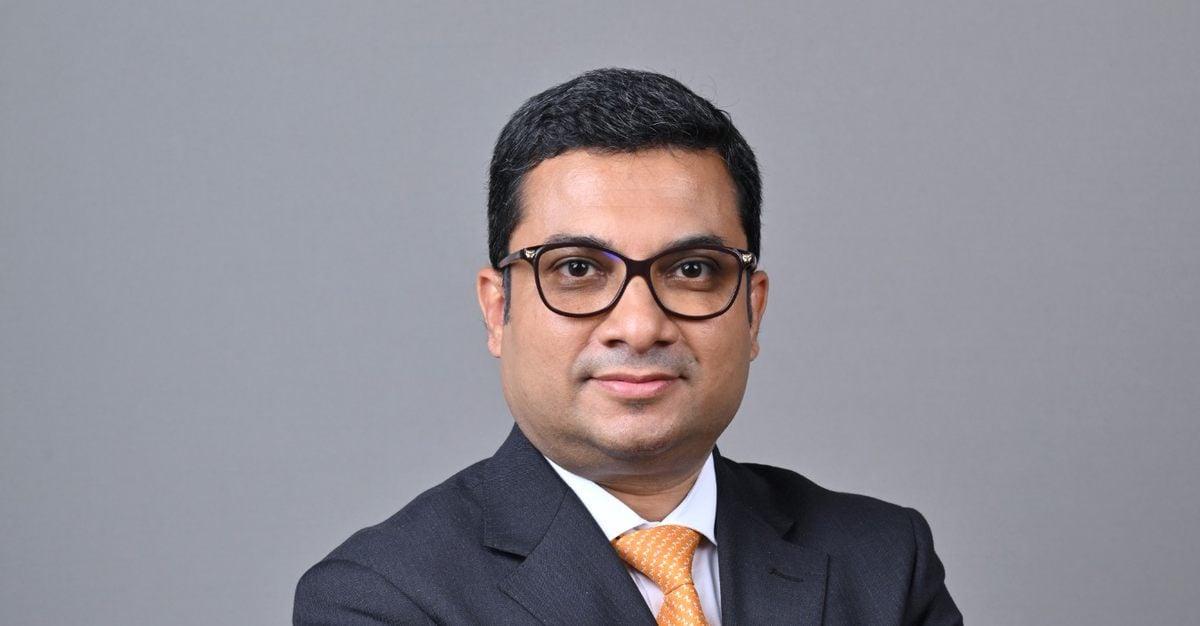
The article was written by Bhaskar Hazra, Joint MD and CEO, Systematix Private Wealth.
✨ Key Takeaways
The investment conversation with India’s wealthy has changed. The question is no longer simply, what should I own? It is increasingly, where should my wealth be exposed and what risks am I willing to concentrate?
The backdrop explains why. U.S. interest rates remain elevated, the dollar is facing a more uncertain long-term outlook, oil prices remain vulnerable to geopolitical shocks and the rupee is trading around Rs 96 to the dollar. For Indian HNIs, this is not a case for choosing India over the world, or the world over India. It is a case for owning both intelligently.
The Rupee Changes the Diversification Equation
Currency can no longer be treated as a secondary consideration in wealth planning. For families with future dollar liabilities, including children’s education, overseas property, global philanthropy or international lifestyles, holding only rupee assets creates a structural mismatch. A weaker rupee increases the cost of those liabilities, even when the underlying portfolio performs well.
The answer is not to predict the next USD/INR move. It is to align a portion of wealth with the currency of future obligations. The dollar may face a more fragmented global monetary landscape, but it remains the dominant reserve currency. For Indian investors, the practical question is therefore not whether the dollar will remain dominant forever, but whether portfolios are sufficiently diversified to withstand periods of rupee weakness, dollar strength and global volatility.
Global Diversification is Increasingly About Access
The second shift is structural. India offers compelling exposure to consumption, financialisation, manufacturing, infrastructure and domestic services. But several defining investment themes of this decade, including AI, advanced semiconductors, hyperscale computing, global healthcare innovation and leading technology platforms, remain concentrated outside India.
International allocation is therefore not only a hedge. It is an access strategy. But diversification does not mean buying the same technology exposure through multiple global funds. It means diversifying the underlying drivers of return across geographies, currencies, sectors, economic cycles and asset classes.
India Remains the Anchor
The case for global diversification should not be mistaken for weaker conviction in India. India remains one of the fastest-growing major economies, supported by domestic consumption, credit, infrastructure, formalisation and rising household financialisation. Its growth engine is also less dependent on global trade than many large economies.
Oil remains the obvious vulnerability. India’s dependence on imported crude means a sustained oil shock can simultaneously pressure inflation, the current account and the rupee. But that reinforces the need for diversification rather than undermining India’s long-term investment case. The portfolio therefore needs to become India-led, but no longer India-only.
The bigger opportunity is for private wealth and for how the private wealth industry itself must evolve. Global investing can no longer be treated as an offshore product added to an otherwise domestic portfolio. It requires a deeper understanding of the client’s entire balance sheet. The wealth manager increasingly needs to answer four questions. How much should be global? In which currency? Through which structure? And for what objective?
That requires integrating investment strategy with tax, succession, liquidity, residency and currency considerations. It also means ensuring global investments complement, rather than simply replicate, the client’s Indian exposures. The wealth manager’s role is therefore moving from product distribution to portfolio architecture.
From Asset Allocation to Risk Allocation
For the next generation of Indian HNIs, diversification will be less about counting asset classes and more about understanding where risks actually sit. A portfolio can hold equities, bonds, alternatives, real estate and still be concentrated in one geography, currency or economic outcome. The objective should be to build a portfolio where different parts of the family’s wealth respond differently to inflation, currency depreciation, interest-rate cycles, geopolitical shocks and changes in economic growth. That is the real meaning of the Great Diversification.
India’s HNIs are not moving away from India. They are moving beyond the idea that wealth should have a single geographic home. The future of Indian private wealth will be India-led, globally diversified and increasingly built around a family’s liabilities, objectives and time horizons, not around products. For wealth managers, that is a much bigger opportunity than simply offering international investments. It is the opportunity to become the architect of a family’s global balance sheet.
Disclaimer: The opinions expressed above are of the author and may not reflect the views of DSIJ.