This Low PE, High ROCE Stock Iron & Steel Company Outlines FY26 Growth Strategy; PAT Rises 27.4% to Rs 3,185 Crore
 Join Us
 Follow Us
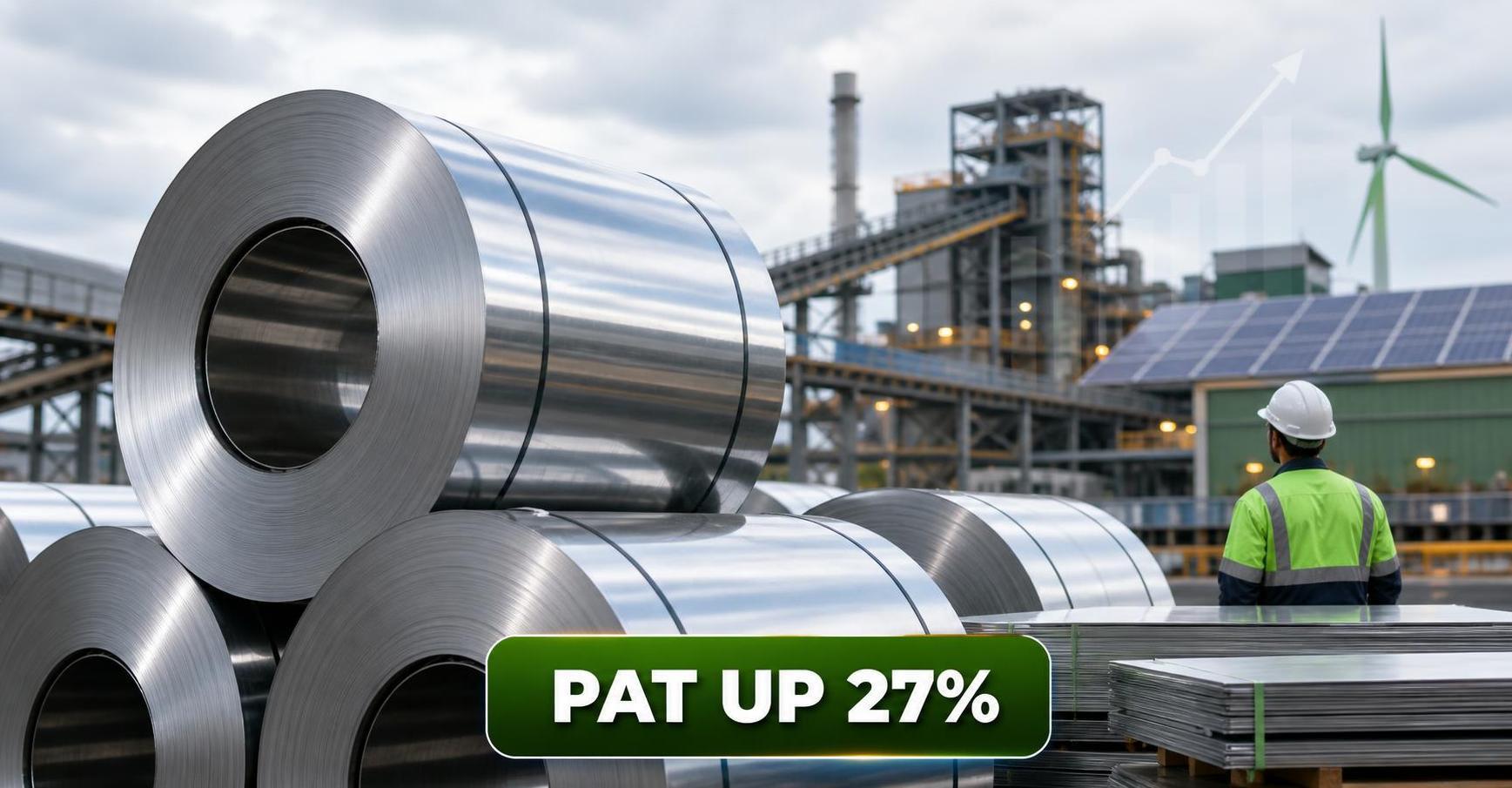
Jindal Stainless outlined its long-term strategy around sustainable manufacturing, specialised applications and ecosystem development in its FY26 Integrated Report, while global melting capacity reached 4.2 MTPA and finished goods sales volume touched a record 2.57 million tonnes
✨ Key Takeaways
Jindal Stainless has released its FY26 Integrated Report, highlighting its strategy for sustainable manufacturing, specialised stainless steel applications, consumer engagement and ecosystem development. The company said its focus is aligned with India's infrastructure and manufacturing ambitions, with greater emphasis on durability, lifecycle value and recyclability of materials.
Global Capacity Reaches 4.2 MTPA
The company continued to strengthen its manufacturing footprint during FY26. It commissioned a 1.2 MTPA stainless steel melt shop in Indonesia ahead of schedule, taking its global melting capacity to 4.2 MTPA. The company also continued downstream expansion in India to increase its value-added capabilities and support emerging applications.
Want to Ride Fast-Moving Market Trends?
Explore DSIJ’s Momentum Pick - a research-driven service focused on fundamentally strong momentum stocks with the potential for short- to medium-term gains.
Download Service BrochureJindal Stainless also expanded its specialised stainless steel portfolio across defence, aerospace, mobility, railways and industrial applications. During the year, the company secured its first commercial aerospace order for India's Small Satellite Launch Vehicle programme and continued developing advanced stainless steel grades for strategic sectors.
Focus on Sustainable Manufacturing
Sustainability remains a key part of the company's long-term strategy. During FY26, Jindal Stainless progressed its 315.6 MW solar-wind hybrid renewable energy project with Oyster Renewable Energy, described as its largest renewable energy investment to date.
Renewable sources accounted for nearly 47 per cent of total electricity consumption across its Hisar and Jajpur facilities. The company also maintained approximately 70 per cent recycled scrap utilisation in its Electric Arc Furnace-based manufacturing process.
The company has set targets to reduce Scope 1 and Scope 2 emissions by 50 per cent by 2035 and achieve Net Zero by 2050.
Also Read - This Stock Below Rs 60 Reports Q1 FY27 Results; Revenue Rises 28.5% YoY to Rs 530.95 Crore, PAT at Rs 8.08 Crore
Building Presence Across Strategic Applications
Jindal Stainless is expanding its presence across sectors where durability, corrosion resistance and recyclability are important. Its FY26 Integrated Report highlighted opportunities across transport, water, energy, defence, urban infrastructure and coastal development.
The company also highlighted the importance of stainless steel in India's long-term infrastructure development, where lifecycle value and material durability are becoming increasingly important considerations.
Consumer Engagement and Ecosystem Development
During FY26, the company increased its focus on consumer engagement through the launch of its first national brand campaign featuring brand ambassador Ranveer Singh. It also expanded the Jindal Saathi programme and continued the growth of its Jindal Saathi Pragati loyalty platform.
The initiatives are part of the company's efforts to build a stronger B2C business model and increase awareness and adoption of stainless steel across India.
The company's Stainless Academy also expanded its education and skilling programmes for fabricators, students and industry professionals, impacting more than 82,000 people in the fabricators ecosystem during FY26.
Strong Balance Sheet Supports Expansion
Alongside its growth, Jindal Stainless maintained a strong balance sheet, with its net debt-to-equity ratio at 0.15x at the end of FY26. This provides the company with financial flexibility to support future investments in capacity and growth initiatives.
The company had an annual melt capacity of 4.2 million tonnes as of March 2026, with 16 stainless steel manufacturing and processing facilities in India and overseas and operations spanning 12 countries.
Jindal Stainless FY26 Financial Performance
The company delivered strong financial performance in FY26, with consolidated revenue standing at Rs 42,955 crore, compared with Rs 39,312 crore in FY25, registering a growth of approximately 9.3 per cent. EBITDA increased 19.2 per cent YoY to Rs 5,560 crore, while profit after tax rose 27.4 per cent to Rs 3,185 crore from Rs 2,500 crore in FY25. Finished goods sales volume reached a record 2.57 million tonnes during the year.
The company's financial performance has also strengthened over the past three years. Revenue increased from Rs 38,562 crore in FY24 to Rs 39,312 crore in FY25 and further to Rs 42,955 crore in FY26. During the same period, PAT stood at Rs 2,693 crore, Rs 2,500 crore and Rs 3,185 crore, respectively, showing a sharp recovery in profitability in FY26.
Jindal Stainless Share Price
Jindal Stainless shares were trading at Rs 737.10, down 0.11 per cent, while the benchmark Nifty 50 index was down 0.18 per cent at 24,391.60. The stock's movement came as the company highlighted its FY26 financial performance, capacity expansion, specialised product development and sustainability initiatives.
With FY26 revenue rising to Rs 42,955 crore and PAT increasing 27.4 per cent to Rs 3,185 crore, the company's latest annual report highlights continued expansion alongside a focus on value-added stainless steel applications and sustainable manufacturing.
Add DSIJ as your preferred news source on G o o g l e
Add NowShare your thoughts on this development in the comments below.
Disclaimer: The article is for informational purposes only and not investment advice.