Union Budget 2026: A Strong Prescription for Healthcare and Pharma
 Join Us
 Follow Us
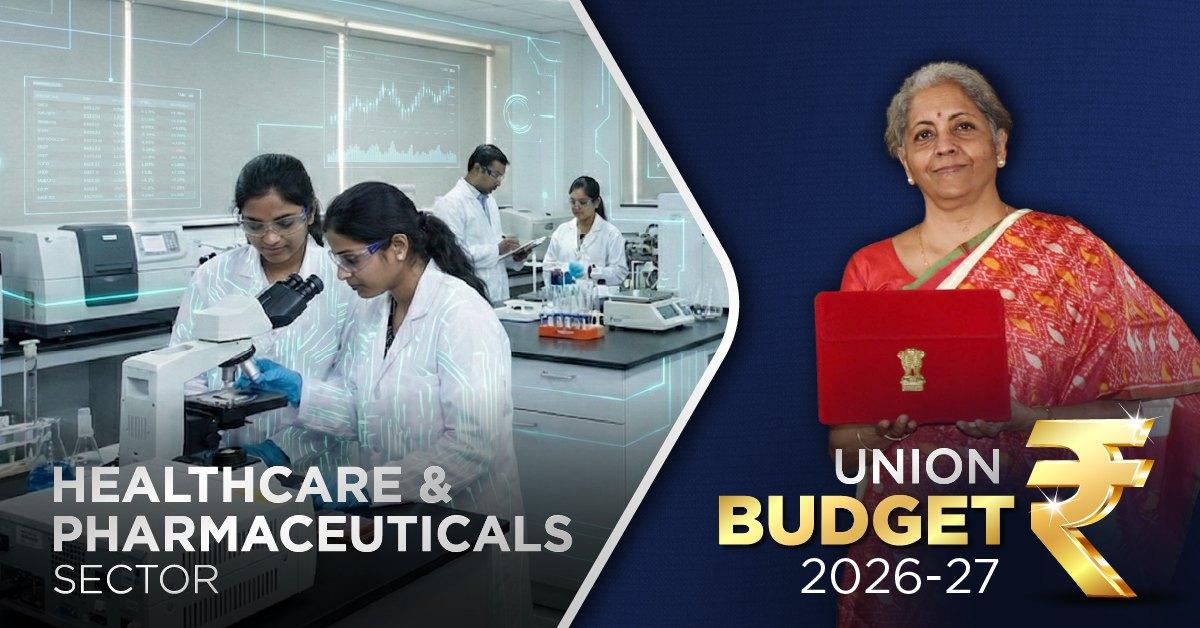
Here’s a look at the most significant Budget measures for the healthcare and pharmaceutical space. Click here!
✨ Key Takeaways
Healthcare and pharmaceuticals have become central to India’s economic and social priorities, especially in the post-pandemic environment. Beyond improving public health outcomes, the sector supports large-scale employment, drives exports and enhances long-term productivity. Rising health awareness, an ageing population, wider insurance coverage and increasing urbanisation are steadily boosting demand across hospitals, diagnostics, medical devices and pharmaceuticals. At the same time, policy support and private investment are helping the industry transition toward a more organised, technology-driven healthcare ecosystem.
The healthcare sector contributes approximately 4 to 5 per cent to India’s GDP. Pharmaceuticals remain a key growth engine, with India established as the world’s largest supplier of generic medicines and a major exporter of vaccines and formulations. Structural shifts such as digital health adoption, hospital capacity expansion, stronger diagnostics penetration and a greater focus on preventive care are reshaping the sector. With higher public health spending and manufacturing incentives gaining traction, the Union Budget’s stance on healthcare and pharmaceuticals holds significant relevance for investors assessing long-term growth opportunities.
Union Budget 2026: Key Announcements Shaping the Healthcare and Pharma Sectors
- With the aim of positioning India as a global biopharma manufacturing hub, Finance Minister Nirmala Sitharaman announced the Biopharma Shakti initiative, with an outlay of Rs 10,000 crore over the next five years to strengthen the ecosystem. Under this initiative, a network of 1,000 accredited clinical trial sites will be created across India.
- The government proposes a scheme to support states in setting up 5 regional medical hubs, envisioned as integrated healthcare complexes combining medical services, education, and research facilities.
- The government plans to establish three new All India Institutes of Ayurveda, upgrade Ayush pharmacies and drug testing laboratories to ensure greater availability of skilled personnel, and enhance the WHO Global Centre for Traditional Medicine in Jamnagar.
- To strengthen mental health infrastructure, NIMHANS 2.0 will be set up as a leading institute in North India.
- The government will roll out initiatives to enhance evidence-based research, training, and public awareness in traditional medicine. It also plans to expand veterinary education and services by adding over 20,000 professionals through a loan-linked capital subsidy scheme supporting private veterinary and para-veterinary colleges, hospitals, diagnostic labs, and breeding facilities.