Union Budget 2026: Key Measures Impacting the FMCG Sector
 Join Us
 Follow Us
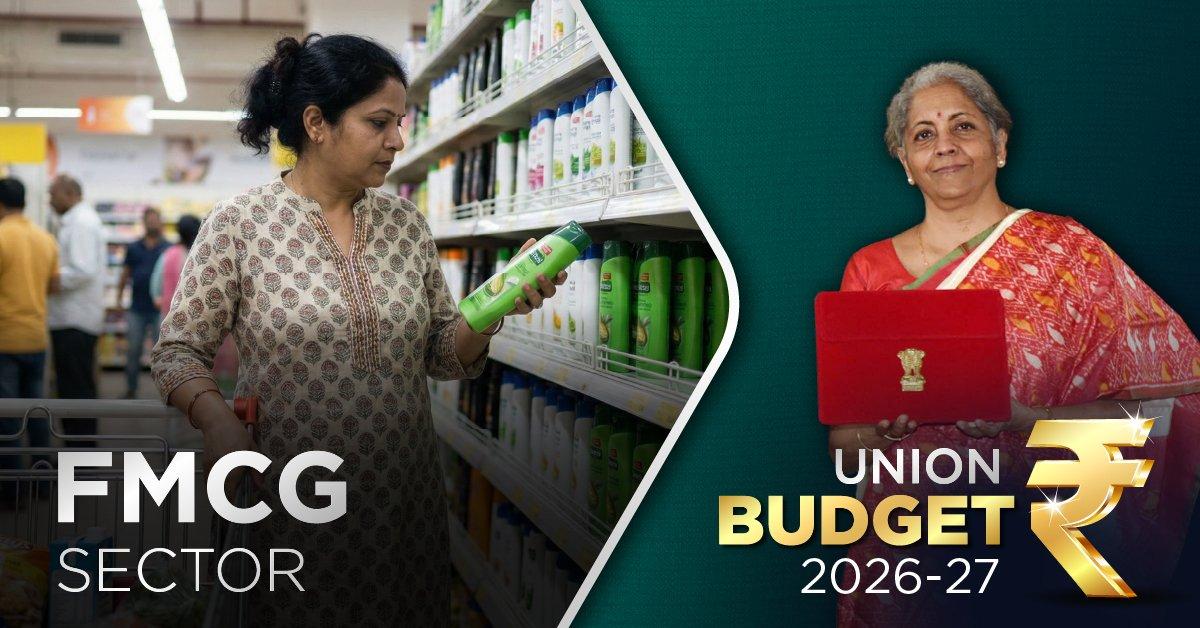
Budget 2026 boosts FMCG via food processing incentives, goods PLI, rural retail support, while rationalising duties on hygiene, tobacco, alcohol.
✨ Key Takeaways
The Union Budget 2026 outlines several strategic interventions, fiscal measures, and budgetary allocations directly affecting India’s Fast-Moving Consumer Goods (FMCG) sector. The focus spans food processing, personal care, household appliances, tobacco, alcohol, and rural retail, aiming to boost domestic manufacturing, global competitiveness, and inclusive growth.
Food Processing and Agricultural Outputs
The government is emphasising the transformation of agricultural produce into premium brands while supporting micro-enterprises in the food sector. The Prime Minister Formalisation of Micro Food Processing Enterprises (PM FME) Scheme has been allocated Rs 1,700 crore in the Budget Estimate (BE) for 2026, up from Rs 1,500 crore in the Revised Estimate (RE) 2025. Additionally, the Production-Linked Incentive (PLI) Scheme for the food processing industry has a dedicated outlay of Rs 1,200 crore in BE 2026.
Global branding initiatives have been proposed to position Indian Cashew and Indian Cocoa as premium international brands by 2030. The Coconut Promotion Scheme will enhance productivity and replace old, non-productive trees, supporting the livelihoods of nearly 10 million farmers. For seafood exports, the government has increased the limit for duty-free imports of specified inputs used in processing from 1 per cent to 3 per cent of the FOB value of the previous year’s export turnover, aiming to enhance competitiveness.
Related Stocks:
- Branded Food / FMCG: Nestlé India, Britannia, ITC (food division), Dabur, Godrej Consumer Products (food portfolio)
- Agri/Nutraceuticals: Hatsun Agro, Jubilant FoodWorks
- Seafood / Exporters: Avanti Feeds, CP Aquaculture, Prabhat Dairy
Personal Care and Hygiene
The Budget 2026 introduces changes to customs duty structures for hygiene products. The exemption for hydrophilic and hydrophobic non-woven fabrics used in manufacturing adult diapers will lapse on April 1, 2026. Similarly, customs duty exemptions for specified goods used in producing Copper-T contraceptives will also end on April 1, 2026. These changes reflect a gradual rationalisation of duty structures in the personal care segment.
Related Stocks:
- Hygiene & Personal Care: Procter & Gamble Hygiene, Kimberly-Clark India, Johnson & Johnson India, Dabur
- Pharma / Contraceptives: HLL Lifecare, Cipla
Household Appliances and Electronics
Consumer durables and white goods continue to receive support through targeted incentives. Basic customs duty (BCD) on specified parts used in manufacturing microwave ovens will be exempted to deepen value addition. Furthermore, the PLI scheme for white goods, covering air conditioners and LED lights, has a proposed outlay of Rs 1,004 crore in BE 2026-27, a substantial increase from Rs 304 crore allocated in RE 2025-26.
Related Stocks:
- White Goods / Consumer Durables: Voltas, Blue Star, Havells India, Crompton Greaves, V-Guard Industries
- Components / Ancillaries: Dixon Technologies, Bharat Electronics
Tobacco and Alcohol (Sin Goods)
The budget also addresses fiscal measures for sin goods. The National Calamity Contingent Duty (NCCD) on chewing tobacco, Jarda scented tobacco, and other tobacco products is revised from 25 per cent to 60 per cent, effective May 1, 2026. However, the effective duty rate will continue at 25 per cent through a separate notification. For alcoholic liquor for human consumption, the Tax Collection at Source (TCS) rate for sellers is rationalized to 2 per cent, up from 1 per cent previously.
Related Stocks:
- Tobacco: ITC (cigarettes & chewing tobacco), VST Industries, Godfrey Phillips India
- Alcohol: United Spirits (Diageo), Radico Khaitan, Globus Spirits, Allied Blenders & Distillers
Rural Retail and Distribution
To empower rural women and enhance product distribution, the government plans to set up Self-Help Entrepreneur (SHE) Marts, community-owned retail outlets within cluster-level federations. These initiatives aim to help women transition into enterprise ownership. The Mahatma Gandhi Gram Swaraj initiative will support village industries through training, quality enhancement, and global market linkages for traditional products.
Additionally, customs duty on umbrellas has been modified to 20 per cent or Rs 60 per piece, whichever is higher, while parts and trimmings attract 10 per cent or Rs 25 per kg, whichever is higher, supporting domestic manufacturing.
The Union Budget 2026-27 reflects a comprehensive approach to strengthening the FMCG sector, with targeted interventions across production, branding, exports, consumer durables, sin goods, and rural distribution.
Related Stocks:
- Rural FMCG Players: ITC, Hindustan Unilever, Marico, Godrej Consumer Products
- Retail / Distribution: Avenue Supermarts (DMart), Jubilant FoodWorks (smaller retail tie-ups)
Disclaimer: The article is for informational purposes only and not investment advice.