In conversation with Sanjeev Aggarwal, CFO, JK Tyre and Industries Ltd
 எங்களுடன் சேருங்கள்
 எங்களைப் பின்தொடரவும்
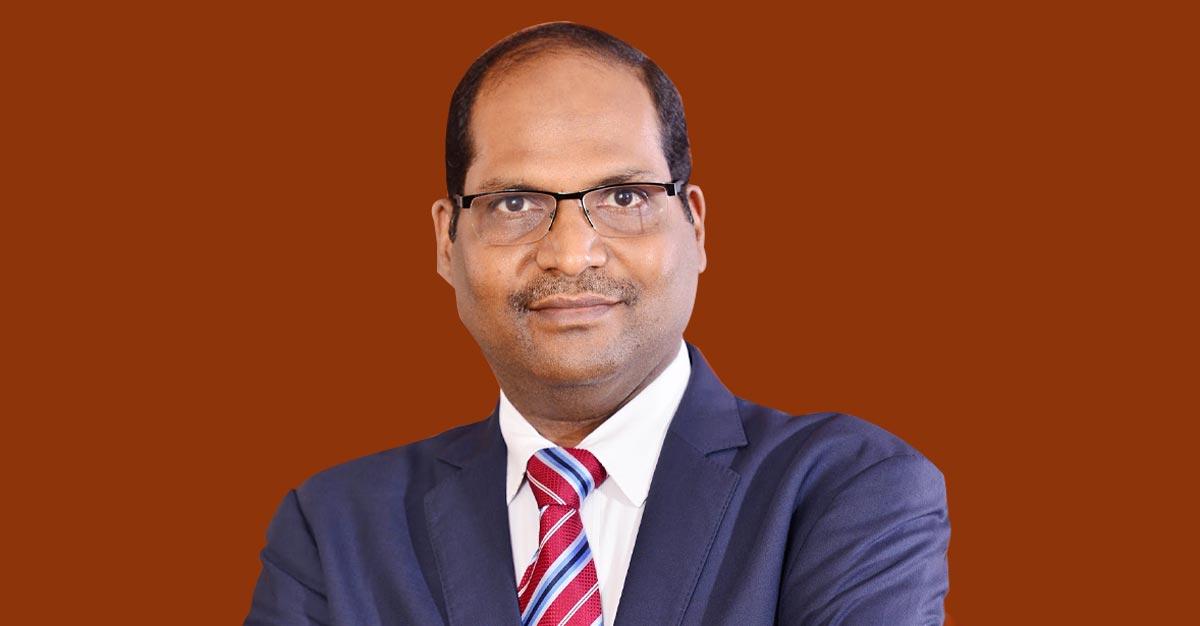
Inside JK Tyre’s strategy to expand margins, protect ROCE, and compound growth across cycles.
✨ முக்கிய குறிப்புகள்
1. You have materially reduced leverage while simultaneously stepping up growth capex. What is the non-negotiable financial threshold for JK Tyre today—net debt to EBITDA, ROCE, or free cash flow—beyond which capital allocation decisions would change?
In the last few years, there has been a significant improvement in the leverage position of the company even though we have invested more than Rs 2,500 crore to fund our growth capex plans. Let me share with you that from a peak level of Rs 5,400 crore in FY’20, we have reduced our net debt to Rs 4,081 crore as at the end of FY’25, which is at 2.4 EBITDA multiple.
Further, we continue to remain committed to deleverage more over the next few years. We are targeting to bring down the net debt to EBITDA ratio in the corridor of 1.5x – 1.7x and net debt to equity ratio of less than 1 over the next 3-4 years while simultaneously investing in growth capex. Our premiumisation strategy and working capital management have been playing a pivotal role in achieving improved EBITDA margins, ROCE and better free cash flows.
2. Operating margins have expanded meaningfully, aided by cost control and operating leverage. How much of the current margin profile is structural versus cyclical, and what margin floor should investors underwrite across cycles?
As discussed earlier, we are continuously working on the margins improvement through various means including product mix improvement, cost optimisation and higher operating leverages. As you may have observed, in Q2FY26 our margins improved to 13.3 per cent as against 10.9 per cent, an increase of 2.4 per cent sequentially.
In the last few years, we have nearly doubled our passenger tyre manufacturing capacities, which has increased its contribution to nearly 32 per cent of the total revenues. All new capacities are capable of manufacturing higher rim sized tyres (16’’ & above), which command higher price.
Secondly, JK Tyre as a brand has always been at the forefront by launching innovative and technologically advanced products to enhance the customer’s experience and stay ahead in the market.
Mobility business vertical, a unique business model under which we charge fleet owners on pay per km basis, is contributing to uplift overall margins. Through all these above efforts, we are ring-fencing our margins and ensuring that it remains unaffected by short-term fluctuations. The recent merger of our subsidiary company, Cavendish Industries Ltd (CIL), is also expected to create significant value on the back of its operational and financial synergies with JK Tyre.
3. JK Tyre remains strong in TBR while PCR volumes are scaling rapidly. Over the next two years, which segment will be the primary driver of incremental ROCE, and how do you prevent PCR growth from diluting group returns?
We have been operating in all segments of automotive tyres with a major focus on truck & bus and passenger car tyres, which together generate more than 80 per cent of the company’s revenues. In truck & bus segment, we have value-added offerings such as XF, XM series contributing to fleet operators’ increased profitability in terms of extra fuel savings, extra mileage, etc. Similar premium offering XD series is available for mining applications and JUXe for electric buses.
In passenger segment, we offer a range of products including highly advanced and innovative products like Levitas Ultra, sensor-embedded Smart Tyre, Green tyre, Puncture Guard tyre, etc., which, apart from being environment friendly, also add to the ride comfort while ensuring seamless road safety and fetch better margins. All our new capacity expansions in PCR are capable of manufacturing higher rim sized tyres having fitments in large SUVs, commanding better prices in market.
Through our dedicated R&D Centre, viz. Raghupati Singhania Centre of Excellence, we keep innovating products for the future of mobility. In addition to this, we have a range of tyres for 2/3W, Farm, LCV/SCV, Off the Road (OTR) for industrial and mining applications, etc., which are also contributing to our bottom line. So, I would say in every segment we are continuously evolving as a world-class tyre manufacturing company.
4. With CV replacement demand improving and radialisation gaining pace, where do you see JK Tyre gaining share—pricing, volumes, or product mix and where are you consciously choosing not to compete?
JK Tyre is the pioneer of radial tyres and is commanding a leadership position in CV segment. JK Tyre has set up the largest service network in India for commercial vehicles, providing superior customer services to a significant number of large fleets in India. We continuously innovate and launch high-quality products to meet the customer’s requirement as per the application of products.
The overall sentiment in auto sector is improving, particularly the CV space post GST cuts. We expect the volumes to go up, driven by enhanced affordability for fleet operators and a surge in consumption in the economy, leading to better lorry utilisation. Demand remains robust across both OE and replacement markets. With the strong demand scenario, we are focussing on increasing our market share across segments and accordingly enhancing capacities.
Also, as we aim to become the preferred mobility partner of choice to every customer, we are present in all segments with a diverse range of products and we are competing across categories for volumes and value.
5. You highlighted strong ESG credentials and governance upgrades. At what point do ESG initiatives start reflecting tangibly in cost of capital, customer preference, or margin protection and how should investors track this?
JK Tyre has recently secured the top-notch CareEdge ESG1+ rating, which represents leadership position in managing ESG risk through best-in-class disclosures, policies and performance. We believe that the leadership rating enhances brand’s acceptance and trust on quality with customers.
Also, the investor community, both at domestic and global level, are scanning the companies with their ESG lens apart from financial aspect.
As a matter of fact, we have also successfully raised USD 100 million Sustainability Linked Loan (SLL) from IFC-W (part of World Bank Group), which allows us to benefit from lower interest rates, thereby improving the profitability.