Hester Biosciences Share Price Rallies After Q2 Profit Rises 44%; Poultry Business Growth Lifts Margins
 எங்களுடன் சேருங்கள்
 எங்களைப் பின்தொடரவும்

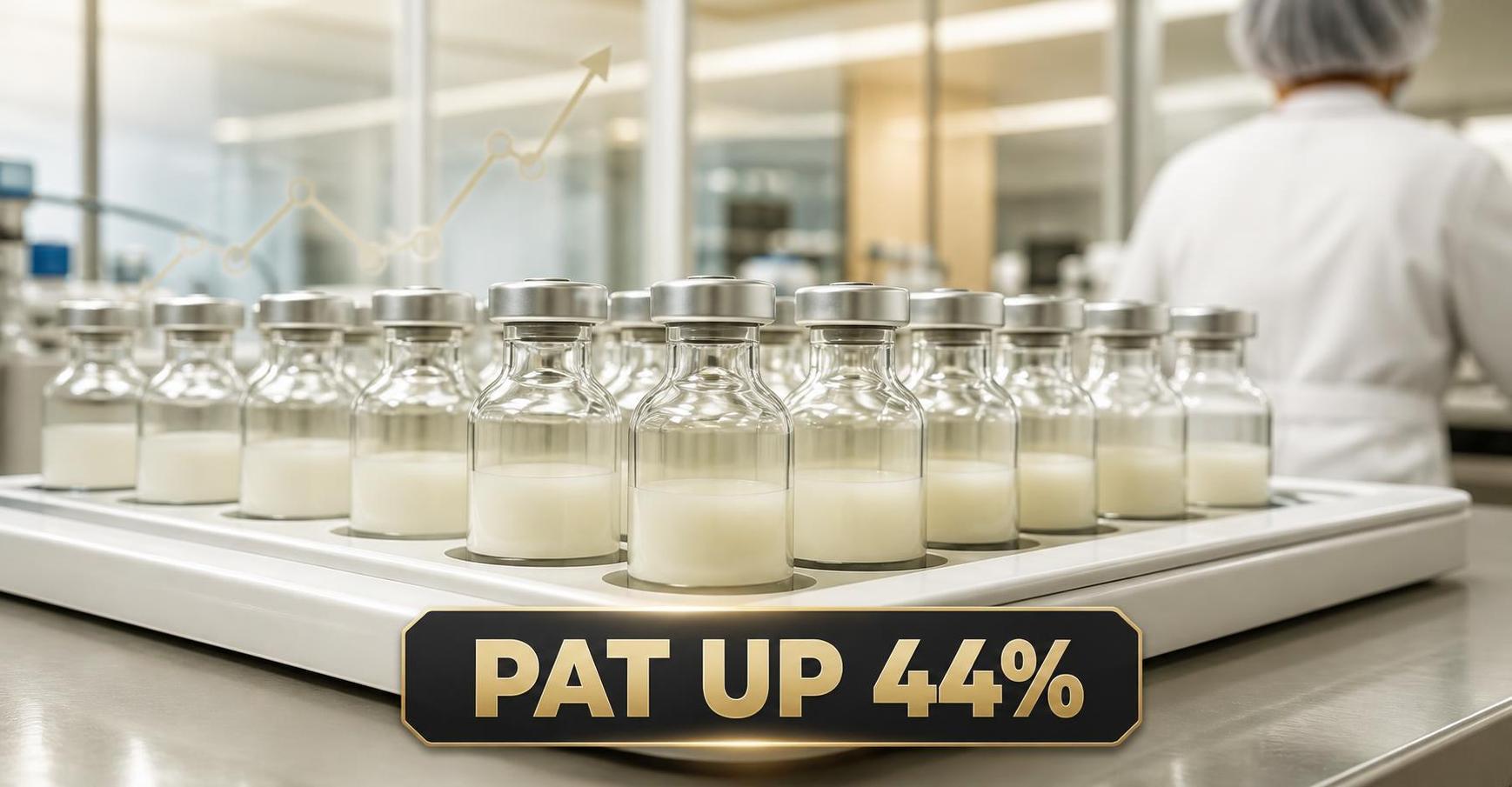
Hester Biosciences posted stronger Q2 FY27 operating performance as poultry healthcare growth and favourable product mix lifted revenue, profitability and gross margins.
✨ முக்கிய குறிப்புகள்
Hester Biosciences operates in poultry, livestock and pet healthcare, with vaccines forming the core of its business. Its domestic poultry franchise has been the key growth engine, while animal healthcare sales remain influenced by the timing of government immunisation programmes. Against this backdrop, the company reported a 38 per cent YoY rise in consolidated revenue from operations to Rs 97.91 crore for the quarter ended September 30, 2026.
Consolidated profit after Tax (PAT) rose 44 per cent to Rs 20.63 crore, while earnings before interest, tax, depreciation and amortisation (EBITDA) increased 55 per cent to Rs 36.52 crore. EBITDA margin expanded by 4 percentage points to 37 per cent, supported by a higher gross profit margin of 78 per cent against 73 per cent a year earlier.
The India business was the main contributor to quarterly growth. Consolidated Poultry Healthcare revenue rose to Rs 62.26 crore from Rs 48.02 crore, aided by institutional business, deeper market penetration and customer engagement. Standalone poultry revenue increased 27 per cent to Rs 60.81 crore. The company said its broader poultry-health portfolio, including feed supplements and disinfectant solutions, is complementing vaccine sales through farm-health and disease-prevention offerings.
Animal Healthcare revenue at the consolidated level rose 55 per cent to Rs 35.65 crore in the quarter, reflecting higher tender execution. However, first-half revenue from the division declined 22 per cent to Rs 50.76 crore because of lower sales in the June quarter. This highlights the uneven timing of government-led immunisation programmes, which remain important for the large-animal vaccine business.
For the first half of FY27, consolidated revenue increased 13 per cent to Rs 175.16 crore. Reported PAT surged 271 per cent to Rs 117.36 crore, although the figure included an exceptional gain of Rs 85.77 crore from an amendment to a loan at wholly owned subsidiary Hester Biosciences Africa Ltd. The Gates Foundation reduced the loan principal to USD 5 million from USD 12 million, waived accrued interest and made the revised facility interest-free.
The board also approved an unsecured loan of up to USD 1 million for Hester Africa’s working-capital and general corporate needs. During the quarter, Hester completed the divestment of its remaining 11 per cent stake in Texas Lifescience Pvt Ltd.
As of 2:02 pm on November 5, 2026, Hester Biosciences shares were trading at Rs 2,402.50, up 3.61 per cent from the previous close. The stock was about 5.1 per cent below its 52-week high of Rs 2,531.25. Over one year, the shares have gained 35.38 per cent, compared with a 4.13 per cent decline in the BSE 500 over the same period. The company’s market capitalisation stood at about Rs 1,972.61 crore.
What This Means for Investors
The quarterly numbers reinforce the importance of Hester’s domestic poultry business, where stronger market penetration, institutional sales and a favourable product mix are supporting both revenue growth and margin expansion. The 37 per cent consolidated EBITDA margin in Q2 also indicates better operating leverage from the core business. Animal Healthcare’s recovery during the quarter is encouraging, but first-half sales still show that tender execution can materially shift revenue between periods.
The sharp H1 PAT increase should be assessed carefully because Rs 85.77 crore came from the accounting impact of the amended Hester Africa loan, rather than normal operations. The more relevant operating indicator is the Q2 performance, where profit growth was supported by sales and margins. International operations and Hester Africa remain longer-term opportunities, but they also require working-capital support and sustained market development. At 22.53 times trailing enterprise value to EBITDA, the valuation leaves execution on poultry growth, capacity utilisation and recurring cash generation as important considerations.
Disclaimer: The article is for informational purposes only and not investment advice.