Expert Perspectives on Union Budget 2026
 எங்களுடன் சேருங்கள்
 எங்களைப் பின்தொடரவும்
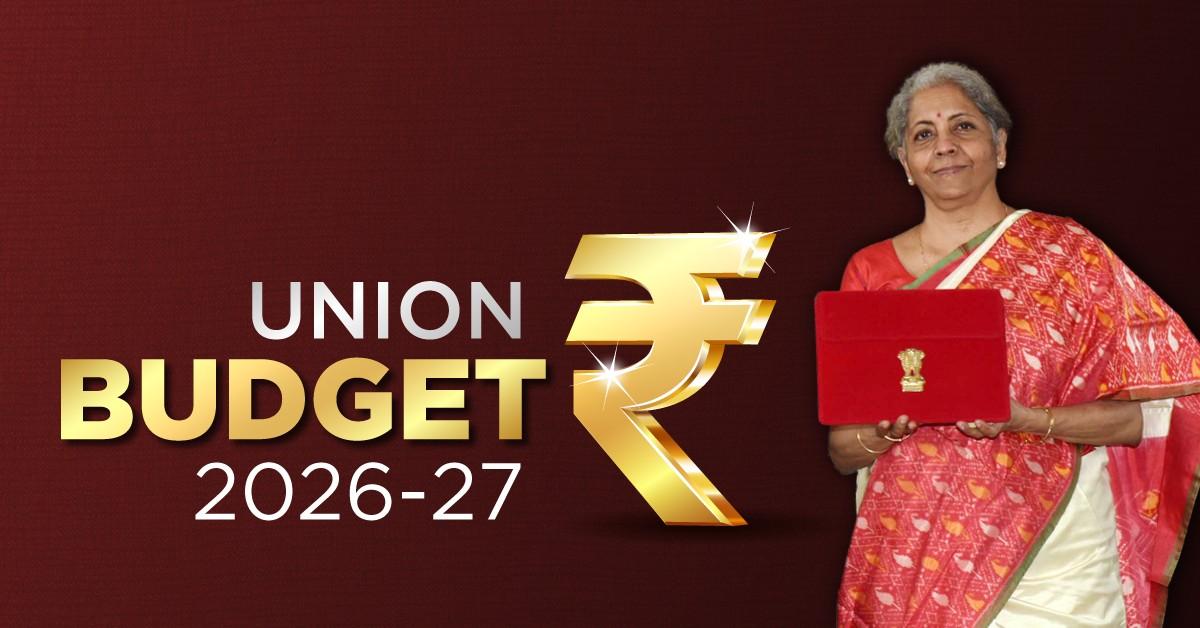
Discover what experts share as they decode the key policy priorities, growth signals and market implications of Union Budget 2026.
✨ AI இயங்கும் சுருக்கம்
A Balasubramanian, MD & CEO, Aditya Birla Sun Life AMC
“The Budget remains focused on sustaining long-term economic growth while maintaining fiscal discipline. India’s growth story is expected to remain intact with announcements on manufacturing, MSME’s and agriculture along with services sector including healthcare, tourism and hospitality will create employment opportunities for the younger population at large. This coupled with focus on technology aligns well with India’s vision of becoming Viksit Bharat by 2047. The proposals to deepen the corporate bond market and improve access to capital are particularly positive. The increase in STT on derivatives may impact trading but it should be looked at as an encouragement to gradually shift towards cash market and long-term investing.”
Murthy Nagarajan, Head - Fixed Income, Tata Asset Management
“The Net borrowing for next year is budgeted at Rs 11.70 lakh crore and Gross borrowing of Rs 17.2 lakh crore. The Government is targeting a fiscal deficit of 4.3 per cent of GDP. The government has shifted the goal post from fiscal deficit reduction of Debt to GDP ratio. Government has taken a prudent path as reduction of fiscal deficit can led to growth slowdown as global environment is not conductive to growth. Government is again doing the hard lifting with capital expenditure increased from Rs 11 to Rs 12.20 lakh crore for the next financial year. The Debt market expected net borrowing of Rs 11.5 lakh crore and Gross borrowing of Rs 17 lakh crore assuming a fiscal deficit of 4.2 per cent. The Debt market may open slightly negative due to higher borrowing programme.”
N Amrutesh Reddy, Director, NDR InvIT
“Union Budget 2026 reinforces the government’s long-term commitment to infrastructure-led growth, with a strong focus on execution, efficiency and asset monetisation. The continued push on Logistics-led capex, multimodal connectivity, coastal and inland waterways, and industrial corridors will strengthen demand fundamentals for organised warehousing and logistics across Tier-2 and Tier-3 markets. The proposal to enable REITs for monetising land assets held by CPSEs is a significant step towards recycling capital, unlocking value from brownfield assets and deepening the institutional investor base for Real Estate and infrastructure. Alongside measures to improve project Bankability, containerised logistics capacity and near-urban warehousing, the budget enhances visibility and predictability for long-duration infrastructure platforms such as InvITs backed by patient domestic and global capital.”
Tapan Patel, Fund Manager - Commodities, Tata Asset Management
“Commodity prices may follow broad global geo-economic factors focusing more on U.S. FOMC stance, upcoming economic data, and shift in geopolitical factors. Investors may re-assess asset allocation and look for relative stability and consolidation in commodities to invest after recent volatile move and sharp selloff in Gold, Silver and Copper prices.”
Rajesh Rokde, Chairman, All India Gem & Jewellery Domestic Council (GJC)
“The Union Budget 2026-27 reflects a stable and sensitive approach towards the Gems & Jewellery industry. The absence of any increase in customs duty or GST, continued policy certainty, strong MSME and cluster support, ease-of-doing-business measures, and litigation-reducing income-Tax reforms together provide confidence to the trade and reinforce the Government’s recognition of our sector as a key contributor to employment, exports, and economic growth.”
Disclaimer: The opinions expressed above are of the author and may not reflect the views of DSIJ.